


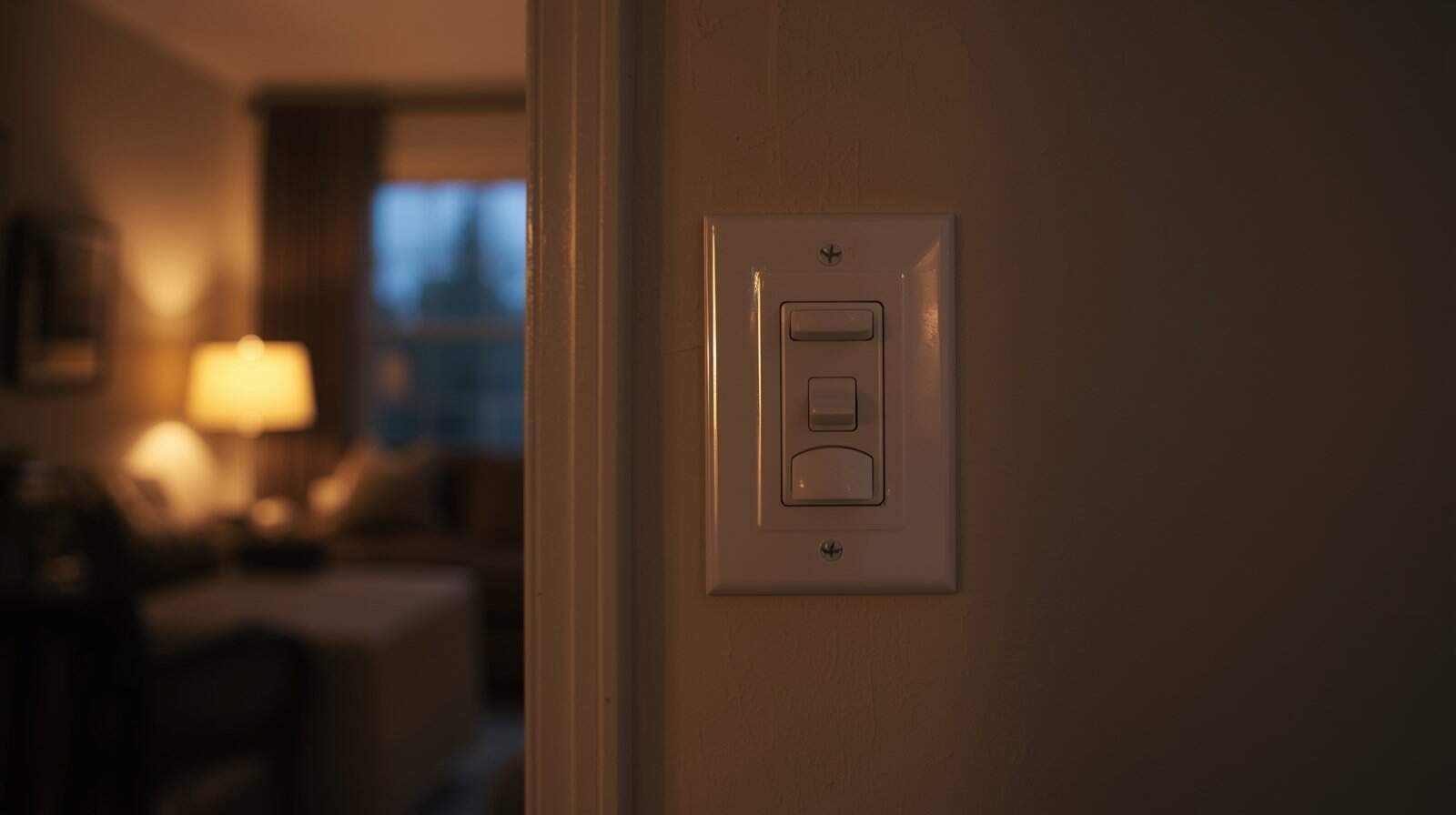
Noticing a light switch that feels warm when the lights are on can be unsettling—especially if everything appears to be working normally. Many homeowners aren’t sure whether this is a harmless quirk (especially with dimmers) or an early warning sign of electrical stress.
The good news is that some mild warmth can be normal in specific situations. The important part is knowing the difference between “expected warmth” and “something is generating heat where it shouldn’t.”
Quick safety rule: A switch should never feel hot. If it’s uncomfortable to touch, smells odd, makes noise, or the wall plate shows discoloration, stop using it and treat it as a safety issue.
“Warm” can be normal sometimes. “Hot” is not.
Why a Light Switch Can Feel Warm
Whenever electricity flows through a device, a small amount of heat is produced. In a normal switch, that heat is usually so minor you never notice it. Warmth becomes noticeable when one of two things happens: the switch is handling a higher electrical load, or there’s added resistance inside the switch or at the wiring connections.
Think of resistance like friction. The more “friction” electricity encounters at a contact point, the more energy gets converted into heat. That’s why heat is a meaningful clue, even if the lights still turn on and off normally.
When Mild Warmth Can Be Normal
Some warmth is expected when a switch is controlling a higher-than-average load. Common examples include a switch controlling many ceiling lights, a bathroom fan/light combination, or a bank of recessed lights on one dimmer.
In these “normal warmth” scenarios, the heat is typically mild, localized to the switch area, and it cools after the lights are turned off. It also tends to feel consistent over time, rather than slowly worsening week by week.
If the switch is only slightly warm during use and returns to room temperature afterward, that may simply be the device operating near its typical range.
Why Dimmer Switches Warm Up More Than Standard Switches
Dimmers commonly run warmer than standard toggle switches because they regulate power rather than simply turning it on or off. Many dimmers reduce light output by controlling the shape of the electrical waveform, and that process generates heat in internal components.
A dimmer controlling multiple bulbs can feel mildly warm and still be functioning normally. However, warmth that increases over time, seems out of proportion to the lighting load, or changes suddenly can indicate an overload condition, an incompatibility with certain bulbs, or an internal device failure.
What matters most is not whether the switch is a dimmer—it’s whether the heat level makes sense for what it’s controlling.
When Warmth Signals Electrical Stress Instead of Normal Operation
A switch that becomes warm under light or moderate load can be a warning that heat is being generated at a connection point. This is especially concerning when the switch controls a single LED fixture (low power draw) yet still feels warm, or when warmth shows up in multiple switches on the same wall plate.
Electrical stress often shows up as a pattern rather than a one-time moment. For example, a switch may start out “a little warm” and gradually get warmer over months. Or the warmth may correlate with certain usage patterns, like when multiple appliances are running elsewhere in the home.
That “pattern recognition” is valuable because many electrical problems develop slowly and don’t trigger an obvious failure right away.
Loose Connections Are One of the Most Common Hidden Causes
Loose wiring connections behind switches create resistance—and resistance creates heat. This is one of the most common reasons a switch feels warm when it shouldn’t.
What makes this tricky is that a loose connection can still pass enough current to keep lights working normally. The system doesn’t have to “fail” for a hazard to exist. Heat can build quietly behind the wall plate, especially when lights are left on for long periods.
If you want a deeper explanation of why loose connections are dangerous (and why homeowners often miss the early signs), see loose electrical connections in the home.
Why the Breaker Usually Doesn’t Trip
Many homeowners assume that if something is truly unsafe, the breaker will trip. Unfortunately, heat caused by resistance doesn’t always raise the total circuit current enough to cross the breaker’s trip threshold.
In other words, a switch can run warm (or even hot) because of a poor connection while the breaker sees “normal” current levels. That’s why heat is such a critical signal to take seriously.
This same concept shows up at the circuit level when homes run close to capacity without tripping anything. A related explanation is covered in overloaded circuits without tripped breakers.
How Overall Household Load Can Make Warmth More Noticeable
Even if the switch itself is the only thing you can touch and feel, heat can be influenced by the broader load environment. When a home is under heavier electrical demand—multiple appliances running, HVAC cycling, space heaters, dehumidifiers, or garage tools—the system can experience more voltage drop and more stress at weak points.
That’s why some warmth issues feel “inconsistent.” The switch seems fine at one time of day but warmer at another. The difference may be what else is running in the home, not just the lights on that switch.
For the big-picture explanation of how demand flows through a home and why weak points heat up under load changes, see how home electrical loads really work.
Warning Signs That Go Beyond Normal Warmth
A switch should never be hot to the touch. If you notice any of the following, treat it as a stop-and-escalate situation:
- The switch feels hot or uncomfortable to touch
- You notice buzzing, crackling, or a faint sizzling sound
- There’s a sharp “hot plastic” odor near the switch plate
- The wall plate looks discolored, warped, or stained
- Lights flicker or behave erratically when the switch is on
These signs suggest heat is being generated in a way that can damage insulation and increase fire risk—sometimes behind the wall where you can’t see it.
What You Can Do Safely Right Now
This is not a situation for opening electrical boxes or “checking wiring.” But there are safe, homeowner-appropriate actions that can reduce risk while you decide whether to escalate.
- Turn the lights off and allow the switch to cool
- Pay attention to whether warmth returns quickly with normal use
- Notice whether the warmth happens only with certain lighting settings (common with dimmers)
- If it becomes hot, stop using it and avoid “testing it repeatedly”
If you’re unsure, err on the side of safety. Electrical heat problems often get worse with repeated load cycles.
When to Stop and Call a Professional
If the warmth is persistent, increasing over time, disproportionate to the lighting load, or paired with any odor, sound, or discoloration, professional evaluation is the safest step.
Clear stop conditions and escalation guidance are covered in when to call an electrician after an outage. Even though that guide is framed around outages, the same safety boundaries apply when a switch is heating under normal power.
Conclusion
A warm light switch isn’t always an emergency—especially with dimmers and higher lighting loads—but it is meaningful information. Mild warmth that matches a high-load situation can be normal. Unexplained warmth, increasing heat, or heat paired with odor/noise is not.
Taking heat signals seriously helps prevent small electrical stress points from turning into damaged wiring or fire risk.