


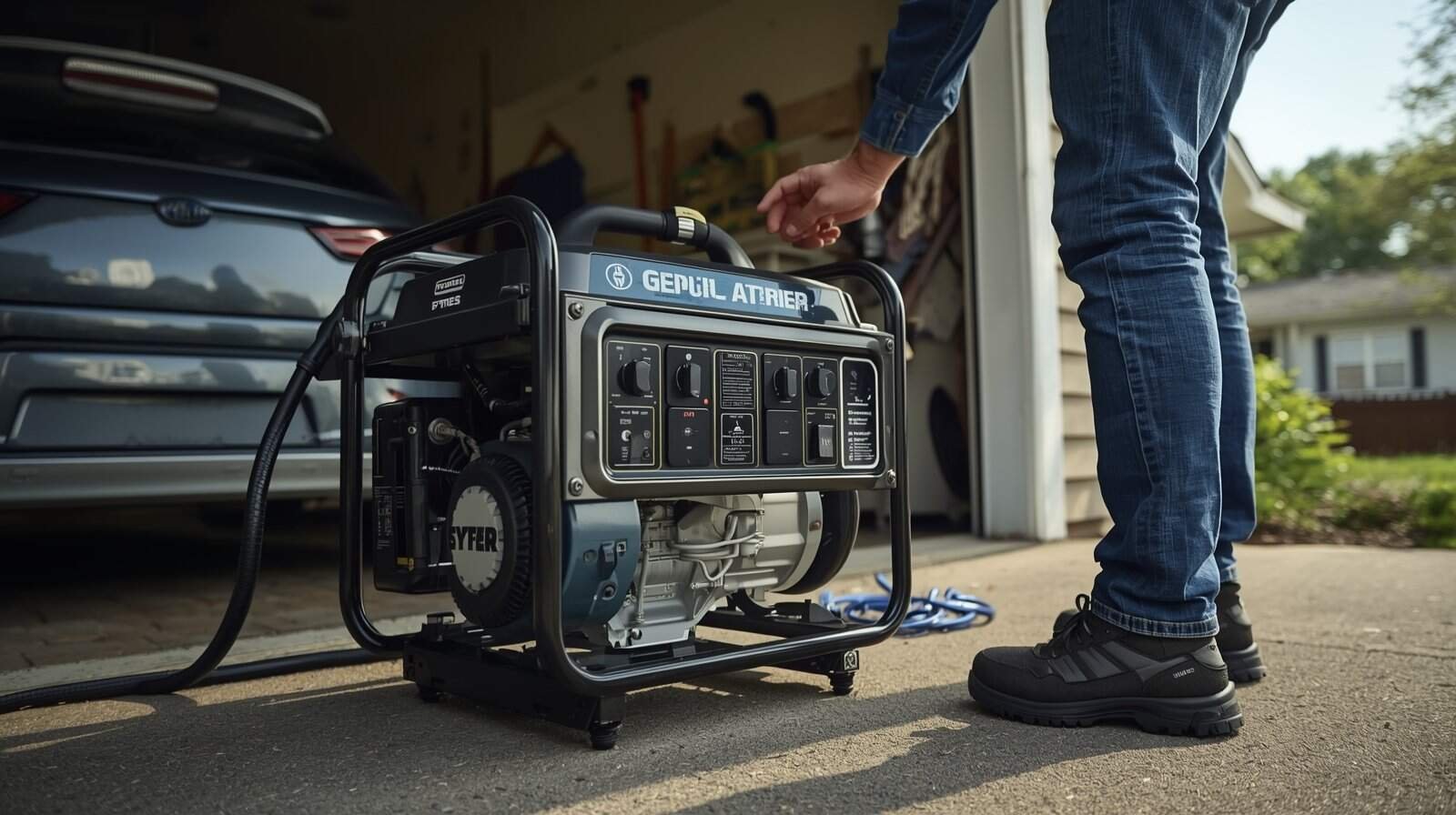
When a generator won’t start during a power outage, it can quickly turn a stressful situation into a dangerous one. While some startup issues are simple and safe to check, others signal problems that should not be handled without professional help.
This guide walks through the most common reasons a generator won’t start, the quick checks homeowners can perform safely, and when it’s time to stop troubleshooting.
Before You Begin: Important Safety Notes
Always make sure the generator is outdoors, far from doors, windows, and vents. Never attempt to troubleshoot a generator indoors or in an enclosed space. If you smell strong fuel odors or see visible damage, stop immediately.
Common Reasons a Generator Won’t Start
Empty or stale fuel
Fuel that has been sitting for months can degrade and prevent ignition. Generators stored long-term often fail to start due to old gasoline or contaminated fuel.
Fuel valve or shutoff closed
Many generators have manual fuel valves. If the valve is closed or partially closed, fuel will not reach the engine.
Choke in the wrong position
Starting a cold engine usually requires the choke to be engaged. If the choke is left open, the engine may not start at all.
Low oil safety shutdown
Most modern generators include a low-oil sensor that prevents startup if oil levels are too low. This is a common and often overlooked cause.
Battery or starter issues
Electric-start generators rely on a battery that can lose charge during storage. A dead or weak battery may prevent the generator from turning over.
Quick Checks You Can Do Safely
Verify fuel level and condition
Check that the generator has fuel and that it smells fresh. If the fuel is old, draining and replacing it may be necessary.
Confirm oil level
Use the dipstick to ensure oil is at the proper level. Add oil if needed, using the type recommended by the manufacturer.
Check choke and fuel valve positions
Make sure the choke is set correctly for a cold start and that the fuel valve is fully open.
Inspect spark plug connections
Loose or disconnected spark plug wires can prevent ignition. Do not remove spark plugs unless you are experienced and the engine is cool.
When Not to Continue Troubleshooting
Stop troubleshooting and seek professional service if you notice fuel leaks, electrical damage, repeated backfiring, or if the generator still won’t start after basic checks. Continued attempts can worsen damage or create safety hazards.
If your generator starts briefly but then shuts down, a different set of issues may be involved. Our guide on why a generator keeps shutting off covers common causes and safety checks.
Preventing Future Startup Problems
- Run the generator periodically during the year
- Use fuel stabilizer for long-term storage
- Check oil levels before storage
- Store the generator in a dry, ventilated area
Final Thoughts
A generator that won’t start is often caused by simple maintenance issues, but safety should always come first. Knowing which checks are safe and when to stop can help protect both your equipment and your household during an outage.