


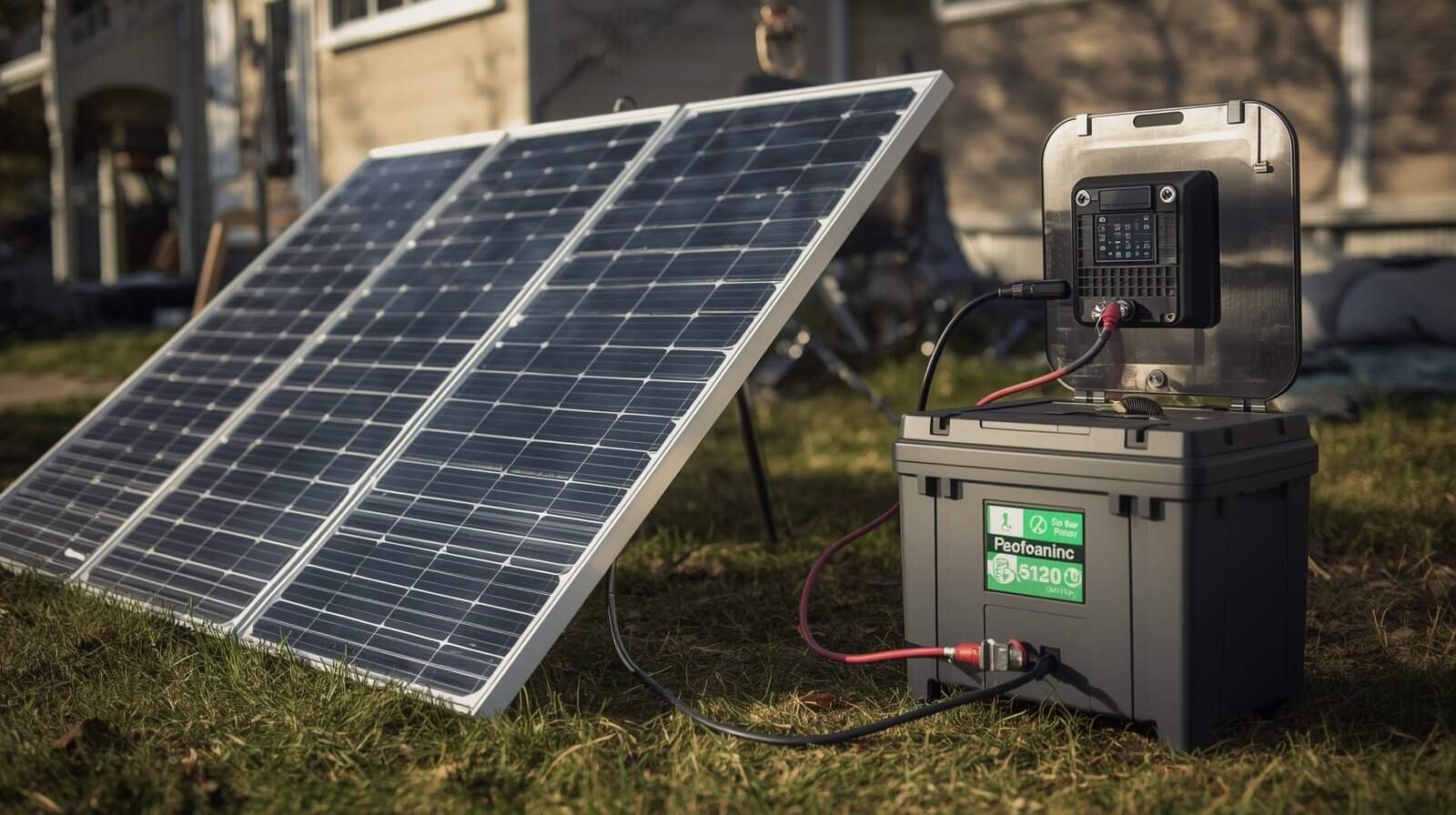
Solar panels offer a convenient way to recharge batteries during power outages and off-grid use, but improper setup can prevent charging entirely. When solar panels fail to charge batteries, the issue is often related to configuration rather than faulty equipment.
Why Solar Panels May Not Charge Batteries
Solar charging systems rely on compatibility between panels, charge controllers, and batteries. A mismatch or incorrect connection can interrupt power flow even under full sunlight.
Incompatible voltage ranges
Solar panels must operate within the voltage range supported by the charge controller or power station. Panels with voltage ratings outside this range will not initiate charging.
Incorrect wiring or polarity
Reversed polarity or loose connections can stop charging or trigger built-in protection systems. Always verify cable orientation and connector integrity.
Charge controller limitations
Built-in charge controllers have maximum input limits. Exceeding these limits may prevent charging or risk damage to internal components.
Insufficient sunlight or shading
Partial shading, low sun angles, or cloud cover can significantly reduce output. Even small obstructions can prevent charging from starting.
Safe Checks You Can Perform
Confirm panel and controller compatibility
Review voltage and current specifications for both panels and the receiving device before connecting them.
Inspect cables and connectors
Damaged cables, adapters, or connectors can block power flow. Replace any components that show wear or corrosion.
Test panels individually
Connecting one panel at a time helps identify whether a single component is causing the issue.
Battery and Power Station Considerations
If batteries are already near full capacity or are protected by temperature limits, charging may pause automatically. Battery health and charge state directly affect solar input behavior.
If your power station will not charge from any source, review our guide on what to do when a power station won’t charge.
Managing Expectations With Solar Charging
Solar panels provide supplemental charging rather than rapid replenishment. Understanding realistic input rates helps prevent frustration and improper system sizing. For related runtime considerations, see our guide on why power stations drain too fast.
When to Consider Alternative Backup Power
During extended outages or low-sun conditions, solar alone may not meet energy demands. Combining solar with other backup options improves resilience. Explore available solutions in our Backup Power Solutions hub.
Conclusion
Most solar charging problems are caused by configuration errors rather than equipment failure. Verifying compatibility, wiring, and environmental conditions restores reliable charging while protecting your system.