


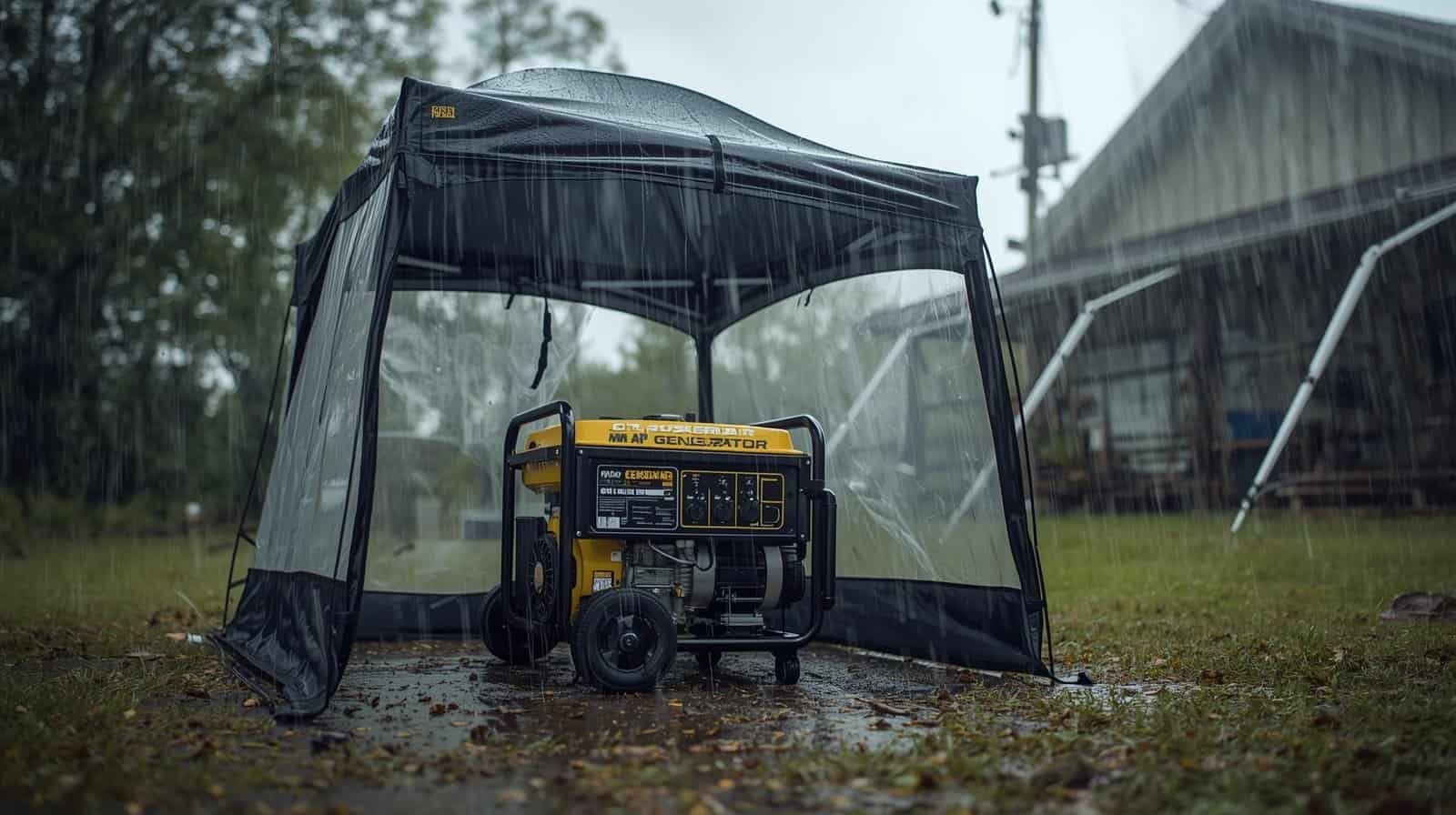
Short answer: Yes, you can run a generator in the rain — but only if it is properly protected from direct water exposure and positioned safely outdoors. Running a generator unprotected in wet conditions can cause electrical shock, equipment damage, and increased carbon monoxide risk if placement is compromised.
Portable generators are designed for outdoor use, but they are not waterproof. Rain can enter outlet panels, extension cord connections, and control components. The key is keeping the unit dry without enclosing it or moving it too close to the house.
Yes, You Can Run a Generator in the Rain — But It Must Stay Dry
Generators must always operate outdoors. However, exposure to direct rainfall increases the risk of electrical shock, outlet shorting, corrosion, and long-term internal damage. Running a generator uncovered in steady rain is unsafe and may void manufacturer warranties.
The correct goal is not moving the generator indoors. The goal is protecting it from precipitation while preserving airflow and safe distance from the home.
Why Rain Creates Electrical and Mechanical Risks
Rainwater can enter outlet panels, control switches, and exposed wiring connections. Even if the generator continues running, moisture intrusion can lead to unstable voltage, short circuits, internal corrosion, or delayed component failure.
Wet ground increases shock risk during setup, refueling, or cord adjustments. Water does not need to flood the unit to create danger. Even light, consistent exposure can introduce long-term electrical damage.
If unstable power behavior develops after storm use, review Generator Power Problems That Damage Electronics.
Safe Weather Protection Methods
The safest way to operate a generator in wet conditions is to use an open-sided shelter or a purpose-built generator cover designed specifically for active operation. These solutions protect against overhead precipitation while allowing full ventilation.
Acceptable protection methods include:
- Open-frame generator tents rated for running operation
- Canopies positioned high enough to allow exhaust to disperse freely
- Covered patios that are fully open on multiple sides (with proper distance maintained)
Improvised solutions that trap heat or exhaust should be avoided. If you are considering equipment-specific options, review Generator Covers and Tents: What’s Safe, What’s Dangerous, and Why.
What You Must Never Do in Rainy Conditions
- Run a generator in a garage — even with the door open
- Operate inside a basement, shed, or enclosed porch
- Cover the generator tightly with plastic or tarps
- Place the unit directly in pooled or standing water
These actions increase the risk of carbon monoxide buildup, overheating, and electrical shock. Rain should never justify moving a generator indoors.
Placement Matters More Than Weather
Generators should remain at least 20 feet from doors, windows, vents, and attached structures. Weather protection should never compromise placement safety.
Proper placement distances are explained in How Far Should a Generator Be From the House?. Distance reduces carbon monoxide intrusion risk — even during wind-driven rain.
Managing Extension Cords in Wet Conditions
Rain increases risk at electrical connection points. Extension cords must be rated for outdoor use, properly grounded, and kept off standing water. Connections should be elevated and shielded from direct rainfall.
Undersized or water-exposed cords can overheat or cause unstable voltage delivery. For detailed sizing and safety guidance, review Generator Extension Cords: What’s Safe and What’s Not.
Wind, Drainage, and Surface Stability
Storm conditions often include wind-driven rain. Secure the generator on a stable, elevated surface to prevent tipping or shifting. Avoid low spots where water may accumulate underneath the unit.
If high winds are expected, ensure the unit cannot move or tilt. Moisture combined with unstable placement increases both electrical and mechanical risk.
Carbon Monoxide Detectors Are Non-Negotiable
Even when the generator is properly placed and protected from rain, carbon monoxide detectors provide critical early warning. Storm pressure systems and shifting airflow patterns can redirect exhaust unpredictably.
Every home using a generator should have working CO detectors on each level and near sleeping areas.
Frequently Asked Questions
Can generators get wet or be exposed to rain?
No. Portable generators are not waterproof. Light moisture may not immediately stop operation, but direct rain exposure can damage electrical components and create shock hazards.
Is it safe to run a portable generator in the rain?
It can be safe only if the generator is protected by an open-sided shelter or manufacturer-approved running cover that keeps rain off electrical components while allowing full airflow.
Can I cover my generator with a tarp while it’s running?
No. Covering a running generator tightly with a tarp or plastic sheet can trap heat and exhaust gases, increasing fire and carbon monoxide risk.
Do inverter generators handle rain better?
Inverter generators are also not waterproof. While some models have more enclosed designs, they still require weather shielding and proper outdoor placement.
What happens if rain gets inside a generator?
Water intrusion can cause short circuits, unstable voltage, corrosion, and long-term mechanical damage. In some cases, internal moisture may not show immediate symptoms but can reduce equipment lifespan.
Conclusion: Dry, Ventilated, and Properly Placed
You can run a generator in the rain — but only when it is shielded from precipitation, placed outdoors at a safe distance, and operated with full awareness of exhaust and electrical risks.
Rain increases danger when it leads to shortcuts. Safe operation requires planning before storm conditions begin — not improvising once the weather turns severe.