


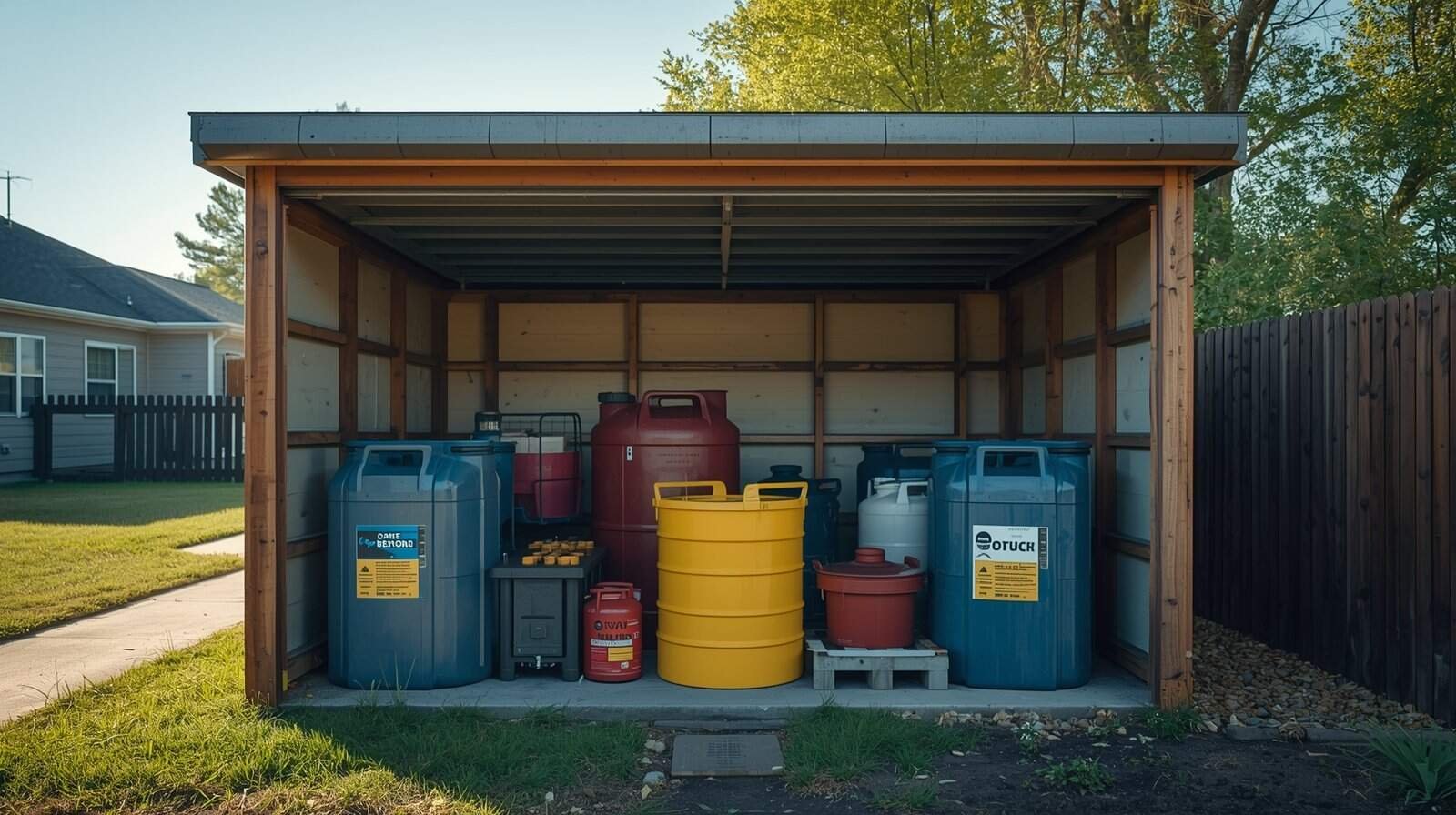
Storing fuel for a generator is one of the most important — and most misunderstood — parts of outage preparedness. While keeping fuel on hand improves readiness, improper storage can increase fire risk, create health hazards, and violate local safety codes.
This guide explains how to store generator fuel safely at home, including approved containers, proper storage locations, and reasonable quantity limits for both gasoline and propane.
Why Safe Fuel Storage Matters
Gasoline and propane are highly flammable energy sources. Vapors from improperly stored fuel can ignite from small sparks, pilot lights, or static discharge.
Many residential fires related to generators occur not during operation, but because of unsafe fuel storage practices.
Gasoline Storage: Containers, Quantity, and Placement
Gasoline must be stored in containers designed to handle vapor pressure and prevent leaks. Only approved fuel containers should be used — never household containers or improvised vessels.
Gasoline should be stored away from living spaces, ignition sources, and direct sunlight. Excessive quantities increase risk without improving safety.
Propane Storage: Tank Size and Ventilation
Propane is stored under pressure in sealed tanks. Unlike gasoline, propane does not degrade over time, but storage safety depends on tank size, placement, and ventilation.
Propane tanks should generally be stored outdoors or in well-ventilated areas according to manufacturer and local safety guidelines.
Where Fuel Should — and Should Not — Be Stored
Fuel should never be stored inside living spaces, near open flames, or next to electrical equipment. Basements, utility rooms, and attached garages pose higher risks if ventilation is inadequate.
Outdoor storage areas should be shaded, secure, and protected from physical damage.
Understanding Quantity Limits and Local Regulations
Many local fire codes limit how much fuel can be stored in residential settings. These limits vary based on fuel type, container size, and storage location.
Homeowners should review local regulations and fire department guidance before storing larger quantities of fuel.
Fuel Storage and Refueling Safety
Proper storage supports safer refueling practices by reducing spills, rushed handling, and vapor exposure. Review refueling a generator safely for best practices during outages.
Fuel Storage as Part of Generator Planning
Fuel storage works best when combined with realistic runtime planning and fuel selection. For a broader comparison, see generator fuel types compared.
Conclusion
Storing generator fuel safely requires balancing preparedness with risk management. Using approved containers, limiting quantities, choosing appropriate storage locations, and following local safety guidelines helps protect your home while maintaining reliable backup power.