


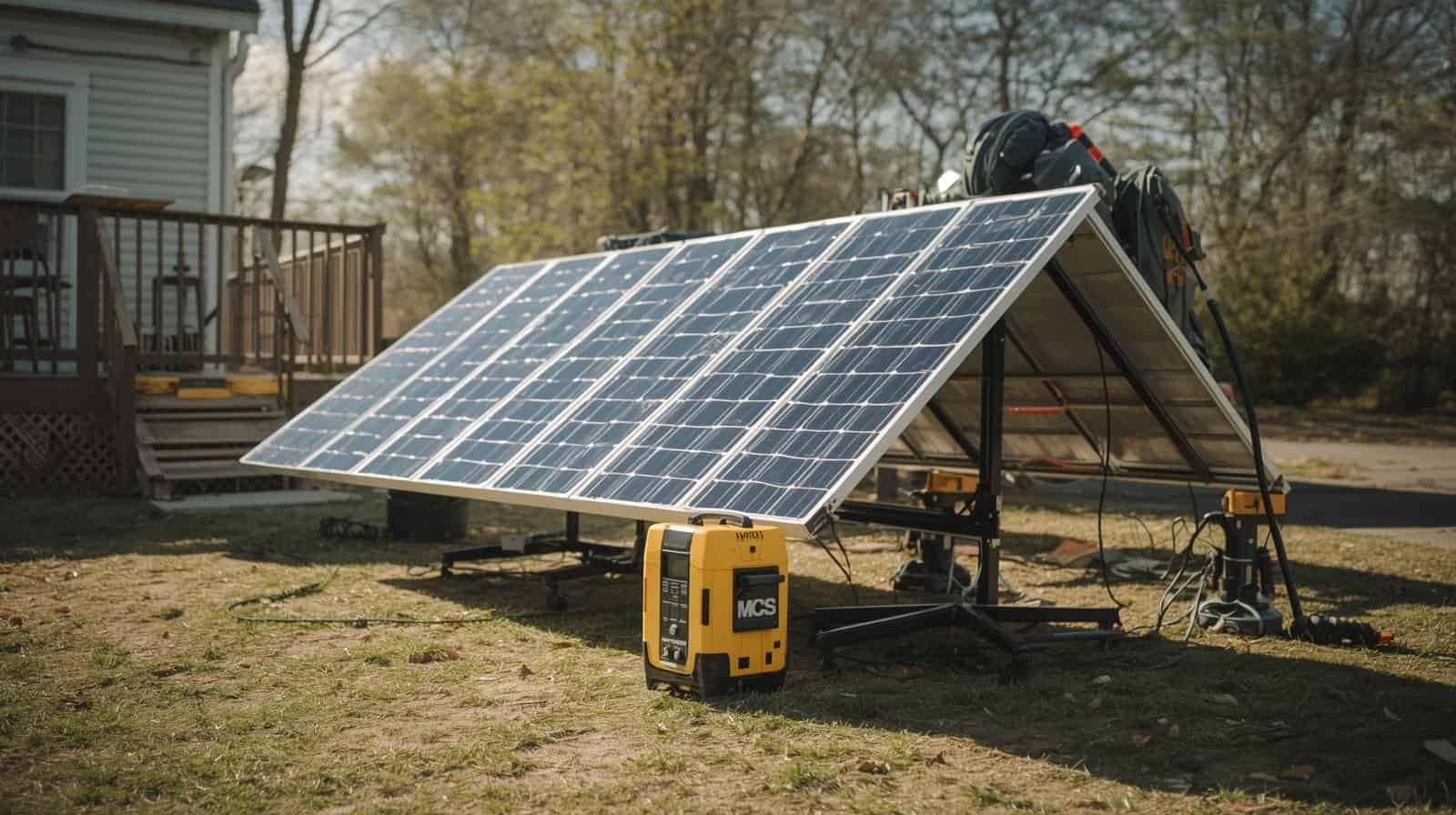
The terms solar generator and power station are often used interchangeably, which leads to confusion for homeowners planning backup power. While they are closely related, the terminology matters when setting expectations for capacity, recharging, and real-world use.
Understanding the difference helps you choose the right solution for outages, travel, or emergency preparedness—without overpaying or underestimating limitations.
Why the Terminology Is Confusing
Manufacturers and retailers often use marketing language rather than technical definitions. Some products labeled as “solar generators” do not include solar panels, while others labeled “power stations” are fully solar-capable.
In practice, both terms describe battery-based portable power systems, but the emphasis differs.
What Is a Power Station?
A power station is a portable battery system with built-in inverters and multiple output ports. It stores electricity and delivers it on demand to power devices such as lights, phones, medical equipment, and small appliances.
Key characteristics of power stations
- Internal rechargeable battery
- AC and DC output ports
- Rechargeable from wall outlets or vehicles
By itself, a power station does not generate electricity—it only stores and delivers it.
What Is a Solar Generator?
A solar generator is typically a power station paired with solar panels for recharging. The term emphasizes the ability to replenish energy using sunlight rather than relying solely on grid power.
Key characteristics of solar generators
- Battery-based power station
- Compatible solar input for recharging
- Designed for extended off-grid use
In most cases, the underlying hardware is the same—the difference lies in how the system is recharged.
The Practical Difference That Actually Matters
From a homeowner’s perspective, the most important distinction is not the name, but how long the system can operate and how quickly it can be recharged.
Recharging flexibility
Power stations rely primarily on grid or vehicle charging. Solar generators add the ability to recharge during daylight, which can extend usefulness during multi-day outages.
Runtime expectations
Both systems are limited by battery capacity and connected load. Understanding realistic runtime is critical. See how long a generator can run safely for planning context.
Capacity and output limits
Battery-based systems are best suited for essential electronics and light appliances. High-demand loads such as electric heaters or large air conditioners are typically beyond their capabilities.
Solar Generator vs Fuel Generator
Solar generators differ fundamentally from fuel-powered generators. They operate silently, produce no exhaust, and are safe for indoor use—but they trade power output and runtime flexibility for those benefits.
Choosing the right system requires understanding your actual power needs. See what size generator you need to compare options realistically.
Which One Is Right for You?
If you need quiet, indoor-safe power for essentials and value renewable recharging, a solar generator or power station may be ideal. If you need sustained high output or whole-home coverage, fuel generators remain more practical.
Conclusion
The difference between a solar generator and a power station is largely about recharging capability, not core functionality. Understanding how each system works helps you choose backup power that matches your expectations and outage planning needs.