


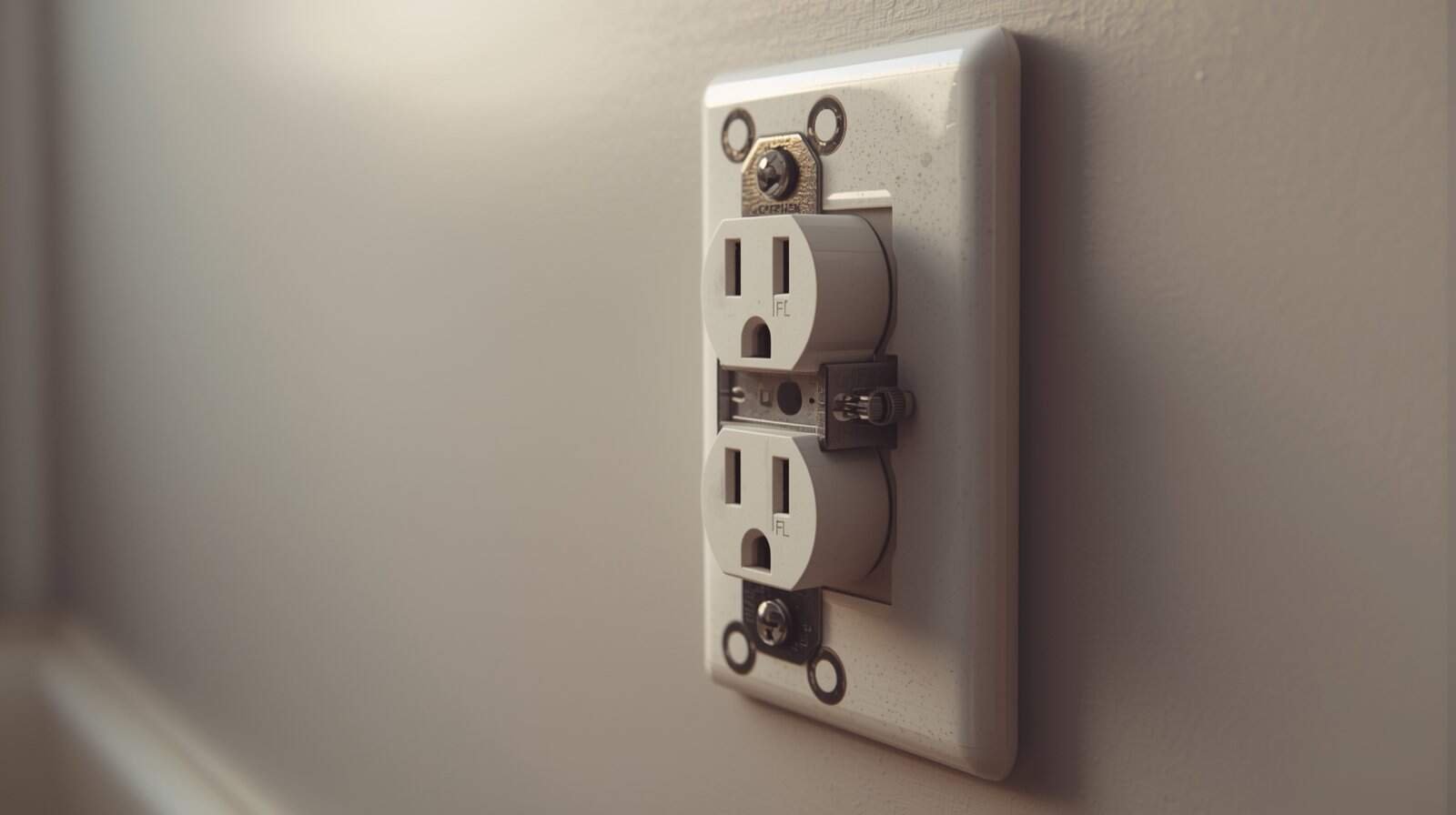
A GFCI outlet that won’t reset can be frustrating—especially right after a power outage, a storm, or a “weird power” moment where lights flicker and something trips. But in most cases, a GFCI that refuses to reset isn’t being stubborn. It’s doing exactly what it was designed to do: prevent a shock hazard when it senses conditions that don’t look safe.
The key is treating a no-reset GFCI like a safety signal, not a nuisance. A few calm, low-risk checks can tell you whether this is likely a simple downstream device issue or a bigger wiring/moisture problem that needs a professional.
What a GFCI Outlet Does
A Ground-Fault Circuit Interrupter (GFCI) protects people from electric shock. It constantly compares the current going out on the hot wire to the current returning on the neutral. If it detects an imbalance (even a small one), it trips quickly—because that imbalance can mean electricity is leaking through an unintended path, including through a person.
This is why GFCIs are common in kitchens, bathrooms, garages, basements, laundry areas, and outdoors—places where water, dampness, or grounded surfaces increase shock risk.
Common Reasons a GFCI Won’t Reset
Downstream Fault
Many GFCI receptacles protect more than just the two plug slots you see on the face. They often feed additional outlets “downstream” on the same circuit. If anything downstream is leaking current (a wet receptacle, a damaged cord, a failing device), the GFCI may refuse to reset because it still detects an unsafe condition.
A very common real-world example: the bathroom GFCI won’t reset, but the actual problem is a damp exterior outlet on the same circuit, or a garage receptacle with moisture intrusion.
Moisture Intrusion
Moisture is one of the most common causes of repeated tripping or refusal to reset—especially after storms, snow melt, heavy humidity, or outdoor use. Water doesn’t need to be “pouring” into a box to cause trouble. A small amount of dampness, condensation, or wet debris around a receptacle can create just enough leakage to trigger the GFCI.
If the outlet is outdoors (or the circuit includes an outdoor outlet), treat moisture as the default assumption until proven otherwise. This is also why “it worked yesterday” isn’t very reassuring after weather changes.
Wiring Issues or Device Failure
Sometimes the problem is the GFCI itself (they do wear out), but wiring issues are also common—especially if the outlet has been in service for many years or has seen repeated tripping events. Loose connections, incorrect line/load wiring from an old install, or heat damage from overload events can all create conditions where a GFCI won’t reset reliably.
If the reset button feels “mushy,” won’t click, or the outlet has been frequently tripping for months, it’s reasonable to suspect the device is at end-of-life—but it’s still important not to assume that’s the only issue.
Safe Checks You Can Perform
These checks are intentionally limited to low-risk, homeowner-safe actions—no disassembly, no probing, no opening boxes.
- Unplug devices on the circuit: Unplug anything you know is connected to that GFCI-protected circuit (bathroom appliances, garage chargers, basement dehumidifiers, outdoor lights, etc.). A failing device can prevent reset even if it “looks fine.”
- Press reset once, firmly: GFCIs typically require a decisive press. If it resets, plug devices back in one at a time to see if a specific item triggers the trip.
- Check other outlets the GFCI might protect: If you have an outdoor outlet, garage outlet, basement outlet, or another bathroom on the same circuit, look for signs of dampness, debris, or a partially inserted plug. You’re not fixing anything here—just spotting obvious conditions that explain why the GFCI is refusing to energize.
If the GFCI resets with everything unplugged but trips again immediately when a specific device is connected, that’s useful information. It often points to a device or cord issue rather than a hidden wiring fault.
What Not to Do
When a GFCI won’t reset, it’s tempting to “force it” or try creative workarounds. This is where people get into trouble—because the outlet is telling you it sees leakage current.
- Do not repeatedly force the reset button: If it won’t reset after a careful attempt, repeated pushing doesn’t solve the underlying condition and can distract you from a real hazard.
- Do not bypass GFCI protection: Extension-cord workarounds, adapters, or switching to a non-GFCI outlet can remove the very safety layer that’s trying to protect you.
- Do not open outlet boxes or wiring: If you feel you need to remove covers or inspect wiring, that’s the handoff point to a licensed electrician.
How to Interpret What You’re Seeing
A few patterns tend to repeat with no-reset GFCIs:
- Won’t reset even with everything unplugged: More consistent with moisture, wiring issues, or a failed device.
- Resets with nothing plugged in, trips when a device is connected: More consistent with a device/cord problem or a downstream outlet issue.
- Works sometimes, fails after rain or high humidity: Strongly suggests moisture intrusion somewhere on the protected run.
This doesn’t diagnose the exact cause—but it helps you decide whether you’re dealing with a likely “single device” issue versus a circuit condition that deserves professional evaluation.
Related Electrical Issues
GFCI problems can show up alongside broader post-outage symptoms—especially when power restoration creates brief surges, moisture issues, or marginal wiring connections. If your situation includes breaker behavior or uneven restoration, these related guides can help you stay oriented: breaker won’t reset and half the house has power.
When to Stop and Call a Professional
Stop troubleshooting and call a licensed electrician if any of these apply:
- You smell burning, see discoloration, or notice warmth around the outlet or cover plate
- The GFCI won’t reset even with everything unplugged (especially after a storm or damp conditions)
- The circuit affects multiple areas (bathroom + garage + outdoor) and you can’t confidently identify where the fault is
- Tripping is persistent or unpredictable (resets sometimes, then fails again without a clear trigger)
If you’re unsure where the safe line is, follow the escalation guidance in when to call an electrician after an outage. A no-reset GFCI is one of those situations where “playing with it” can turn a manageable problem into a serious risk.
Conclusion
A GFCI outlet that won’t reset is usually protecting you from a condition that could cause shock—often downstream leakage, moisture intrusion, or a wiring/device fault. A few careful, low-risk checks can narrow the situation, but the moment things feel uncertain (or any heat/odor is present), it’s time to stop and bring in a pro.
For a quick “what does this mean?” overview, use our post-outage breaker and GFCI decision guide to match your symptom to the safest next step.