


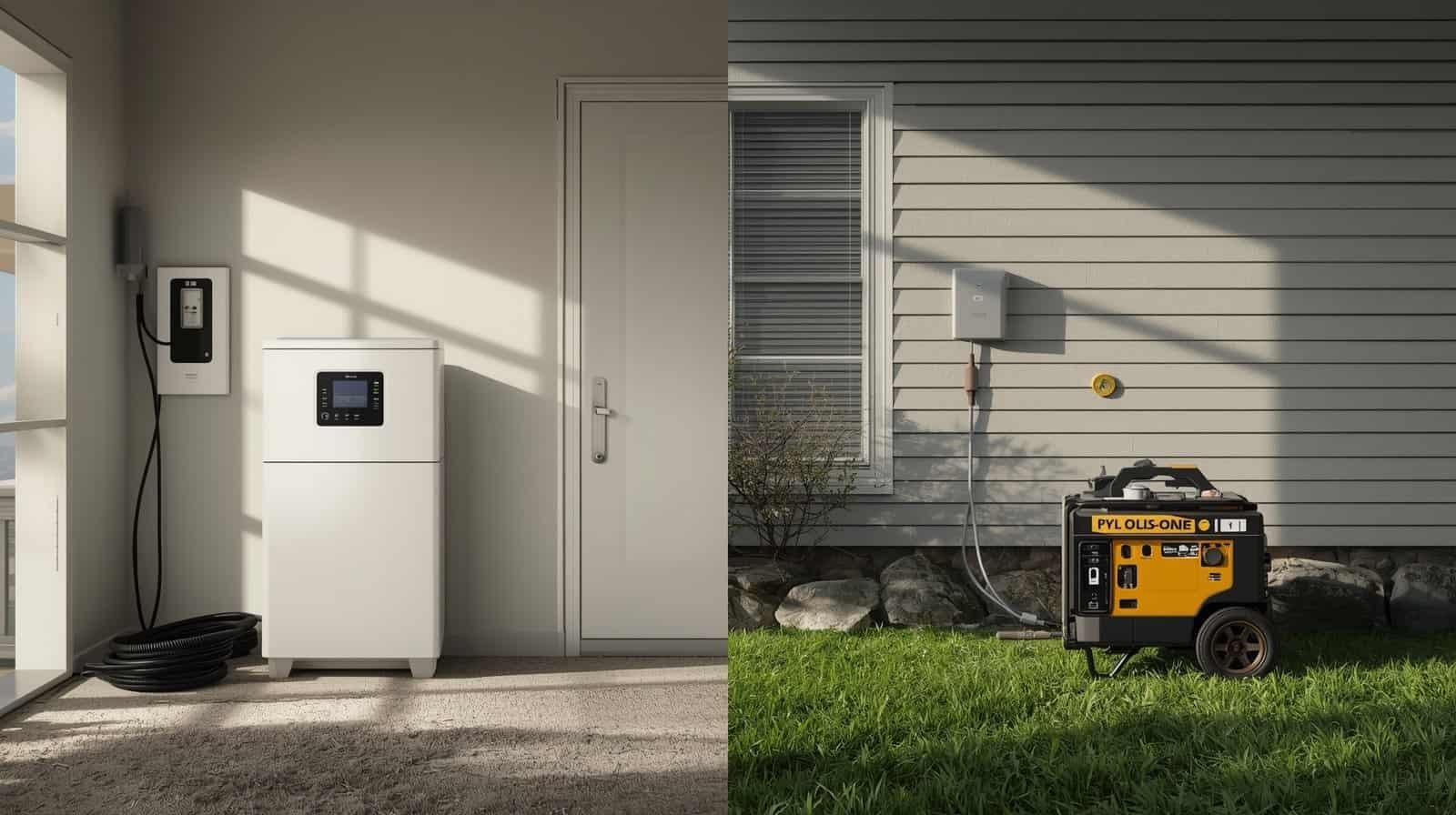
When homeowners start planning for power outages, one of the most common questions is whether an inverter-based backup system or a traditional generator makes more sense. While both provide electricity during outages, they solve very different problems and are designed for different priorities.
Understanding how each option works in real-world outage conditions helps avoid overspending, under-preparing, or choosing a system that creates new risks instead of reducing them.
What Is an Inverter-Based Backup System?
An inverter-based backup system uses stored battery energy and converts it into household AC power. These systems are often paired with battery banks and are designed to deliver clean, stable electricity suitable for sensitive electronics.
Because they do not rely on combustion, inverter systems operate quietly and without emissions. This makes them well suited for indoor use, apartments, and situations where noise or exhaust would be a concern.
What Is a Generator?
A generator produces electricity by burning fuel such as gasoline, propane, or natural gas. These systems are commonly used for extended outages where higher power output is required.
Generators are capable of running larger loads for longer periods, but they require outdoor placement, regular maintenance, and strict attention to safety due to exhaust and carbon monoxide risks.
Power Capacity and Runtime Differences
One of the biggest differences between inverter systems and generators is how much power they can supply and for how long. Generators typically provide higher continuous output, making them suitable for multiple large appliances.
Inverter systems are limited by battery capacity. While they excel at powering essential devices and electronics, runtime planning is critical to avoid unexpected shutdowns during longer outages.
Noise, Emissions, and Placement Considerations
Inverter systems operate quietly and can be used indoors without ventilation concerns. This makes them appealing for overnight use or densely populated areas.
Generators generate both noise and exhaust, which restricts where and when they can be used. Improper placement significantly increases safety risks, particularly during extended outages.
Cost, Fuel, and Maintenance Tradeoffs
Inverter systems often involve higher upfront battery costs but minimal ongoing maintenance. Generators may have lower initial costs for basic models, but fuel storage, refueling logistics, and maintenance add complexity.
Fuel planning and generator sizing are discussed in how much fuel a generator uses and what size generator you need.
Safety and Reliability in Real Outages
Both systems can be reliable when used correctly, but their risk profiles differ. Inverter systems reduce risks associated with exhaust and fuel handling, while generators introduce additional safety considerations that must be managed carefully.
Reliability depends not only on the equipment, but also on planning, load management, and user familiarity.
Medical and Critical Load Considerations
Homes that rely on medical devices or essential electronics often prioritize clean, stable power and predictable runtime. Battery-based inverter systems are commonly used for these needs. See backup power for medical devices for related planning guidance.
Which Option Makes Sense for Most Homes?
For many households, the decision is not strictly one or the other. A layered approach that uses inverter systems for sensitive or overnight loads and generators for higher-demand or longer outages often provides the best balance.
Broader planning considerations are outlined in whole-home backup vs portable backup.
Conclusion
Inverter systems and generators serve different roles in outage preparedness. Choosing the right option depends on outage duration, load requirements, safety considerations, and how much involvement homeowners want during an outage.