


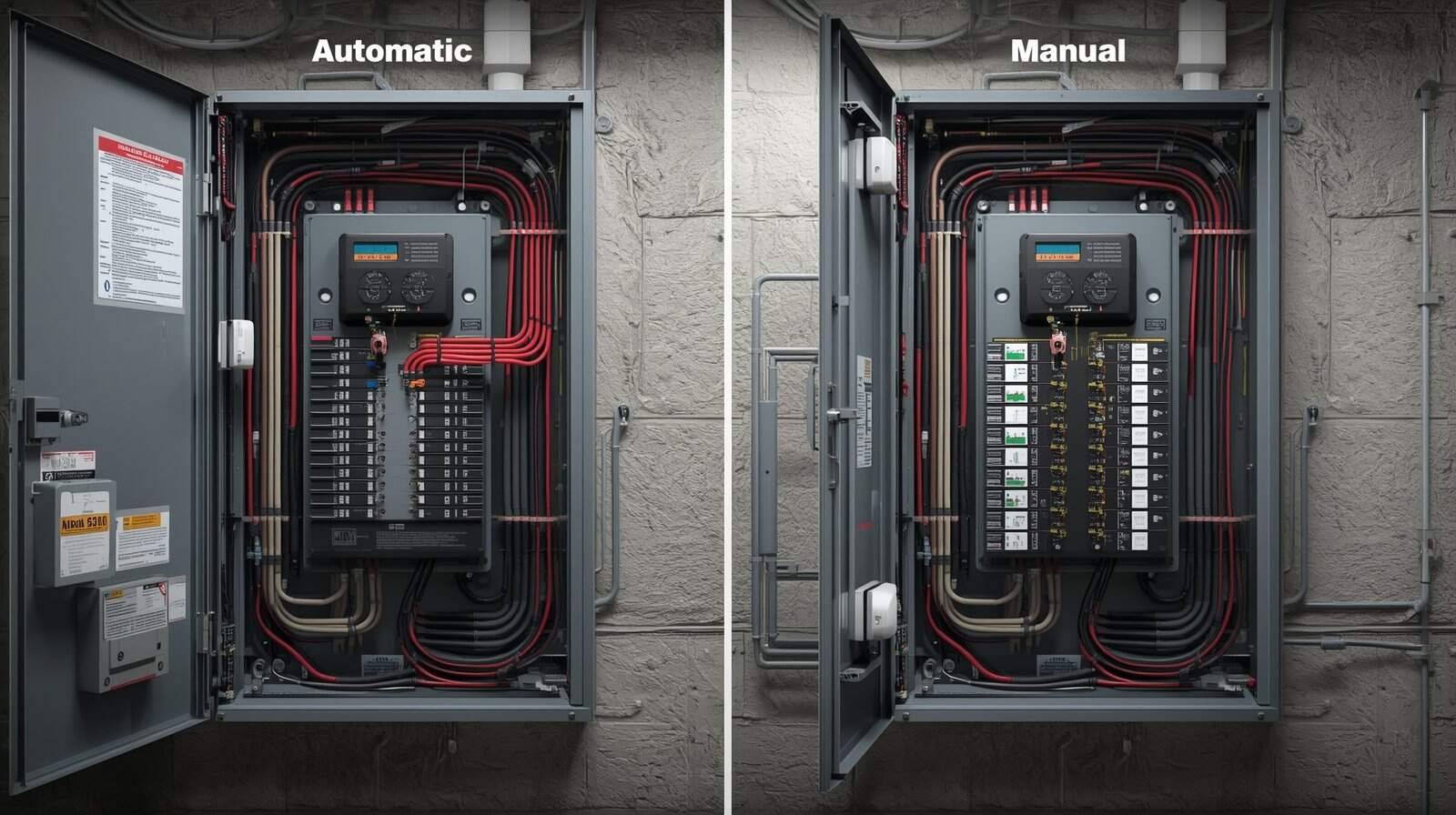
After choosing a generator for backup power, homeowners often face another important decision: whether to use an automatic transfer switch or a manual transfer switch. While both devices safely isolate your home from the utility grid during an outage, they differ significantly in how they operate and what level of involvement they require.
This guide explains the differences in plain language, focusing on real-world use rather than technical specifications.
What an Automatic Transfer Switch Does
An automatic transfer switch (ATS) detects a power outage and automatically shifts your home’s electrical load from the utility grid to the generator. When utility power returns, the switch reverses the process without homeowner involvement.
Automatic systems are commonly paired with standby generators and are designed to provide seamless backup power with minimal disruption.
What a Manual Transfer Switch Does
A manual transfer switch requires the homeowner to physically operate the switch during an outage. Once the generator is running, the user manually transfers selected circuits to generator power.
This approach provides control and simplicity, but it depends on someone being present and comfortable performing the transfer.
Reliability During Unattended Outages
Automatic transfer switches are particularly valuable when outages occur while no one is home. Critical systems such as sump pumps, refrigeration, or heating can receive power without delay.
Manual systems cannot respond without human intervention, which may be a limitation for some households.
Practical next step: If a generator is running but the house still has no power, this flowchart helps you verify the safe transfer setup and where the connection path often fails: Generator Runs but House Has No Power — Safety Setup Flowchart.
Installation and System Complexity
Automatic transfer switches are more complex and typically require professional installation. They are integrated with both the generator and the home’s main electrical service.
Manual transfer switches are generally simpler and may be easier to retrofit into existing electrical systems.
Cost and Maintenance Considerations
Automatic systems usually involve higher upfront costs due to equipment and installation. Manual systems are more affordable but require active participation during outages.
Choosing between them often comes down to budget and tolerance for manual operation.
Safety Considerations
Both types of transfer switches are designed to prevent dangerous backfeeding. However, generator safety extends beyond switching equipment. Outdoor placement and exhaust management remain critical. Carbon monoxide risks are discussed in generator safety resources.
It’s important to remember that transfer switches only manage electrical flow. Carbon monoxide risks remain regardless of switching method. See generator carbon monoxide safety for critical guidance on safe generator placement and operation.
How This Fits into Backup Planning
Transfer switch choice should align with your broader backup strategy. See transfer switch vs interlock kit, whole-home backup vs portable backup, and inverter vs generator for home backup for related planning guidance.
Which Option Is Right for Your Home?
Homes seeking convenience and uninterrupted operation often favor automatic transfer switches. Households prioritizing affordability and hands-on control may prefer manual systems.
Conclusion
Automatic and manual transfer switches both provide safe generator integration when properly installed. Understanding how each works helps homeowners choose a solution that matches their outage risks and comfort level.