


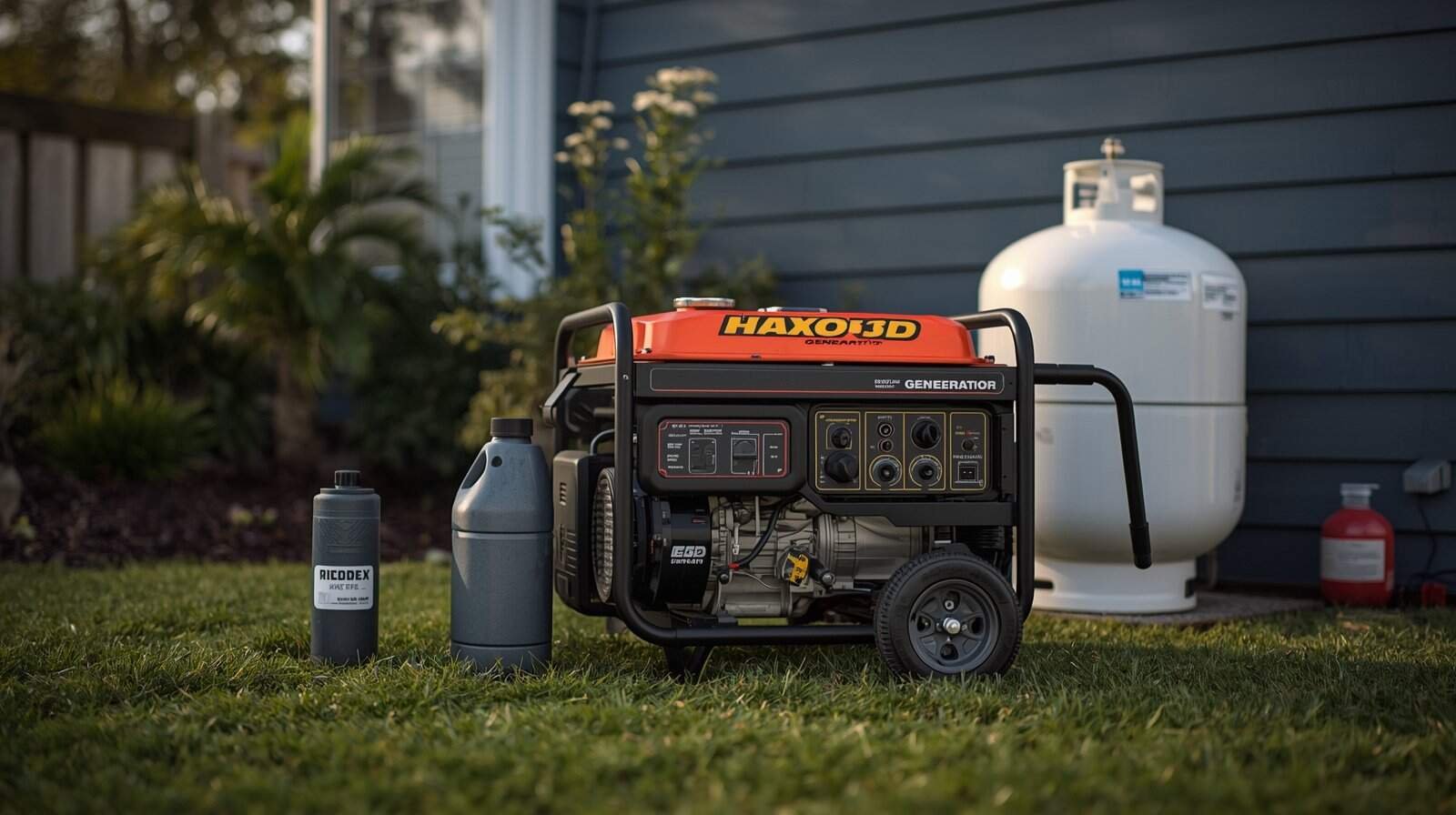
Gasoline, propane, and dual-fuel generators can all provide dependable backup power, but they create very different outage plans. Gasoline is easy to find and usually gives a portable generator its highest rated output, but it requires careful rotation and storage. Propane stores without the same fuel-aging problems as gasoline, but cylinder size, cold-weather performance, and refill access matter. Dual-fuel generators add flexibility by letting you choose between the two fuels, but they do not eliminate the tradeoffs of either one.
For most homeowners, the best fuel type is not simply the one with the longest advertised runtime. It is the one you can store safely, obtain during a regional outage, operate comfortably, and maintain over time. The generator model also matters because output, fuel consumption, tank connections, starting procedure, and maintenance requirements vary.
Gasoline vs Propane vs Dual-Fuel: Quick Comparison
| Factor | Gasoline | Propane | Dual-Fuel |
|---|---|---|---|
| Fuel availability | Widely available in normal conditions | Depends on cylinders, refill stations, or delivery | Can use whichever fuel is available |
| Long-term storage | Requires rotation and fuel-management plan | Fuel itself does not degrade like gasoline | Propane provides a long-storage option; gasoline still needs management |
| Generator output | Often the highest rated output on a dual-fuel model | Often somewhat lower output on the same machine | Output depends on selected fuel |
| Refueling | Engine must be shut down and cooled before adding fuel | Cylinder changes require correct valves, hoses, and fittings | Must follow model-specific procedures for each fuel |
| Fuel-system maintenance | Stale gasoline can create carburetor and starting problems | Avoids stale-gasoline varnish problems | Gasoline side still requires gasoline maintenance |
| Outage flexibility | One fuel source | One fuel source | Best flexibility if one fuel becomes difficult to obtain |
No row makes one fuel universally “best.” A homeowner who already stores propane for other equipment may reach a different decision than someone who can safely rotate gasoline through lawn equipment or vehicles.
Why Fuel Type Changes the Entire Outage Plan
Fuel choice affects much more than the engine. It changes how much energy you can keep on hand, where that fuel can be stored, how often the generator must be refueled, how much output the generator can provide, and what happens if local fuel supplies become disrupted.
During a short outage, almost any practical fuel arrangement may work. During a multi-day regional outage, logistics become much more important. Gas stations may have long lines or no power. Propane cylinder exchanges may sell out. Roads may be blocked. A fuel choice that works well on a normal Saturday can become inconvenient during a widespread storm.
That is why fuel planning should be done before buying the generator—not after the first long outage.
Gasoline Generators: Familiar, Powerful, and Easy to Refill
Gasoline-powered portable generators are common, which makes them easy to understand, service, and fuel under normal conditions. Gasoline is available at thousands of service stations, and many homeowners already use approved gasoline containers for lawn equipment or other small engines.
On dual-fuel generators, the gasoline rating is also commonly higher than the propane rating. The exact difference varies by model, but homeowners should compare both the running-watt and starting-watt specifications for each fuel before assuming the generator has the same capacity either way.
Gasoline makes sense when:
- You want the generator’s highest available output
- You can safely store and rotate fuel
- You expect relatively short outages
- Local gasoline availability is usually good
- You are comfortable managing carbureted small-engine fuel systems
The Main Gasoline Tradeoff Is Storage
Gasoline does not remain unchanged indefinitely. Over time it can lose volatility and contribute to deposits that make carbureted engines harder to start or run correctly. Ethanol-blended gasoline can also create moisture and storage concerns in small-engine fuel systems.
The generator manufacturer may recommend fuel stabilizer, draining the system, running the carburetor dry, using fresh fuel within a certain period, or another model-specific procedure. Follow the owner’s manual rather than relying on one universal storage interval.
For reserve-fuel handling, use How to Store Generator Fuel Safely at Home. Gasoline should be kept in approved containers and stored away from living areas and ignition sources.
Gasoline Availability Can Change During a Widespread Outage
“Gasoline is everywhere” is true until a regional outage affects fuel stations too. Pumps need electricity, deliveries may be delayed, and demand can rise sharply before or after major storms.
A gasoline generator therefore works best with a realistic reserve-fuel plan rather than the assumption that you can always drive out and refill several cans during the outage.
The amount of gasoline you need depends on generator size, load, tank capacity, and how many hours per day you plan to run it. Review How Much Fuel Does a Generator Use? before deciding how much fuel is practical to keep available.
Propane Generators: Strong Long-Term Fuel Storage Advantages
Propane’s biggest preparedness advantage is that the fuel does not degrade in storage the way gasoline does. A properly maintained propane supply can therefore be easier to keep ready between outage seasons.
That does not mean propane storage is effortless. Cylinders and tanks still require correct placement, valve protection, inspection, and safe handling. Spare cylinders should be stored outside and away from ignition sources and heat-producing equipment, following cylinder instructions and applicable local requirements.
Propane can be a strong choice when:
- You want fuel that can remain stored without gasoline-style rotation
- You already maintain propane cylinders or a larger propane supply
- You prefer to avoid stale-gasoline carburetor problems
- You can safely store the required cylinder capacity
- You are comfortable managing hoses, regulators, valves, and cylinder changes
Propane Does Not Make a Generator Safe to Run Indoors
One dangerous misconception is that propane is “clean enough” to make a portable generator safe in a garage, shed, basement, or other enclosed area. It is not.
Propane-fueled engines still produce carbon monoxide. Portable generators must be operated outdoors according to the manufacturer’s instructions and current carbon-monoxide safety guidance.
Propane Output Is Often Lower Than Gasoline Output
On many dual-fuel generators, the manufacturer publishes lower running and starting watt ratings for propane than for gasoline. The difference may be modest, but it can matter if the generator is already close to its limit with a well pump, sump pump, refrigerator, furnace blower, or other motor load.
Always size the generator using the rating for the fuel you actually plan to use. Do not buy a dual-fuel generator based on its gasoline wattage and assume the same capacity will be available on propane.
Propane Runtime Depends Heavily on Cylinder Size and Load
A small portable cylinder is convenient, but it may not provide the runtime people imagine from the generator’s marketing examples. Runtime depends on generator load, ambient temperature, cylinder size, regulator behavior, and the generator’s fuel consumption.
Larger stationary propane tanks can support much longer outage operation, but that changes the installation and fuel-delivery plan. A homeowner with a 20-pound cylinder has a very different backup strategy from a home with a large permanently installed propane tank.
For any fuel, separate the idea of how long one tank lasts from how long the generator itself can be operated safely. See How Long Can a Generator Run Safely? for the operating, maintenance, cooling, and refueling considerations that apply during extended outages.
Cold Weather Can Affect Propane Supply
Propane must vaporize inside the cylinder or tank before the engine can use it. As temperatures fall and fuel is consumed, the rate at which a small cylinder can supply vapor may become a limitation—especially with larger generators under substantial load.
This does not mean propane generators cannot be used in winter. It means cylinder size, fill level, temperature, and generator demand need to be considered together. Follow the generator and propane-system manufacturer’s cold-weather guidance.
Do not try to heat propane cylinders with open flames, space heaters, hot water, or improvised warming methods.
Dual-Fuel Generators: Fuel Flexibility Is the Main Advantage
A dual-fuel generator can operate on gasoline or propane. That flexibility can be valuable during outages because it gives the household two fuel-supply options instead of one.
You might normally keep propane available for long-term readiness, then use gasoline if extra output is needed. Or you might begin an outage with gasoline and switch to propane if gasoline becomes difficult to obtain.
The advantage is not that dual-fuel generators somehow combine both fuels at once. Most portable dual-fuel generators operate on one selected fuel at a time, using the switching procedure specified by the manufacturer.
Dual-Fuel Does Not Eliminate Gasoline Maintenance
If gasoline is ever used in a dual-fuel generator, the gasoline side still needs proper storage and maintenance. Buying dual-fuel equipment does not protect a carburetor from stale gasoline left in the system.
Likewise, the propane side adds hoses, regulators, valves, and fittings that need inspection. Dual-fuel flexibility comes with a slightly more complex operating routine.
That complexity is usually manageable, but homeowners should practice switching fuels and starting the generator before an emergency rather than learning the procedure during a nighttime outage.
Can You Switch Fuels While the Generator Is Running?
Do not assume the generator can switch from gasoline to propane—or back again—while carrying a load. Some models may support specific fuel-switching procedures; others require shutdown or load removal first.
Follow the exact procedure in the owner’s manual. Never improvise by closing valves, disconnecting propane fittings, or adding gasoline while the generator is running.
When gasoline refueling is required, shut the generator down and allow it to cool before adding fuel. Our How to Refuel a Generator Safely During an Outage guide covers the shutdown, cool-down, spill, and fuel-handling sequence.
Fuel Type Changes Maintenance More Than Many Buyers Expect
Fuel choice can influence the type of maintenance problems you are most likely to encounter.
| Fuel | Maintenance issue to plan for |
|---|---|
| Gasoline | Fuel aging, carburetor deposits, fuel rotation, stabilizer/draining procedure |
| Propane | Cylinder condition, regulator and hose inspection, valve and fitting condition |
| Dual-fuel | Both fuel systems need to remain serviceable; gasoline maintenance still applies if gasoline is used |
Engine oil, spark plugs, air filters, batteries, and other generator maintenance still apply regardless of fuel type.
Which Fuel Is Easier to Store at Home?
For long-duration storage, propane has a major convenience advantage because the fuel itself does not become stale like gasoline. But “easier to store” does not mean cylinders can be placed anywhere.
Gasoline requires approved containers, rotation, and careful separation from ignition sources. Propane cylinders must also be stored and handled correctly, generally outside and away from ignition sources and excessive heat.
The practical winner depends on your property. A homeowner with secure outdoor cylinder storage may find propane simple. Someone with limited outdoor storage but an established gasoline-rotation system may prefer gasoline.
Which Fuel Is Better for a 1- to 2-Day Outage?
For a short outage, gasoline’s availability and higher output on many portable models can make it convenient. Fuel-aging problems matter less when the gasoline is fresh and used promptly.
Propane also works well for short outages, particularly if you already keep full cylinders available and your essential loads fit comfortably within the propane wattage rating.
For short events, the difference often comes down to what fuel you already have safely available rather than a major technical advantage.
Which Fuel Is Better for a Multi-Day Outage?
Long outages reward fuel flexibility and pre-planning. Gasoline may provide higher output, but you need enough safe storage or reliable access to more fuel. Propane stores well, but small cylinders can be consumed quickly by a heavily loaded generator.
This is where dual-fuel generators can be especially useful. Having both propane and gasoline available can extend the household’s options if one supply becomes scarce.
However, total fuel inventory matters more than the label on the generator. A dual-fuel generator with one small propane cylinder and no gasoline reserve is not automatically better prepared than a gasoline generator backed by a well-planned fuel supply.
Which Fuel Is Best for Occasional Emergency Use?
For a generator that may sit unused for most of the year, propane is attractive because you do not need to keep cycling gasoline through the generator simply to avoid stale fuel.
A dual-fuel model can offer a practical compromise: use propane for routine testing and emergency readiness, while retaining gasoline as an alternative fuel and potentially higher-output option.
If you choose that strategy, still exercise and maintain the gasoline system according to the manufacturer’s instructions so it remains usable when needed.
Which Fuel Is Best When Maximum Generator Output Matters?
If the generator must start demanding appliances and the model has a higher gasoline wattage rating, gasoline may offer more usable surge and running capacity.
That difference becomes important when loads are close to the generator’s limits. A refrigerator plus sump pump plus well pump may fit on gasoline but create less margin on propane, depending on the generator.
Always compare the manufacturer’s fuel-specific ratings instead of assuming fuel choice affects runtime only.
Do Not Choose Fuel Type Without Considering Refueling Safety
Gasoline requires opening the generator’s fuel tank, pouring liquid fuel, and managing highly flammable vapors. The generator must be shut down and cooled before refueling.
Propane avoids pouring liquid fuel into the generator, but cylinder changes still involve pressurized fuel, valves, seals, hoses, and fittings. A damaged connector or leaking cylinder is not a minor inconvenience.
Dual-fuel owners need to understand both procedures. Whichever fuel you choose, practice the complete shutdown, refueling or cylinder-change, inspection, and restart sequence before an emergency.
A Practical Way to Choose Between Gasoline, Propane, and Dual-Fuel
Ask these questions before deciding:
- What loads must the generator start? Compare those loads with the generator’s ratings on each fuel.
- How long are outages in your area? A one-night plan requires less fuel logistics than a five-day plan.
- Where can fuel be stored safely? Your property may favor one option.
- How will you obtain more fuel during a regional outage?
- Are you willing to rotate gasoline? If not, propane becomes more attractive.
- Do you already use propane? Existing cylinders or a larger tank can simplify the plan.
- Would a second fuel source meaningfully improve resilience? If yes, dual-fuel may justify the added cost.
- Can you operate and maintain both fuel systems confidently?
Common Fuel-Choice Mistakes
- Buying a generator based only on advertised runtime
- Assuming propane provides the same wattage as gasoline
- Assuming gasoline will always be available during a regional outage
- Buying dual-fuel equipment but never practicing the fuel-switching procedure
- Leaving gasoline in a dual-fuel generator indefinitely because propane is the normal fuel
- Assuming propane is safe for indoor generator operation
- Planning around small propane cylinders without estimating actual consumption
- Storing either gasoline or propane in unsafe locations
- Ignoring local fuel-storage requirements
Generator Fuel Type FAQ
Is propane or gasoline better for a portable generator?
Neither is universally better. Gasoline often provides higher generator output and is widely available in normal conditions. Propane stores more conveniently for long periods and avoids stale-gasoline fuel-system problems. The better choice depends on your loads, storage, outage duration, and fuel access.
Does a generator produce less power on propane?
Many dual-fuel generators are rated for somewhat lower running and starting watts on propane than on gasoline. Check the fuel-specific ratings for the exact model.
Does propane go bad in storage?
Propane does not degrade in the same way gasoline does, but cylinders, valves, regulators, and storage conditions still require proper inspection and handling.
Is dual-fuel worth it?
It can be if having two fuel sources improves your outage resilience. The tradeoff is a somewhat more complex fuel system and the need to maintain both gasoline and propane capability.
Can I run a propane generator in a garage?
No. Propane-fueled portable generators still produce deadly carbon monoxide and must be operated outdoors in a safe location according to the manufacturer’s instructions.
Bottom Line
Gasoline, propane, and dual-fuel generators can all provide reliable emergency power, but they solve different preparedness problems. Gasoline offers familiarity, broad normal-time availability, and often the highest generator output. Propane offers excellent long-term fuel readiness without gasoline-style degradation. Dual-fuel combines those options and gives the household more flexibility when an outage disrupts one fuel supply.
Choose based on the fuel you can safely store, the loads you actually need to start, how long your outages may last, and how you would obtain more fuel during a widespread emergency. Then compare the generator’s fuel-specific wattage and consumption ratings—not just the headline generator size—before making the final decision.