


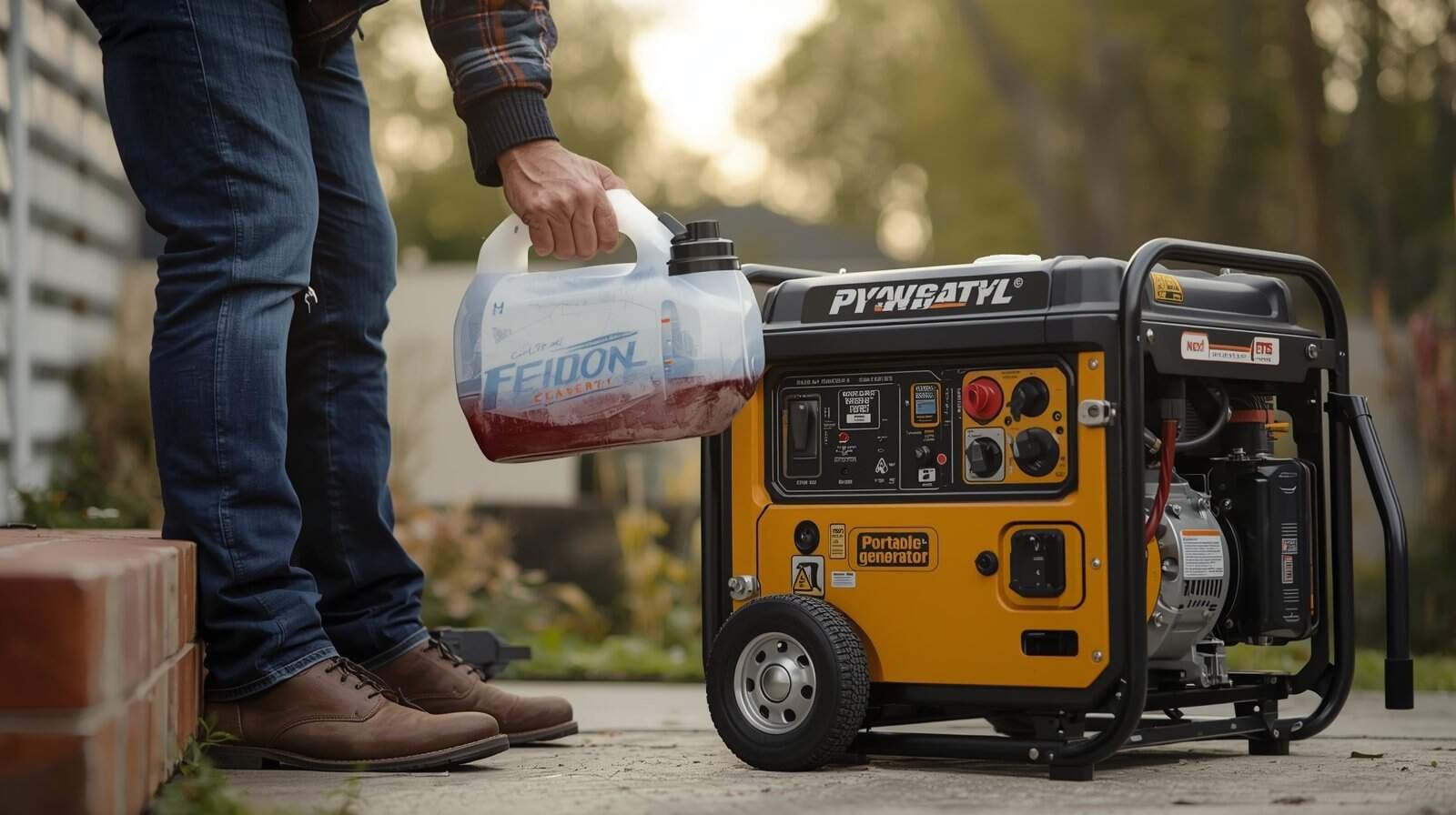
Refueling a portable generator is one of the moments when a routine outage task can become a serious fire hazard. The generator may be hot, gasoline vapors can ignite, lighting may be poor, and people are often trying to restore power quickly. The safest rule is simple: never add fuel while the generator is running or still hot.
Shut the generator down, disconnect or switch off connected loads as directed by the manufacturer, and allow the unit to cool before opening the fuel system. Use an approved fuel container, work outdoors away from flames and sparks, clean up spills before restarting, and follow the generator manual for the exact refueling procedure and cool-down period.
Why Generator Refueling Deserves Extra Caution
A portable generator combines several hazards in one small area: combustible fuel, a hot engine, a hot muffler and exhaust system, electrical equipment, and ignition sources created during normal engine operation. Those conditions are manageable while the generator is being used correctly, but adding fuel introduces another opportunity for gasoline or vapor to reach a hot surface.
Gasoline is especially hazardous because it evaporates readily and its vapors can ignite. A small splash that would be merely inconvenient on a cold piece of equipment can become much more serious around a hot muffler, engine, or spark source.
Refueling is also when homeowners are most tempted to break their normal routine. The lights are out, the refrigerator or sump pump may need power, rain may be approaching, and the generator may be nearly empty. That urgency is exactly why a repeatable shutdown-and-cool-down procedure is useful.
Can You Refuel a Generator While It Is Running?
No. A portable generator should not be refueled while it is running. Shut the engine off and allow it to cool before adding gasoline or otherwise servicing the fuel system.
Do not try to save a few minutes by slowly pouring fuel into a running generator. Do not hold a funnel over the tank while the engine is operating, and do not assume that avoiding the muffler makes the process safe. Fuel can splash, overflow, or release vapors near hot or energized components.
If the generator is supporting an essential load, plan the shutdown instead of eliminating it. Refrigerators, freezers, battery chargers, and many other household loads can tolerate a short planned interruption more safely than the household can tolerate a fuel fire.
How Long Should a Generator Cool Before Refueling?
There is no universal cool-down time that applies to every portable generator. Engine size, enclosure design, load, ambient temperature, fuel system, and manufacturer instructions all affect how quickly components cool.
For that reason, use the cool-down period specified in the generator owner’s manual rather than relying on a generic number such as 15 or 20 minutes. The important requirement is that the generator be shut down and allowed to cool before fuel is added.
If you routinely reach the fuel limit before you expect to, review How Long Can a Generator Run Safely? and build refueling stops into the outage plan before the tank gets critically low.
A Safer Step-by-Step Refueling Routine
Use the generator manufacturer’s instructions as the controlling procedure, but a safe household routine generally looks like this:
- Choose a safe stopping point. Avoid waiting until the generator is sputtering out of fuel while an essential load is running.
- Reduce or disconnect loads as directed. Follow the generator manual for the correct shutdown sequence.
- Turn the generator off. Never add fuel while the engine is running.
- Allow the generator to cool. Follow the manufacturer’s specified cool-down procedure.
- Keep flames, cigarettes, sparks, and other ignition sources away.
- Use an approved fuel container. Do not pour gasoline from an improvised household container.
- Open and fill carefully. Avoid splashing and do not overfill the tank.
- Secure the fuel cap. Make sure it is properly closed before restarting.
- Handle any spill before startup. Do not restart a generator with gasoline on the unit or pooled nearby.
- Move stored fuel away from the operating generator. Keep reserve fuel in its proper storage location rather than beside the machine.
- Restart only when conditions are safe. Then reconnect loads according to the generator instructions.
This sequence may feel slower than topping off a running machine, but it removes the most avoidable refueling hazard: introducing fresh fuel around hot operating equipment.
What to Do If Gasoline Spills During Refueling
Do not immediately restart the generator after a gasoline spill. Keep ignition sources away and follow the generator and fuel-container instructions for safely handling the spill.
If gasoline lands on the generator, give the equipment additional time to cool and dry. If fuel pools on the ground, spreads toward another ignition source, or creates a situation you cannot safely control, keep people away and get appropriate assistance rather than trying to hurry the generator back into service.
Never use an open flame to improve visibility while refueling. During a nighttime outage, use a battery-powered flashlight or lantern positioned so you can clearly see the tank opening, fuel level, and surrounding ground.
Do Not Overfill the Fuel Tank
More fuel is not automatically better. Gasoline can expand as it warms, and portable-generator fuel systems are designed with a specified filling procedure and capacity. Filling beyond the manufacturer’s limit can increase the chance of leakage or overflow.
Use the fuel gauge or filling guidance provided for your model rather than trying to squeeze in enough gasoline for “one more hour.” If the generator repeatedly needs fuel sooner than expected, reduce unnecessary loads or revise the operating schedule instead of overfilling the tank.
Gasoline, Propane, and Dual-Fuel Generators Need Different Handling
Gasoline and propane systems present different fuel-handling issues. Gasoline refueling involves opening the tank and pouring a highly flammable liquid, while propane systems rely on cylinders, valves, hoses, regulators, and fittings that must be used exactly as the manufacturer specifies.
Do not assume a propane-cylinder change can be improvised simply because liquid fuel is not being poured. Shut the generator down and follow the model-specific cylinder-change or fuel-switching procedure. Check connections as directed by the manufacturer and never use a damaged hose, regulator, valve, or cylinder.
Dual-fuel equipment can add another layer of complexity because some models have specific instructions for selecting or changing fuel sources. Review Generator Fuel Types Compared for the practical differences among common generator fuels, but use your generator manual for the actual operating and refueling procedure.
Where Should You Refuel a Portable Generator?
Refuel the generator outdoors in the same safe operating environment required for generator use. Portable generators should not be operated or refueled in a home, garage, basement, shed, or other enclosed or partly enclosed location.
Current U.S. Consumer Product Safety Commission guidance says portable generators should be operated outdoors at least 20 feet from the home, with exhaust directed away from the home and nearby buildings. That placement also helps keep the generator away from doors, windows, and vents where carbon monoxide could enter.
Refueling outdoors does not mean ignoring the surrounding area. Keep the generator away from smoking, grills, fire pits, candles, pilot flames, and other ignition sources. Maintain stable footing and enough light to see what you are doing.
What If It Is Raining When the Generator Needs Fuel?
Rain creates a difficult combination: the generator still needs to remain outdoors, but electrical equipment should not be exposed to unsafe wet conditions. Do not solve that problem by moving the generator into a garage, doorway, porch enclosure, shed, or basement.
Use only a generator shelter or operating cover that is specifically appropriate for the equipment and used according to the manufacturer’s instructions. Do not create an improvised enclosure that traps exhaust or reduces required ventilation.
If conditions are too severe to shut down, cool, and refuel the generator safely, allow the generator to remain off until the task can be performed safely. An inconvenient interruption is preferable to carbon monoxide exposure, electrocution, or a fuel fire.
Store Reserve Fuel Away From the Generator
The fuel waiting for the next refueling stop deserves the same attention as the fuel already in the tank. Keep gasoline and other fuels in containers designed and approved for that fuel, clearly identified, and stored according to local requirements and the container manufacturer’s instructions.
Do not leave gasoline containers beside a hot generator so they are “ready for the next fill.” Keep reserve fuel away from living areas, ignition sources, and fuel-burning appliances.
For a broader storage plan, use How to Store Generator Fuel Safely at Home. Refueling and storage are connected: safer storage makes it easier to retrieve, transport, and use the fuel correctly during a long outage.
Plan Refueling Around Essential Loads
A long outage is easier to manage when refueling is part of the operating plan rather than an emergency interruption. Estimate how long a tank lasts at your normal outage load and identify reasonable shutdown windows.
For example, you may choose to refuel after a refrigerator or freezer has completed a cooling cycle, after battery devices have been charged, or before overnight operation if your generator and household plan allow it. The exact schedule depends on the generator, fuel capacity, load, weather, and manufacturer guidance.
If you are regularly pushing the generator hard enough that refueling becomes rushed or unusually frequent, use a load-rotation strategy instead of adding every appliance at once. The Generator Load Rotation Plan explains how to prioritize major loads without treating the generator as unlimited utility power.
Refueling Mistakes to Avoid
- Adding gasoline while the generator is running.
- Opening the fuel tank immediately after shutdown without following the required cool-down procedure.
- Smoking or using an open flame near the generator or fuel.
- Refueling in a garage, shed, basement, doorway, or other enclosed or partly enclosed area.
- Using an unapproved or damaged fuel container.
- Overfilling the generator tank.
- Restarting immediately after gasoline spills on the generator or ground.
- Leaving reserve fuel beside a hot operating generator.
- Changing propane cylinders or fuel modes without following the manufacturer’s procedure.
- Moving the generator dangerously close to the home because weather makes refueling inconvenient.
When to Stop Refueling and Leave the Generator Off
Do not continue the normal refueling process if you find a fuel leak, damaged fuel line, cracked tank, damaged propane connection, strong unexplained fuel odor, loose fitting, sparking, smoke, or evidence of overheating.
Also stop if you cannot maintain safe generator placement because of flooding, severe weather, damaged surroundings, or another emergency condition. Refueling should never become an excuse to bypass a known equipment problem.
Generator Refueling FAQ
Can I put gas in a generator while it is running?
No. Shut the generator off and let it cool before refueling. Spilled gasoline can ignite on hot engine or exhaust components.
How long should I wait before adding gasoline?
Follow the cool-down period and refueling instructions in the generator owner’s manual. There is no single waiting time that is correct for every portable generator.
Should I let a generator run completely out of fuel before refueling?
Not necessarily. A planned shutdown before the tank is empty can make refueling calmer and more predictable. Follow the manufacturer’s shutdown and refueling instructions rather than waiting for the engine to sputter to a stop.
Can I refuel a generator in a garage if the door is open?
No. Portable generators should remain outdoors, away from the home and openings where carbon monoxide can enter. An open garage door does not make the garage a safe generator location.
What should I do if I spill gasoline on the generator?
Do not restart it immediately. Keep ignition sources away, handle the spill according to the equipment and fuel-container instructions, and allow the area to become safe before the generator is operated again.
Bottom Line
The safest generator refueling procedure is deliberately uneventful: shut the generator down, let it cool, keep flames and sparks away, add the correct fuel carefully from an approved container, avoid overfilling, handle spills before restart, and move reserve fuel back to a safe storage location.
Do not trade safety for a few extra minutes of electricity. A planned cool-down and refueling stop is part of normal generator operation during a long outage, not wasted time. Build those stops into your runtime and load plan so essential equipment can be supported without turning a routine fuel refill into a fire, carbon monoxide, or electrical emergency.