


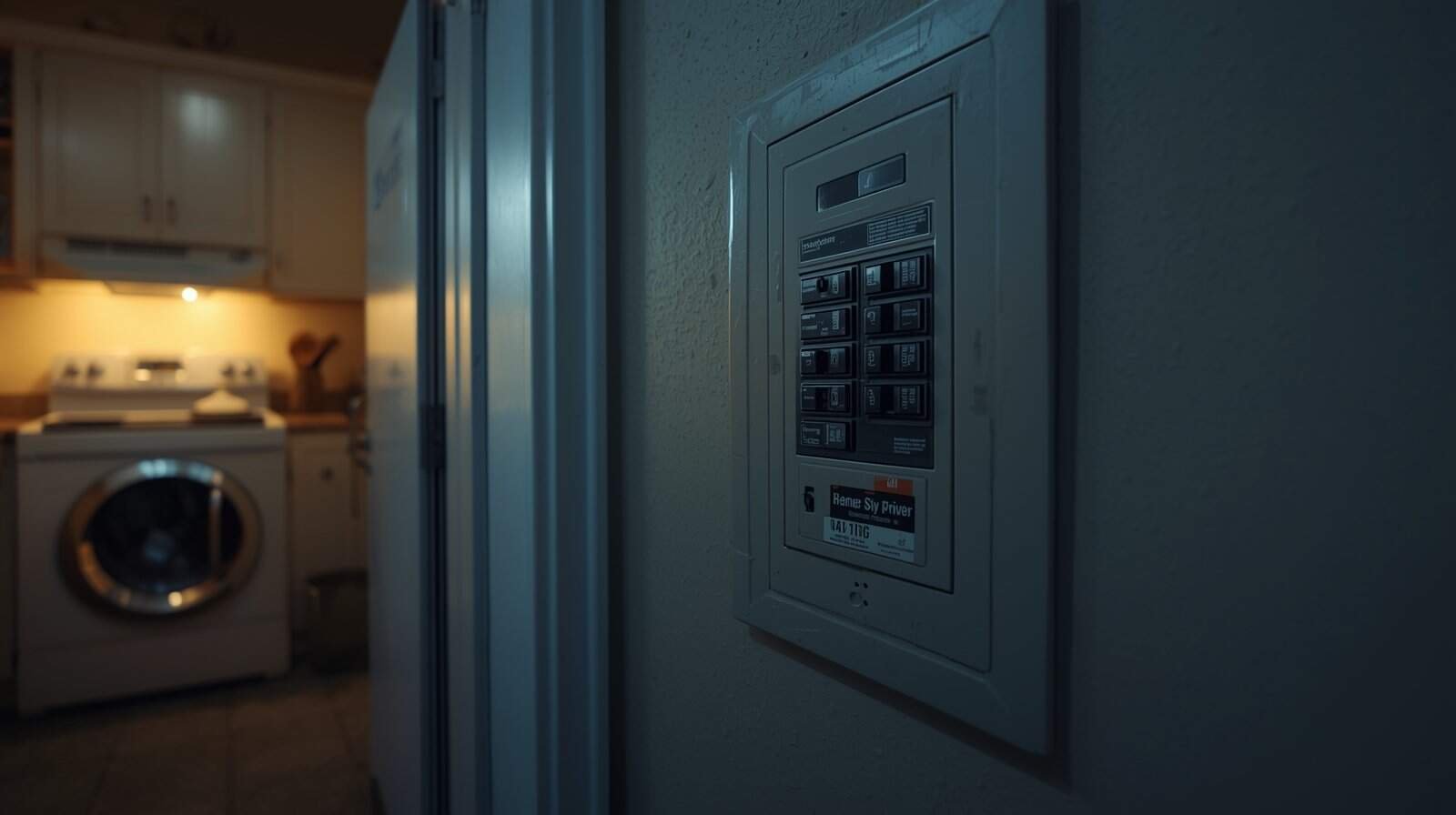
When power is restored after an outage, appliances often attempt to restart all at once. If one or more appliances immediately trip a circuit breaker, it can signal a temporary post‑outage condition—or a deeper electrical or equipment issue.
Understanding why appliances cause breakers to trip after restoration helps homeowners take safe, effective next steps without risking further damage.
Why Appliances Draw More Power After an Outage
Many appliances create a brief but significant inrush of current when they restart. Compressors, motors, and heating elements can exceed normal operating loads during startup.
When several appliances start simultaneously, that combined surge can exceed the circuit’s capacity and trip the breaker.
Common Appliances That Trigger Post‑Outage Trips
Refrigerators, freezers, air conditioners, well pumps, and washing machines are frequent culprits. Devices with motors or compressors are especially prone to high startup loads.
Appliance Damage vs Circuit Limitations
If a breaker trips only when a specific appliance is plugged in, the appliance itself may be damaged by the outage or restoration surge. If multiple appliances cause trips, the issue may be the circuit’s capacity.
Related breaker behavior is covered in breaker trips after power is restored.
Moisture and Environmental Factors
After storms, moisture can enter appliance outlets, cords, or junction boxes. Ground faults caused by moisture may trip breakers when appliances energize.
Safe Steps to Isolate the Cause
Unplug all appliances on the affected circuit and reset the breaker. Plug appliances back in one at a time, waiting several minutes between each. Stop immediately if the breaker trips again.
If appliances remain unresponsive without tripping, guidance in power is back but appliances don’t work may help.
When Not to Keep Resetting
Repeatedly resetting a breaker can overheat wiring and worsen hidden damage. If trips continue after basic isolation, troubleshooting should stop.
When Professional Help Is Required
Persistent trips, burning smells, warm outlets, or buzzing sounds indicate a safety risk. In these cases, professional evaluation is necessary.
Clear escalation guidance is provided in when to call an electrician after an outage.
Conclusion
Appliances that trip breakers after power is restored often reveal post‑outage stress on both equipment and circuits. Identifying the source safely helps prevent further damage and protects the home.