


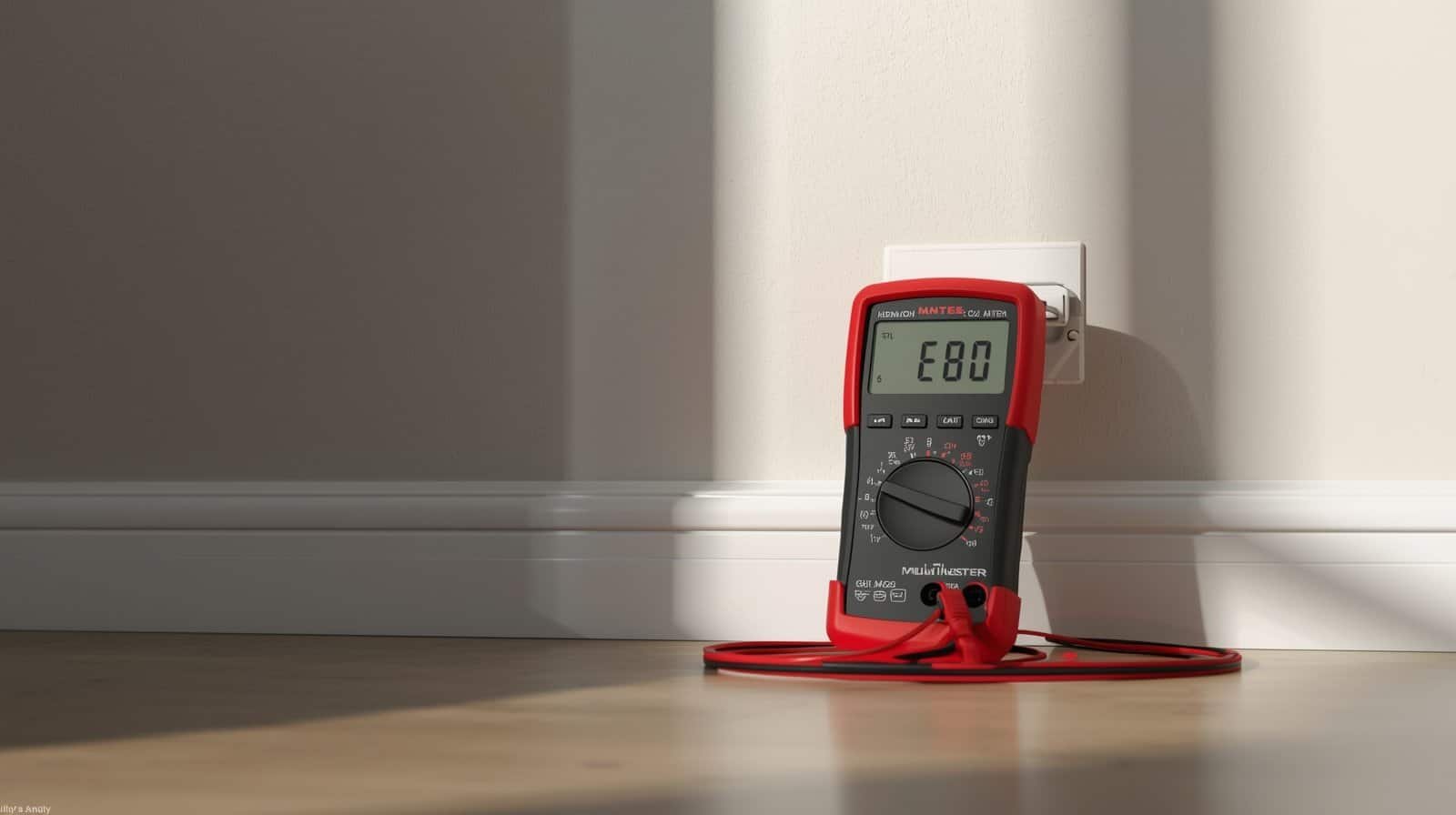
A multimeter is a powerful diagnostic tool, but it is not the first step for most outlet or circuit problems. In many cases, visible symptoms or simple checks can explain what’s wrong without measurements.
This article explains when a multimeter is actually needed, what kinds of problems it helps confirm, and when testing should stop in favor of professional help.
If appliances stopped working after power was restored, see Power Is Back but Appliances Don’t Work: What to Check First. If protection devices are involved, GFCI Keeps Tripping After an Outage explains why outlets may appear energized but not function correctly.
What a Multimeter Can (and Can’t) Tell You
A multimeter can confirm whether electrical conditions exist that match what you’re seeing—such as missing voltage, an open neutral, or inconsistent power delivery.
However, it cannot identify damaged wiring inside walls, loose connections inside breaker panels, or utility-side issues. Measurements are clues, not guarantees.
Situations Where a Multimeter Is Useful
An Outlet Shows Power but Appliances Won’t Run
If an outlet appears energized but appliances fail to operate, a multimeter can help confirm whether usable power is actually present.
This symptom is common after outages when neutral connections or upstream protection devices are compromised. For a full symptom-level walkthrough, see Outlet Has Power but Appliance Won’t Work. If voltage itself is unstable, that condition is covered in Outlet Shows Power but Voltage Is Unstable After an Outage.
This is commonly seen after outages when neutral connections or upstream protection devices are compromised.
For symptom-level diagnosis, see Outlet Has Power but Appliance Won’t Work.
Repeated Breaker or AFCI Trips Without Obvious Overload
When breakers trip repeatedly with no clear load issue, a multimeter may help indicate whether abnormal conditions exist on the circuit.
This does not replace breaker diagnostics or reset procedures.
Inconsistent Outlet Behavior on the Same Circuit
If some outlets work normally while others behave erratically, testing may help confirm whether the issue is localized or circuit-wide.
When a Multimeter Is Not the Right Tool
- If an outlet or breaker feels hot
- If you smell burning plastic
- If the problem appeared immediately after a surge
- If testing would require removing covers or accessing live wiring
In these cases, testing can increase risk rather than reduce it.
Why Measurement Alone Isn’t a Diagnosis
Electrical measurements show conditions at a moment in time. They do not reveal loose connections under load, heat-related failures, or intermittent faults.
That’s why measurements must be interpreted alongside symptoms, not in isolation.
What to Do Before Taking Measurements
- Confirm the problem isn’t appliance-specific
- Check nearby GFCI outlets
- Review recent outage or surge events
When to Stop and Call an Electrician
If a multimeter indicates abnormal conditions, or if symptoms persist despite normal readings, professional evaluation is required.
Some faults only appear under load or inside enclosed wiring and cannot be safely diagnosed by homeowners.
Conclusion
A multimeter is best used as a confirmation tool, not a starting point. Knowing when to measure—and when not to—is just as important as knowing how.
If measurements point to deeper issues or don’t match what you’re seeing, stop and involve a licensed electrician.