


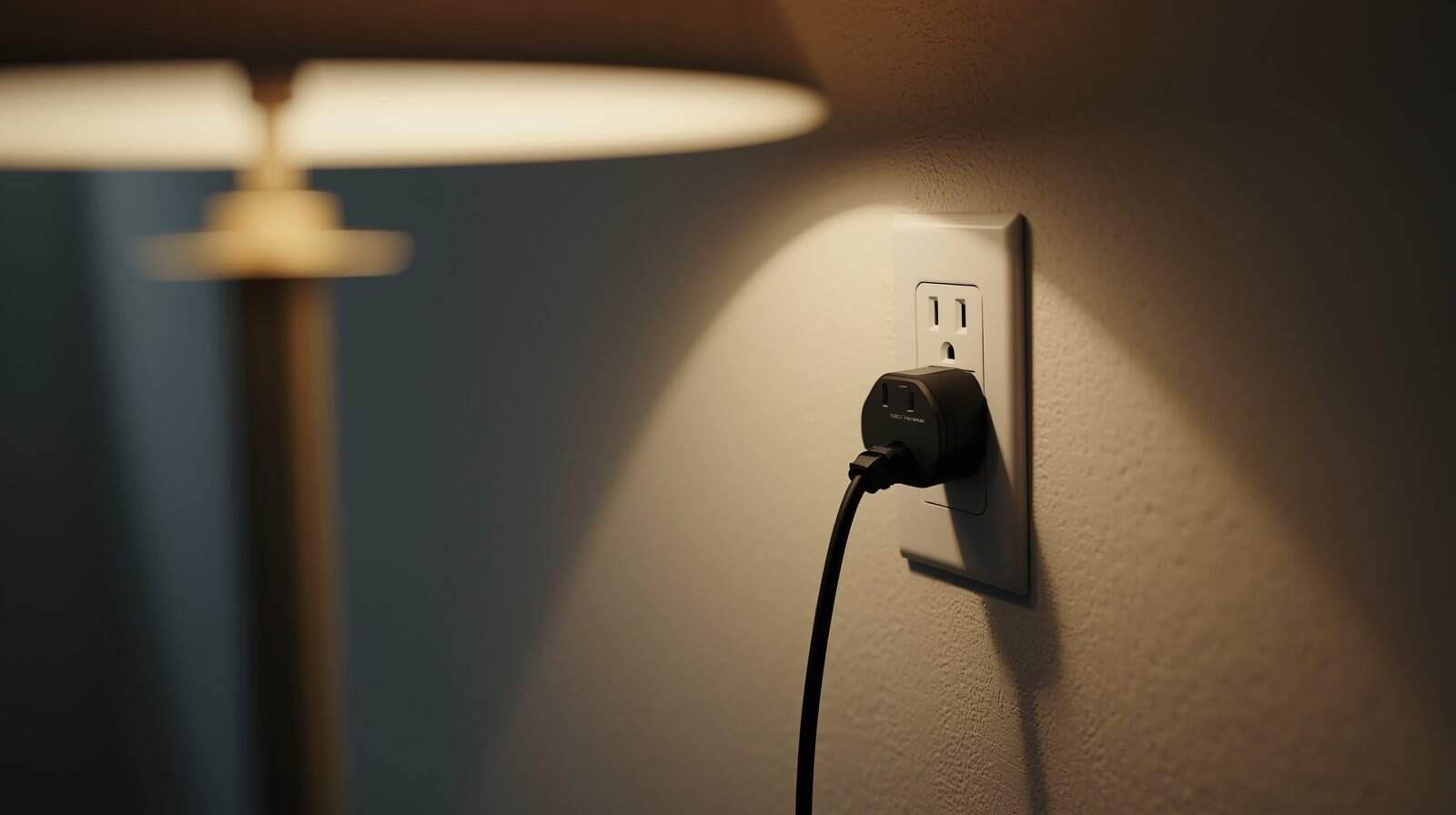
This guide addresses outlets that appear to have power after an outage but deliver unstable, fluctuating, or inconsistent voltage.
When power is restored, electrical systems may experience imbalance, loose neutral conditions, or service-level irregularities. In these cases, outlets test “live” yet fail to deliver steady, safe electricity.
This article focuses on voltage behavior that can damage devices and signal deeper electrical problems.
What Unstable Voltage Looks Like in a Home
Unstable voltage does not mean power is completely gone. Instead, it presents as irregular behavior such as:
- Lights dimming when appliances turn on
- Flickering lamps across multiple rooms
- Electronics buzzing or resetting
- Motors sounding strained or cycling unexpectedly
These symptoms often appear immediately after restoration and may affect more than one outlet or circuit.
Why Voltage Can Become Unstable After an Outage
Loose or Compromised Neutral Connections
The neutral wire stabilizes voltage across split-phase service. If compromised, voltage may rise on one leg and fall on the other.
This condition is explained in detail in Loose Neutral Wire Symptoms and is one of the most serious post-outage hazards.
Utility-Side Restoration Irregularities
During restoration, upstream equipment may briefly deliver inconsistent voltage. If neighbors report similar flickering or instability, the issue may be outside your home.
Heat-Stressed or Weakened Connections
Outages and restoration surges stress connection points. Weak terminals may not fail outright but introduce resistance that causes voltage drop under load.
How This Differs From a Dead Outlet or Tripped Breaker
A dead outlet shows no power. A tripped breaker cuts power entirely. Unstable voltage is different — power appears present, but performance changes under load.
If an outlet shows power yet appliances will not operate normally, see Outlet Has Power but Appliance Won’t Work.
When to Stop Using the Outlet Immediately
- Lights flare unusually bright or dim dramatically
- Electronics reset repeatedly
- Outlets or plugs feel warm
- Buzzing is heard from devices or panel
When Measurement Helps — and When It Doesn’t
Voltage measurement can confirm instability, but readings alone do not reveal loose or overheating connections. A stable number at one moment does not guarantee safe wiring.
If you are unsure whether testing is appropriate, When a Multimeter Is Needed for Outlet and Circuit Diagnosis explains safe boundaries.
Protection Devices and Unstable Power
GFCI or AFCI devices may trip repeatedly during voltage instability. This can make the issue appear outlet-specific when it is actually circuit- or service-level.
For related post-outage protection behavior, see GFCI Keeps Tripping After an Outage.
When to Contact the Utility Company
If neighbors report similar instability or symptoms appeared immediately upon restoration across multiple homes, contact your utility provider.
If the issue appears confined to your home and persists, contact a licensed electrician for evaluation.
Conclusion
Unstable outlet voltage after an outage is not a minor inconvenience. Even when power appears present, fluctuating voltage can damage equipment and create hidden heat stress in wiring.
Recognize the warning signs early, avoid continued use under unstable conditions, and escalate appropriately to prevent further damage or safety risk.