


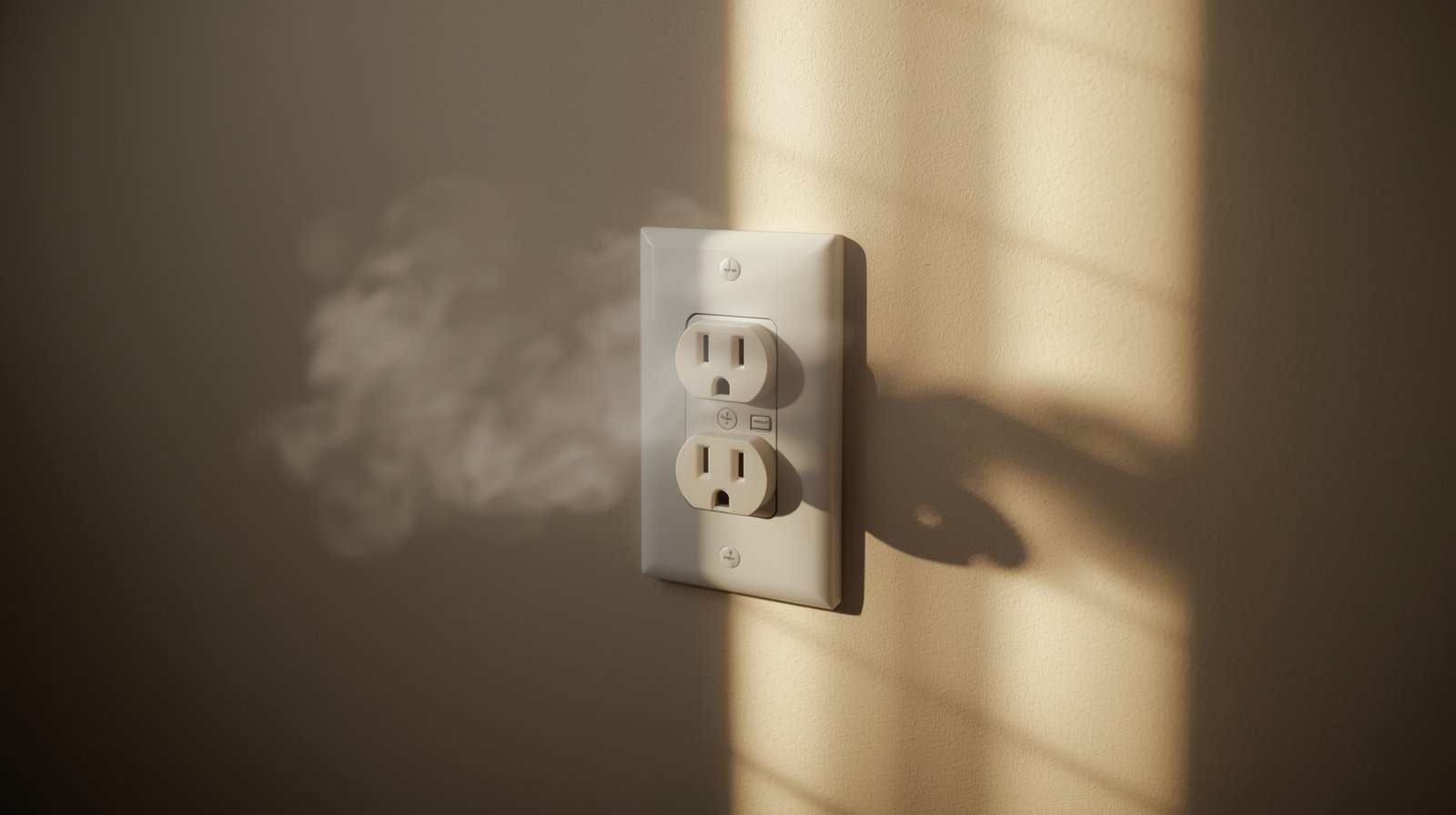
Short answer: A burning smell after a power outage should be treated as a real warning until you prove otherwise. Sometimes it is relatively harmless, like dust burning off a heater or appliance that just came back on. Other times it signals overheated wiring, a failing outlet, a damaged power strip, or an appliance problem that can escalate quickly if you keep using the circuit.
This guide helps you sort out the most common causes, what is normal versus not, and what to do in the first 10 to 30 minutes after you notice the smell—without guessing and without doing anything unsafe.
First: Treat a Burning Smell Like a “Stop and Assess” Moment
After an outage, your home’s electrical system may be coming back under unusual conditions: voltage fluctuations, partial restoration, surge stress, and multiple appliances trying to restart at once. Any weak point—an aging outlet, loose connection, damaged power strip, or appliance fault—can heat up during that transition.
The safest mindset is simple: do not assume it will just go away. Burning odors can fade even while the real problem remains, especially if overheating was brief or intermittent. It is better to pause and isolate what is happening than to keep using power and hope for the best.
If you see smoke, hear crackling, notice sparking, or the odor is strong and immediate, skip normal troubleshooting. Shut off power to the area at the breaker if it is safe to do so and contact emergency services if you suspect active fire risk.
What the Smell Often Means
How the smell is described matters because different odor types point toward different risk levels.
1) Hot plastic or melting smell
This is the most serious category to assume first. Melting odors may come from overheated outlet bodies, switch housings, extension cords, power strips, wire insulation, or internal appliance parts. If it smells like hot plastic, overheated electronics, or a melting cord, treat it as a possible overheating condition.
2) Dust burning or stale heat smell
When power returns, devices with heating elements or motors may switch on immediately—space heaters, baseboards, furnaces, toasters, ovens, dryers, and dehumidifiers. Dust that accumulated while power was off can briefly burn off, creating an odor that may be harmless if it clearly comes from one device and fades quickly.
3) Fishy or sharp chemical smell
Failing electrical components and overheated plastics are sometimes described as producing a fishy, sour, or chemical odor. Treat that as a warning sign of overheating, arcing, or insulation damage.
If you are unsure how to classify the smell, assume the higher-risk interpretation until the source is clearly identified.
Immediate Safety Steps in the First 5 Minutes
These steps reduce the chance of feeding an overheating condition while helping you narrow the source safely.
Step 1: Reduce load immediately
Unplug high-draw devices in the area, especially anything that may have restarted automatically when power returned. Common suspects include space heaters, microwaves, hair dryers, air fryers, window AC units, dehumidifiers, and kitchen appliances.
Step 2: Pay attention to warmth
Carefully check for abnormal warmth near outlets, switches, plug ends, and power strips without taking anything apart. A warm faceplate or warm plug is meaningful information. If heat is present at the outlet itself, see Warm or Hot Outlet After an Outage: Is It Dangerous? for what that usually means.
Step 3: Look and listen
Do you hear buzzing, sizzling, or faint crackling? Are lights nearby flickering? Odor combined with sound or visible instability increases the urgency to stop using that circuit and remove power if needed.
Step 4: If the smell persists, isolate the circuit
If the smell lasts more than a minute or two and you cannot tie it to one harmless source, turn off the suspected breaker. You are not repairing anything. You are removing power to reduce risk while you determine whether the smell returns.
How to Narrow Down the Source Without Taking Anything Apart
The goal is to figure out whether the odor is coming from a specific device, a circuit component like an outlet or switch, or something more serious such as the electrical panel or upstream wiring.
Check 1: Does the smell follow a specific device?
If you unplug one device and the odor fades noticeably, that device becomes the leading suspect. Do not plug it back in “just to see.” Some failures are heat-related and will recur as soon as the device is loaded again.
Check 2: Does the smell stay in one room even with everything unplugged?
If the odor remains localized after loads are removed, the issue may be in an outlet, switch, junction, or in-wall connection rather than in an appliance. Look for visible clues like discoloration or scorch marks around receptacles or faceplates. For context, see Scorch Marks or Discoloration Around Outlets: What They Mean.
Check 3: Is the smell stronger near one wall, outlet, or switch?
Odor “hot spots” matter. A single stronger location often points to a localized overheating issue. Do not open boxes or remove faceplates unless you are qualified and the circuit has been safely de-energized and verified.
Check 4: Does it seem to come from the panel?
If the smell appears strongest near the electrical panel, treat the situation as urgent. A failing breaker, overheated conductor, or loose panel connection can be serious. Keep the panel closed and contact a licensed electrician.
Common Causes After an Outage
Outages do not simply turn power off and on. Restoration events can expose weak points that were already close to failure. These are the most common causes of burning smells after power returns.
Overloaded circuits restarting all at once
When power returns, refrigerators, freezers, sump pumps, furnaces, dehumidifiers, and chargers may all try to start together. That startup surge can heat a marginal outlet, power strip, or loose connection even if the breaker does not trip.
Damaged power strips or extension cords
Power strips and temporary extension-cord setups are common culprits because they may overheat under load without obvious external damage. If you used temporary outage wiring, treat those components as suspects first.
Loose electrical connections that heat under load
A loose connection may behave “normally” for months and only reveal itself when load conditions change abruptly. These issues can create odor without immediately tripping a breaker. In broader outage-risk terms, this fits the same category of escalating warning signs covered in Electrical Red Flags After an Outage: Signs You Shouldn’t Ignore.
Appliance internal failures
Motors, relays, heating elements, and electronic power supplies can fail when power is restored. A failing appliance can produce an odor that feels like it is coming from the wall when the problem is actually inside the device.
When a Burning Smell Is a “Call Now” Situation
Use these as practical escalation thresholds. If any of the following are true, stop troubleshooting and involve a licensed electrician or emergency services as appropriate:
- Smoke, visible charring, or sparking anywhere
- Persistent burning odor that does not stay gone after power is removed
- Warm or hot outlets or switches combined with odor
- Buzzing or crackling sounds near outlets, switches, or the panel
- Repeated breaker tripping when the circuit is re-energized
- Odor near the panel or signs of panel heat
If you want a clearer stop boundary for when observation ends and escalation begins, see When to Call an Electrician After an Outage: Clear Signs You Shouldn’t Ignore.
What Not to Do
These common mistakes can make a bad situation worse:
- Do not keep resetting breakers if the smell returns
- Do not assume “it went away” means “it is fixed”
- Do not open outlets, switches, or the panel unless you are qualified
- Do not keep plugging devices back in casually without a deliberate isolation plan
If you identify one suspect device, the safest move is usually to remove it from service rather than repeatedly test it on the same circuit.
A Simple Safe Re-Energize Approach
If you switched off a breaker and everything is now calm—no smell, no heat, no sound—you can take a cautious observation-only approach to confirm whether energizing the circuit brings the problem back.
- Leave high-draw devices unplugged
- Turn the breaker back on
- Wait a few minutes and observe for odor, heat, or sound
- If any sign returns, turn it back off and stop there
This is not a repair method. It is simply a safer way to confirm whether energizing the circuit recreates the problem.
If odor is combined with partial power, dead rooms, or inconsistent behavior, that is a stronger warning pattern. This post-outage safety flowchart shows why those mixed symptoms often mean it is time to escalate.
Conclusion
A burning smell after a power outage can be something minor, like dust burning off a heating element, or something serious, like overheating wiring, a failing outlet, or a damaged appliance. The safest way to tell the difference is not guesswork—it is isolation, observation, and removing power when the smell does not clearly resolve.
If the odor is persistent, electrical in character, paired with warmth or buzzing, or seems to come from the panel, remove power if safe, keep the area clear, and escalate. Heat and odor together are always worth taking seriously.