


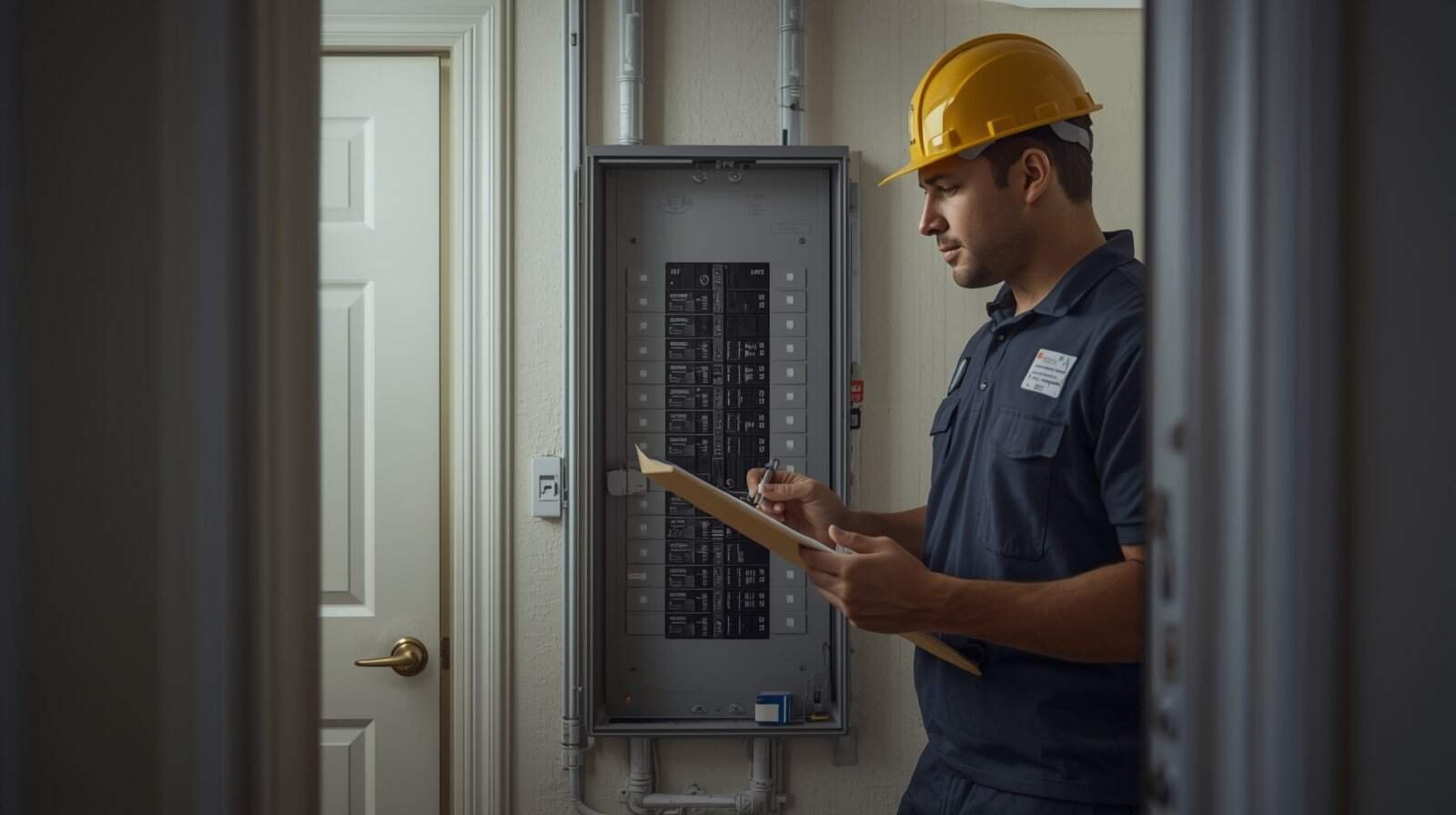
Short answer: Home wiring becomes unsafe when warning signs stop being isolated and start becoming a pattern. Repeated flicker, unexplained breaker trips, warm outlets, burning odors, buzzing, partial power, or visible outlet damage are not normal “house quirks.” They are signs that the electrical system may already be overheating, loosening, or breaking down behind the walls.
Most electrical systems do not fail all at once. They deteriorate gradually, producing warning signs that are easy to dismiss, especially when symptoms come and go. That is why homeowners often wait too long. The system still “mostly works,” so the risk does not feel urgent until something stronger happens.
This guide brings together the clearest indicators that home wiring has crossed from aging into unsafe—and why that shift should trigger professional evaluation rather than more observation.
Why Electrical Problems Often Go Unnoticed
Much of a home’s wiring is hidden behind walls, ceilings, insulation, and boxes that homeowners cannot safely inspect themselves. Problems usually begin at connections, terminations, insulation weak points, or overloaded older circuits—places that stay out of sight while heat and damage slowly build.
That hidden nature is what makes electrical deterioration so deceptive. Symptoms may appear intermittently, in different rooms, or only when certain devices are used. Because the signals seem inconsistent, homeowners often assume they are minor, temporary, or unrelated.
Clear Signs Home Wiring May Be Unsafe
Unsafe wiring rarely announces itself with one dramatic event. More often, it produces recurring clues that point toward hidden overheating, unstable voltage, or weakening connection points.
Recurring electrical symptoms
Repeated flickering lights, outlets that work inconsistently, unexplained breaker trips, or devices that cut out under normal use all suggest that something deeper may be happening in the system.
One flicker by itself may not mean much. But repeated flicker, especially when combined with other symptoms, should never be treated as normal aging.
Heat, odor, or visible damage
Warm outlets, warm switch plates, burning smells, buzzing, scorch marks, or discoloration are stronger warning signs because they suggest actual heat generation somewhere in the system.
Electrical systems are not supposed to create noticeable surface heat during normal use. When heat, smell, or visible damage appears, the problem is no longer theoretical—it is already affecting materials and components.
Voltage instability or partial power loss
Lights that brighten and dim unexpectedly, appliances behaving erratically, or situations where only part of the home has power can point to more serious system issues such as loose connections, neutral problems, or service-related instability.
These patterns matter because they often affect more than one circuit and may indicate that the problem is not limited to a single outlet or appliance.
Older wiring under modern electrical load
Homes with older wiring systems may struggle under today’s electrical demands even when no one symptom looks severe on its own. Space heaters, kitchen appliances, chargers, office equipment, window AC units, and modern electronics all add load that older systems were often never designed to support continuously.
That mismatch between old design and modern use is one of the most common reasons a wiring system becomes unsafe gradually rather than suddenly.
How Individual Risks Combine Into System-Level Danger
Electrical hazards rarely stay isolated forever. Loose connections, voltage imbalance, hidden in-wall overheating, aging insulation, and overloaded circuits often reinforce each other. A circuit running warmer than it should may loosen a termination over time. A loose termination may then create more resistance. That resistance creates more heat, and the cycle gets worse.
That is why multiple mild symptoms often matter more than one dramatic symptom. The bigger concern is the pattern they reveal. These related risk categories are explored in more detail in Loose Electrical Connections in the Home, Loose Neutral Wire Symptoms, Overheated Wiring Inside Walls, and Older Home Wiring Risks.
Why Professional Inspection Matters
Licensed electricians have the tools and training to evaluate conditions homeowners cannot safely access or interpret from surface clues alone. They can determine whether symptoms point to overloaded circuits, degraded wiring, failing connections, neutral issues, or heat damage that has not yet become visible.
The value of an inspection is not just confirming that something is wrong. It is catching hidden risk before it becomes visible outlet damage, equipment loss, or fire.
When Monitoring Is No Longer Enough
There is a point where “keeping an eye on it” stops being responsible and starts becoming risky. That point usually arrives when symptoms repeat, appear in combination, or become more frequent over time.
Monitoring should end and professional evaluation should become the priority if:
- More than one warning sign is present
- The same symptom keeps returning
- Heat, odor, or buzzing become part of the pattern
- Power behavior grows more erratic over time
- Visible damage appears anywhere in the system
For outage-related stop boundaries, see Electrical Red Flags After an Outage and When to Call an Electrician After an Outage.
Why Early Action Protects More Than Just the Wiring
Unsafe wiring does not only threaten the wiring itself. It can damage appliances, stress electronics, create intermittent outages, and raise the risk of fire in concealed spaces where detection is delayed.
Early action helps limit repair scope, prevent secondary damage, and restore confidence that the system is safe to keep using. Waiting for a “bigger sign” often means waiting until the problem is already more expensive, more disruptive, and more dangerous.
Conclusion
Home wiring rarely announces exactly when it becomes unsafe. Instead, it produces repeated, subtle warning signs that are easy to normalize until the pattern becomes too obvious to ignore.
The safest approach is to take recurring electrical symptoms seriously, especially when they involve heat, odor, buzzing, unstable power, or visible damage. Recognizing when a system has crossed from aging into unsafe—and acting before a bigger failure occurs—is one of the most important ways to protect your home.