


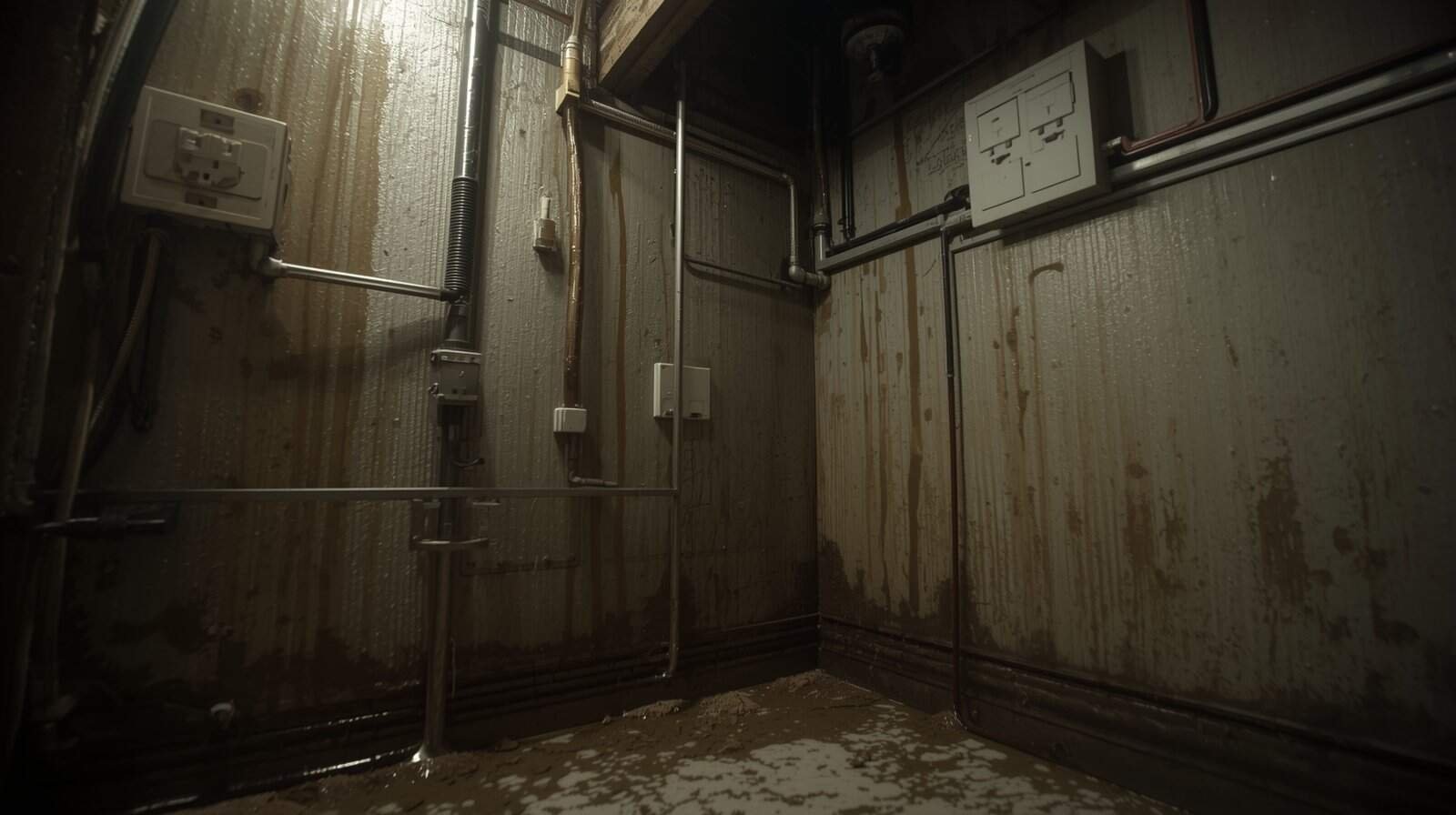
Short answer: Moisture intrusion is an electrical safety problem, not just a water problem. Even when walls and surfaces look dry, moisture can remain inside electrical boxes, wiring paths, and building materials long enough to promote corrosion, increase resistance, trigger arcing, and raise fire risk over time.
Water and electricity are a dangerous combination, but moisture-related electrical risk is not always dramatic or immediate. In many homes, the bigger danger comes from slow leaks, damp spaces, humidity, and condensation that quietly affect electrical components over weeks, months, or years.
This guide explains how moisture gets into electrical systems, why the damage is often hidden, what warning signs matter most, and when a professional inspection becomes the safest next step.
How Moisture Enters Electrical Systems
Electrical wiring and components often pass through areas that are naturally more vulnerable to dampness, temperature swings, and hidden leaks. Basements, crawl spaces, attics, garages, exterior walls, and utility areas are all common problem zones.
Common moisture sources include:
- Roof leaks and flashing failures
- Plumbing seepage or small recurring leaks
- Foundation cracks and water intrusion
- Condensation caused by temperature differences
- Flooding, storm exposure, or chronic dampness
- Outdoor humidity entering poorly sealed wall cavities or boxes
In many cases, homeowners focus on the water source itself and miss the electrical consequences developing nearby.
Why Moisture-Related Electrical Damage Is Hard to See
Moisture damage is often hidden because it develops inside places homeowners cannot easily inspect—junction boxes, cable runs, wall cavities, panel areas, and connectors. Water does not have to visibly pool around wiring to create problems. Elevated humidity alone can allow moisture to collect slowly on metal surfaces or inside enclosed spaces.
As that moisture lingers, corrosion can begin forming on conductors, terminals, and connection points. Corrosion increases resistance. Resistance creates heat. That means the real danger may not appear until much later, when the electrical system is under load and the weakened connection starts warming up.
How Moisture Increases Electrical Fire Risk
Moisture contributes to fire risk in several ways. It can corrode metal connections, weaken insulation, create leakage paths, and support conditions where arcing becomes more likely. These effects are especially dangerous because they often do not trigger immediate failure.
Instead, the system may continue operating in a degraded state while hidden heat builds over time. That makes moisture intrusion similar to other slow electrical hazards: the damage grows quietly until one day the warning signs become impossible to ignore.
This hidden-heat pattern closely overlaps with the broader risks explained in Overheated Wiring Inside Walls.
Why “It Dried Out” Does Not Always Mean “It’s Fine”
One of the most common mistakes homeowners make is assuming the risk ends when surfaces feel dry again. In reality, residual moisture can remain trapped inside walls, boxes, insulation, and concealed cavities long after visible wetness is gone.
That lingering moisture can keep corrosion progressing and may continue weakening electrical infrastructure even when no active leak is visible. This is why some moisture-related electrical symptoms show up days, weeks, or even months after the original water exposure.
Moisture, GFCIs, and Repeated Tripping
Ground-fault protection devices are designed to react when current starts flowing where it should not. Moisture can create exactly those conditions. Sometimes that causes what feels like nuisance tripping. Other times it reveals a real leakage path that had been hidden until dampness made it worse.
If GFCIs begin tripping repeatedly after storms, humidity spikes, or water exposure, the issue may not be limited to the outlet itself. The problem may involve moisture deeper in the circuit or nearby electrical components. That related behavior is explained further in GFCI Keeps Tripping After an Outage.
Long-Term Effects of Moisture on Electrical Infrastructure
Moisture-related damage tends to accumulate rather than resolve on its own. Over time, repeated exposure can:
- Corrode terminals and connectors
- Increase heat at weak electrical contact points
- Degrade insulation around conductors
- Weaken breakers, panels, and enclosure integrity
- Make future outages, tripping, or arcing more likely
This is why moisture should be treated as a long-term electrical reliability issue as well as a short-term safety concern.
Warning Signs That Moisture May Be Affecting the Electrical System
Moisture-related electrical damage often reveals itself indirectly. Watch for patterns such as:
- Repeated GFCI tripping after storms or humidity changes
- Buzzing, warmth, or inconsistent behavior at outlets or switches
- Corrosion, staining, or discoloration near electrical equipment
- Burning odor or hot-plastic smell in damp areas
- Electrical oddities that seem tied to weather, leaks, or damp seasons
These are not always dramatic symptoms, but they matter because moisture-related deterioration often develops slowly before becoming obvious.
When Moisture Exposure Should Trigger a Professional Inspection
Any history of leaks, flooding, chronic dampness, or repeated condensation near wiring, outlets, panels, or junction areas should be treated as an inspection-level concern—especially if it is paired with electrical symptoms.
Professional evaluation becomes more important when moisture concerns overlap with heat, odor, GFCI behavior, flicker, or visible corrosion. That combination suggests the problem may no longer be just “water exposure.” It may already be affecting electrical safety.
If moisture concerns are combining with broader warning signs, the situation may be part of a larger fire-risk pattern. For that escalation framework, see When Home Electrical Systems Become a Fire Risk.
Why Early Action Matters
Moisture intrusion rarely causes all its damage at once. That is what makes it easy to underestimate. Early attention can prevent corrosion and heat buildup from turning into a more serious wiring, outlet, or panel problem later.
Addressing moisture as an electrical safety issue—rather than only a building-maintenance issue—helps reduce hidden fire risk and protects the long-term reliability of the electrical system.
Conclusion
Moisture intrusion does not always create an immediate electrical failure. More often, it creates the conditions for hidden corrosion, resistance, heat, and fault behavior that worsen over time.
Recognizing moisture as an electrical hazard—not just a water-management issue—helps homeowners act earlier, reduce long-term risk, and avoid waiting until hidden damage becomes visible damage.