


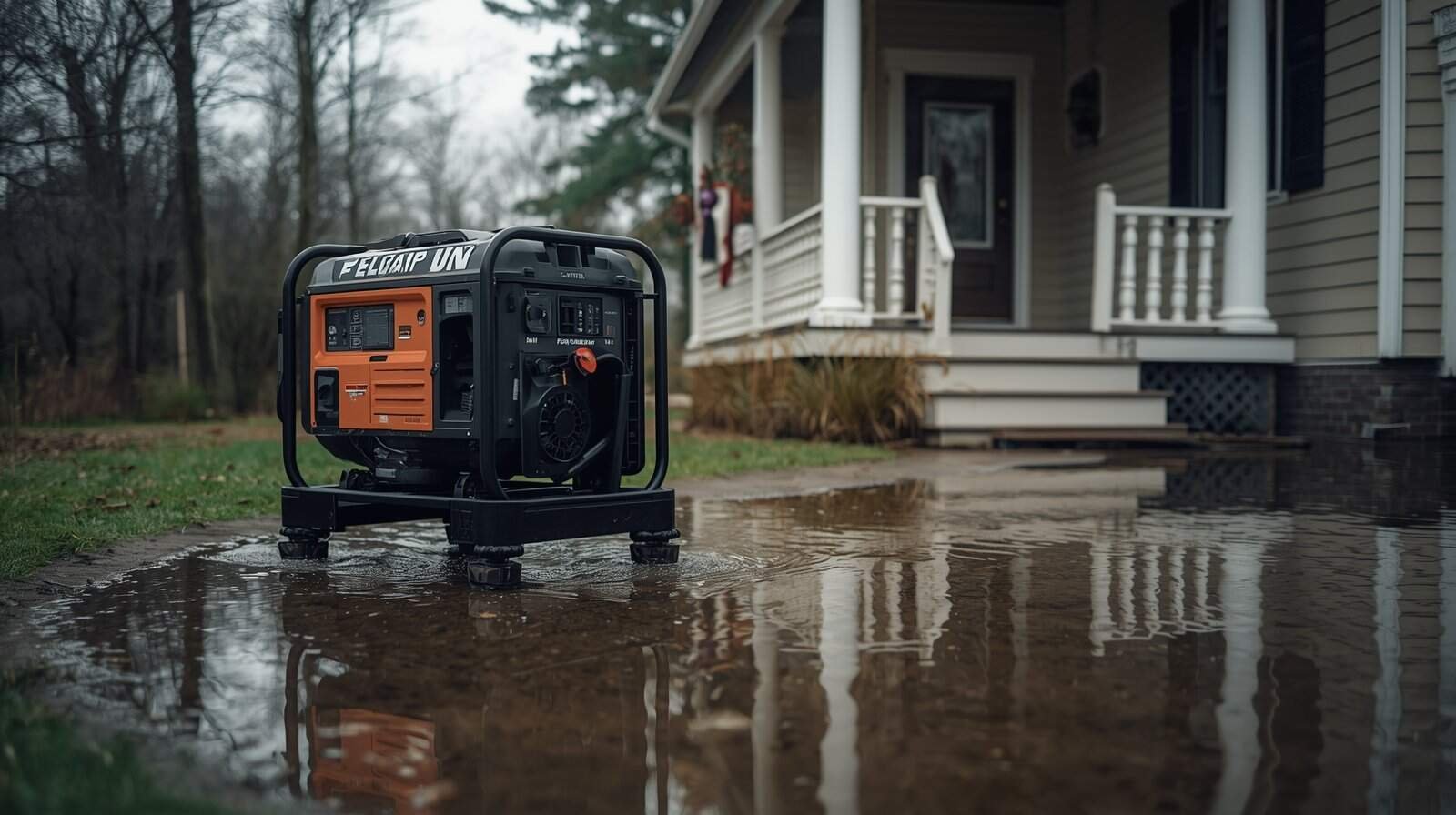
Flooding and standing water often follow major storms that cause power outages. When electricity is unavailable, some homeowners consider running a generator despite wet or flooded conditions. This is one of the most dangerous situations in which a generator can be used.
Why Flood Conditions Make Generator Use Extremely Dangerous
Portable generators produce electricity while operating on fuel-powered engines. When water surrounds the generator, the risk of electrical shock increases dramatically. Standing water can energize the ground around the generator, turning nearby surfaces into shock hazards.
Floodwater is rarely clean. It often contains debris, sediment, and contaminants that increase conductivity, making electrical injuries more likely.
Electrocution Risks from Standing Water
Electricity seeks the path of least resistance. When a generator or its cords contact standing water, current can travel through puddles, wet soil, or saturated surfaces. Anyone touching the generator, cords, or nearby objects may be exposed to severe or fatal shock.
Even generators equipped with ground-fault protection are not designed to operate while submerged or surrounded by water.
Carbon Monoxide Risks Increase During Flooding
Flood conditions often force homeowners to place generators closer to buildings or in partially enclosed areas. This significantly increases carbon monoxide risk.
Exhaust gases can accumulate when airflow is restricted by debris, water barriers, or nearby structures. Review generator carbon monoxide safety to understand how quickly dangerous levels can develop.
Why Elevating a Generator Is Not a Safe Solution
Some homeowners attempt to elevate generators on platforms, blocks, or pallets to keep them above water. While elevation may reduce direct water contact, it does not eliminate shock risk.
Wet cords, unstable footing, and exhaust drift remain serious hazards. Elevated platforms can also shift or collapse in moving water.
Safer Alternatives During Flood Conditions
If flooding or standing water is present, the safest option is to avoid running a portable generator until conditions improve. Focus on conserving power, relocating critical needs, or using battery-powered devices designed for wet environments.
In some situations, permanently installed standby generators with professional installation and code-compliant flood mitigation may be appropriate. Portable generators, however, are not designed for flood operation.
Warning Signs That Electrical Conditions Are Unsafe
Flood-related electrical hazards may persist even after water recedes. Burning smells, tripped breakers, buzzing sounds, or warm outlets indicate unsafe conditions.
Review electrical red flags after an outage and when to call an electrician after an outage before restoring power.
Related Weather Safety Guidance
Flood risks often overlap with other weather-related generator hazards. For additional context, see running a generator in the rain for moisture-related precautions.
Conclusion
Running a generator in flood conditions or standing water is extremely dangerous and should be avoided. Electrocution and carbon monoxide risks increase dramatically, even with attempts to elevate equipment. Waiting for safer conditions or using alternative power options is the safest choice.