


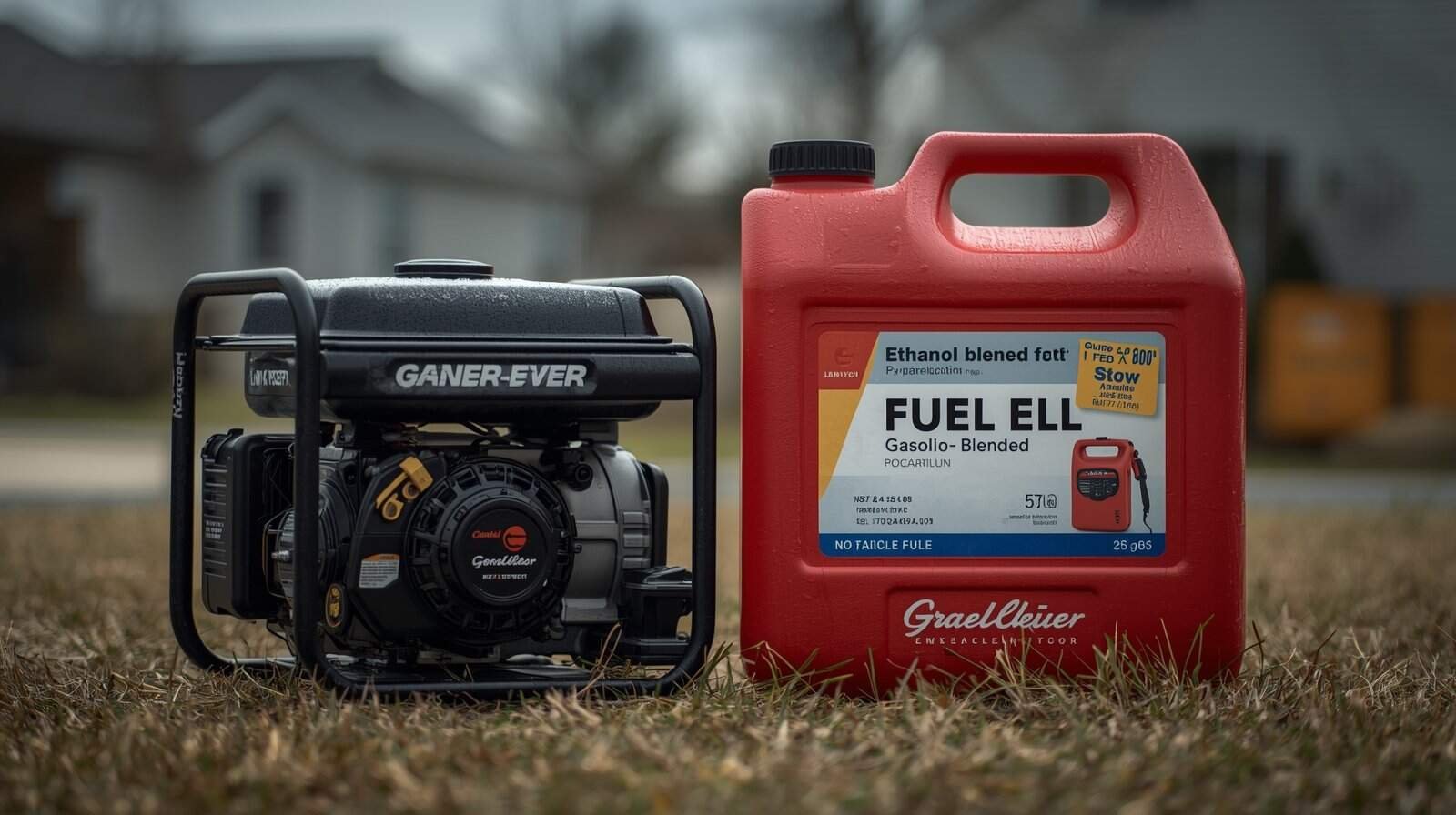
Short answer: Ethanol-blended gasoline can cause real problems in portable generators—especially when fuel sits unused between outages. Ethanol attracts moisture, breaks down faster than many homeowners expect, and can contribute to corrosion, carburetor deposits, hard starting, surging, and fuel system damage over time.
Most gasoline sold today contains ethanol, a renewable alcohol additive blended into fuel for automotive use. While modern vehicles are built to tolerate ethanol blends more effectively, portable generators and other small engines are much more sensitive—especially when the fuel remains in the system for weeks or months between uses.
This guide explains why ethanol causes generator problems, why storage makes those problems worse, and the safest ways homeowners can reduce fuel-related damage without turning routine generator care into a repair project.
What Ethanol Is and Why It’s Used in Gasoline
Ethanol is an alcohol-based fuel additive blended into gasoline to help extend fuel supplies and reduce certain emissions. The most common blend in the U.S. is E10, which contains up to 10% ethanol, though higher blends exist in some areas.
For cars driven regularly, this arrangement is often manageable because fuel is constantly cycled through the system. Portable generators are different. They may sit for long periods with fuel in the tank, fuel lines, and carburetor bowl—giving ethanol more time to absorb moisture and degrade.
Why Ethanol Causes Generator Problems
The biggest issue with ethanol is that it attracts and absorbs moisture from the air. Over time, that moisture can contribute to fuel breakdown and, in more severe cases, phase separation—where the fuel and alcohol/water mixture begin to separate inside the system.
When that happens, generators may experience:
- Hard starting or repeated starting attempts
- Surging or uneven engine speed
- Stalling shortly after startup
- Poor fuel delivery through clogged carburetor passages
- Corrosion inside metal fuel components
These symptoms often overlap with what homeowners describe as “bad gas.” For comparison, see Bad Gas in a Generator: Symptoms, Safety Risks, and What to Do Next.
Why Storage Time Makes Ethanol Problems Worse
Generators are especially vulnerable because they often sit unused between outages. During storage, ethanol continues absorbing moisture and fuel continues aging—even if the generator looks perfectly fine from the outside.
This is why a generator may run normally during one storm, then refuse to start the next season. The problem often develops quietly while the machine is sitting idle, not while it is actively being used.
Storage conditions matter too. Heat swings, humidity, and partially filled containers all increase the chance of fuel degradation over time.
To reduce that risk, review How to Store Generator Fuel Safely at Home.
How Ethanol Affects New Generators
Some homeowners assume ethanol problems only affect older generators. In reality, new generators can also develop fuel-related issues if ethanol-blended gasoline sits in the system too early or too long.
This can be especially frustrating because it may look like a defect when the real problem is early fuel system contamination, varnish, or moisture absorption during storage between initial uses.
That’s one reason proper first-use habits matter. See Generator Break-In Period Explained for safe early-use guidance.
Ways to Reduce Ethanol-Related Damage
You do not need to eliminate all risk to reduce it significantly. The goal is to make ethanol-related fuel problems less likely by controlling storage time and fuel quality.
- Use ethanol-free fuel when it is available and recommended for your generator
- Avoid storing gasoline for long periods without a clear rotation plan
- Keep fuel containers tightly sealed and stored correctly
- Do not treat old fuel as “probably fine” just because the generator ran last season
- Review your generator’s manual for fuel recommendations and storage guidance
Some homeowners also choose propane or dual-fuel options partly to reduce gasoline-storage problems. For a broader comparison, see Generator Fuel Types Compared: Gasoline vs Propane vs Dual-Fuel Generator.
When Ethanol Damage Becomes More Than a Simple Fuel Swap
If a generator continues surging, stalling, or refusing to start even after fuel replacement, the issue may no longer be just “old gas.” Ethanol-related damage can leave deposits, corrosion, or internal clogging that simple refueling does not solve.
At that point, the generator may need internal cleaning or service. Homeowners should be cautious about assuming that additives alone will reverse long-term fuel system damage.
Frequently Asked Questions
Is ethanol-free gas better for generators?
In many cases, yes. Ethanol-free fuel is often preferred for small engines because it is less likely to absorb moisture and create storage-related fuel problems.
How long can ethanol gas sit in a generator?
The safe window depends on storage conditions, fuel age, and the generator’s fuel system, but ethanol-blended fuel becomes more risky the longer it sits unused.
Can ethanol make a generator surge?
Yes. Ethanol-related fuel degradation, moisture absorption, and carburetor deposits can all contribute to surging or unstable engine speed.
Does fuel stabilizer completely prevent ethanol problems?
No. Stabilizers may help slow degradation, but they do not make long-stored ethanol fuel risk-free.
Conclusion
Ethanol-blended gasoline is one of the most common causes of generator fuel problems, especially in units that sit unused between outages. What makes it challenging is how quietly the problem develops—often showing up only when you need the generator most.
Understanding how ethanol behaves, reducing storage time, and following smarter fuel habits can significantly improve reliability. For many homeowners, preventing ethanol damage is less about repairs and more about avoiding preventable fuel mistakes in the first place.