


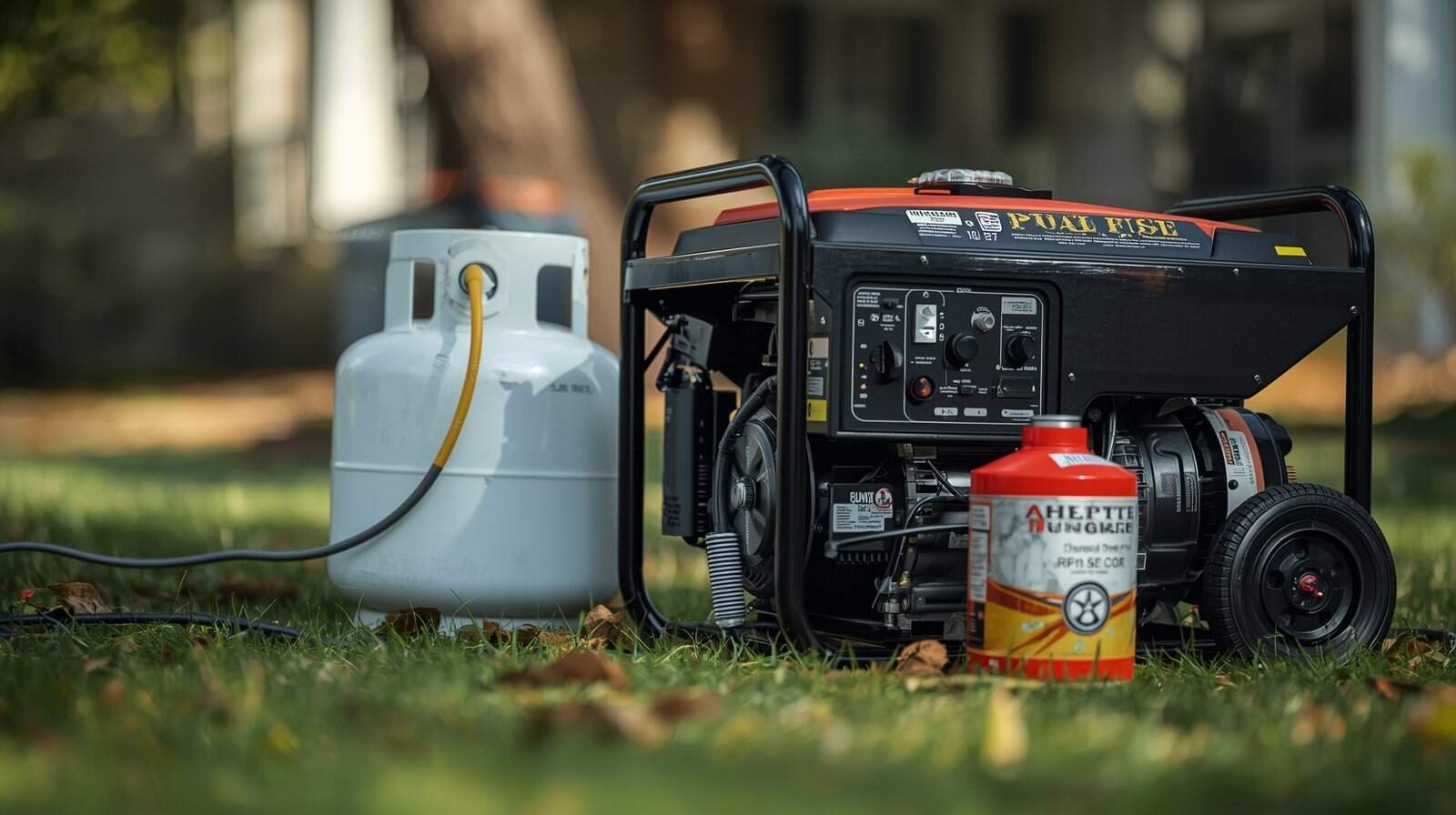
Dual-fuel generators offer flexibility by allowing homeowners to run on gasoline or propane. While switching fuels can improve reliability during outages, doing so incorrectly can lead to hard starting, rough operation, or fuel system damage.
Why Proper Fuel Switching Matters
Gasoline and propane behave very differently inside a generator. Switching fuels without following proper shutdown and setup steps can leave residual fuel in lines or carburetors, causing combustion problems. If you’re unsure how the two fuels differ mechanically and operationally, see generator fuel types compared for a clear breakdown.
Most dual-fuel generators are designed to switch fuels only when the engine is off and cool.
Steps to Take Before Switching Fuel Sources
Before changing fuels, shut the generator down completely and allow it to cool. Disconnect electrical loads and verify the fuel selector is set to the desired position.
Never attempt to switch fuels while the generator is running unless the manufacturer explicitly states it is safe.
Switching from Gasoline to Propane
When moving from gasoline to propane, ensure gasoline supply valves are closed and residual fuel is not being drawn into the carburetor. Confirm propane connections are secure and free of leaks before restarting.
Propane systems rely on pressure and temperature. Cold weather may affect startup reliability.
Switching from Propane to Gasoline
When switching back to gasoline, disconnect propane supply lines and allow pressure to dissipate safely. Use fresh gasoline to reduce starting issues.
If gasoline has been stored for extended periods, review gasoline vs propane storage risks before use.
Common Fuel Switching Mistakes
Common errors include attempting to switch fuels under load, failing to purge fuel lines, or using stale gasoline. These mistakes often cause rough running or shutdowns.
If performance issues occur after switching, review why a generator runs rough for additional troubleshooting context.
Safety Considerations During Fuel Changes
Fuel changes introduce fire and leak risks. Never refuel or reconnect fuel sources near ignition sources or while equipment is hot.
For safe fueling procedures, see refueling a generator safely.
When Dual-Fuel Switching Isn’t Enough
In some conditions—such as extreme cold or degraded gasoline—switching fuels may not restore reliable operation. Planning fuel availability and storage ahead of outages remains essential.
Conclusion
Dual-fuel generators provide flexibility, but safe fuel switching requires careful shutdown, proper connections, and attention to fuel quality. Following manufacturer guidance and avoiding common mistakes helps prevent damage and ensures dependable backup power.