


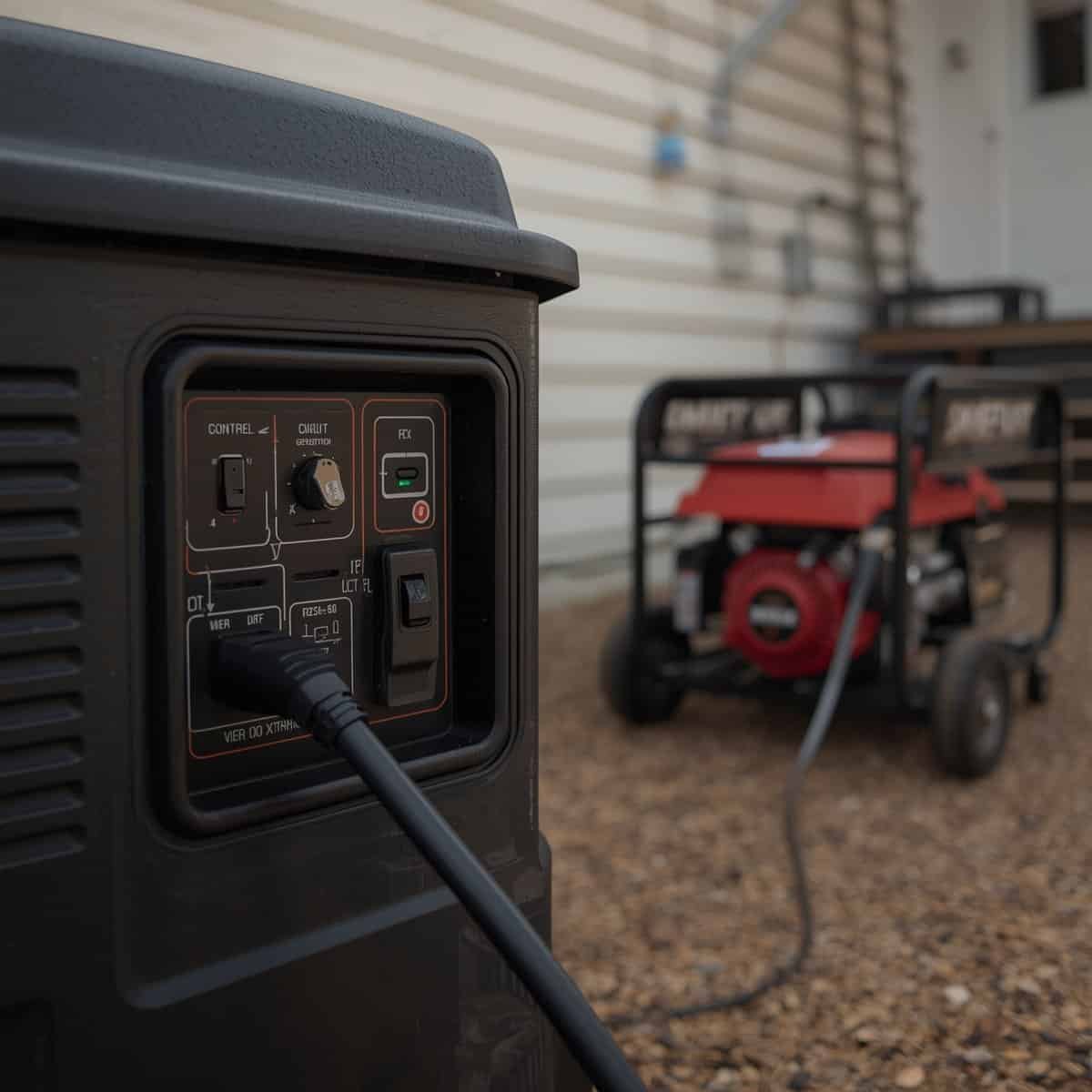
Seeing a generator breaker switched on but getting no power from the outlets can be confusing. In many cases, the breaker itself is not the problem—even though it appears to be in the correct position.
What a Generator Breaker Actually Does
The breaker on a generator is designed to protect internal wiring and connected devices from overloads and short circuits. When it trips, it interrupts electrical output even if the engine continues to run.
However, a breaker can appear “on” while internal faults still prevent power from reaching the outlets.
Why the Breaker May Look On but Output Is Disabled
Some generators use internal thermal or electronic protection that disables output without visibly tripping the external breaker switch. Moisture, vibration, or voltage irregularities can activate these protections.
Environmental factors are discussed further in generator runs but produces no power in cold or wet conditions.
Hidden Breakers and GFCI Protection
Many portable generators include built-in GFCI outlets or secondary breakers that are easy to overlook. A tripped GFCI outlet can block power delivery even when the main breaker is on.
Check each outlet individually and reset any GFCI protection before assuming internal damage.
Extension Cord and Connection Issues
A generator may be producing power correctly, but damaged or undersized extension cords can prevent electricity from reaching devices. Cold or wet conditions can worsen marginal cords.
Verify proper cable selection using extension cord sizing for generators.
Internal Wiring or Outlet Damage
If no outlets produce power and breakers appear normal, internal wiring connections or outlet assemblies may be damaged. This can occur from vibration, corrosion, or previous overload events.
For deeper mechanical causes, review generator runs but produces no power.
When a Breaker Problem Becomes a Safety Issue
Repeated breaker anomalies may indicate internal electrical faults that are unsafe to troubleshoot without proper tools and training.
If the breaker appears to reset but power cuts out repeatedly under load, this may indicate overload or internal short conditions rather than a simple outlet issue. See generator breaker keeps tripping for deeper diagnostic guidance.
If breakers behave unpredictably or power output remains absent, stop operation and seek professional service.
If the generator seems “on” but power still isn’t reaching where it should, this visual flowchart helps you trace the safe connection path all the way to the home panel: Generator Runs but House Has No Power — Safety Setup Flowchart.
Conclusion
A generator breaker that appears on does not guarantee power delivery. Hidden protection systems, outlet-level faults, and connection issues are common causes. Understanding these limits helps homeowners diagnose safely and avoid damaging equipment.