


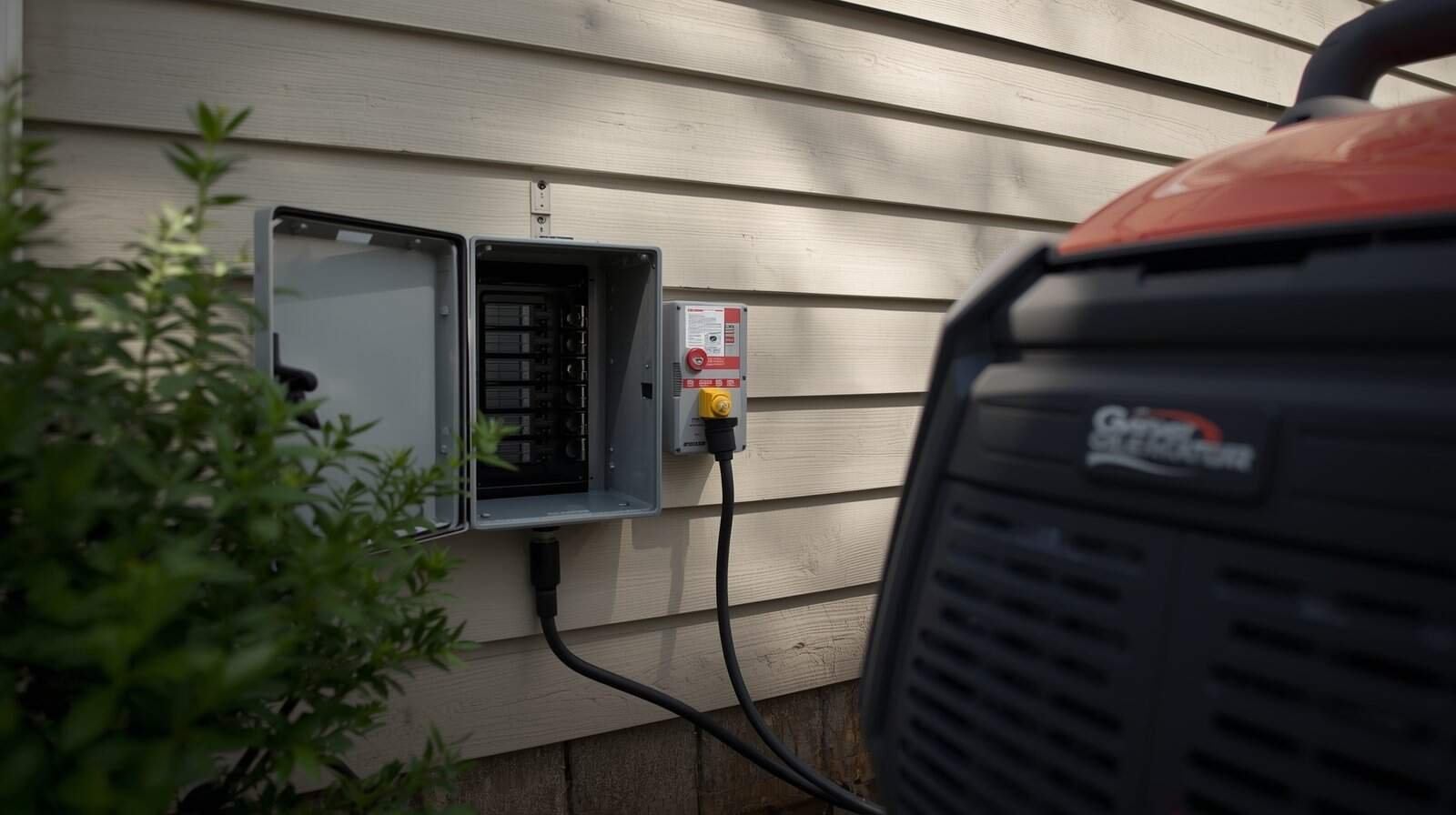
Seeing power at a generator inlet box but none at the breaker panel is one of the most confusing generator problems homeowners face. The generator appears to be working, the inlet looks energized, yet the house remains dark.
What It Means When the Inlet Box Has Power
The inlet box is designed only to receive power from the generator. If power is present here, it confirms that the generator itself and the extension cord supplying the inlet are functioning correctly.
If the generator is clearly running but the home remains dark, this situation is often part of a broader connection failure. For a full overview of how generator power is supposed to reach the house, see generator runs but house has no power.
However, the inlet box does not distribute power on its own. Power must travel through internal wiring to reach transfer equipment and the breaker panel.
Common Wiring Issues Between the Inlet and Panel
The wiring run between the inlet box and the breaker panel is often hidden inside walls or conduit. Loose terminals, damaged conductors, or incorrect wire sizing can interrupt power flow without any visible warning signs.
These issues may develop over time due to vibration, corrosion, or improper installation.
Interlock and Transfer Equipment as the Gatekeeper
Even with good wiring, transfer equipment must be correctly positioned to allow generator power into the panel. Interlock kits physically block generator breakers unless utility breakers are off.
If the interlock plate is misaligned or the breaker sequence is incorrect, power will never reach the panel. For common interlock failures, see interlock kit installed but generator power still doesn’t work.
Transfer Switch Failures That Block Power
Manual and automatic transfer switches rely on internal contacts to route power. Mechanical movement does not guarantee electrical continuity.
Worn contacts, relay failures, or control board issues can prevent power from reaching circuits even though the switch appears active. This scenario is covered in transfer switch clicks but no circuits get power.
Why Backfeeding Assumptions Create Risk
When power does not reach the panel, some homeowners attempt unsafe workarounds. Improvised connections can energize unintended conductors and create severe shock and fire hazards.
If there is any uncertainty about power routing, stop and review generator backfeeding explained.
Safe Checks Homeowners Can Perform
Confirm that the inlet box terminals are secure, the inlet breaker (if present) is on, and the transfer mechanism is fully engaged. Inspect for moisture intrusion or visible damage.
Do not open the breaker panel or inlet wiring unless the generator is shut down and you are qualified to do so.
Visual check: If the inlet box has power but the panel doesn’t, this flowchart helps you confirm the safe path and identify the most common break points (without opening anything): Generator Runs but House Has No Power — Safety Setup Flowchart.
When Professional Help Is Required
If power is verified at the inlet but not at the panel after basic checks, the problem likely involves internal wiring or transfer equipment failure. These conditions require professional diagnosis.
Continuing to troubleshoot without training increases the risk of injury or equipment damage.
Conclusion
When a generator inlet box has power but the breaker panel does not, the fault lies between the inlet and the transfer equipment. Understanding this pathway helps homeowners troubleshoot safely and know when to stop.