


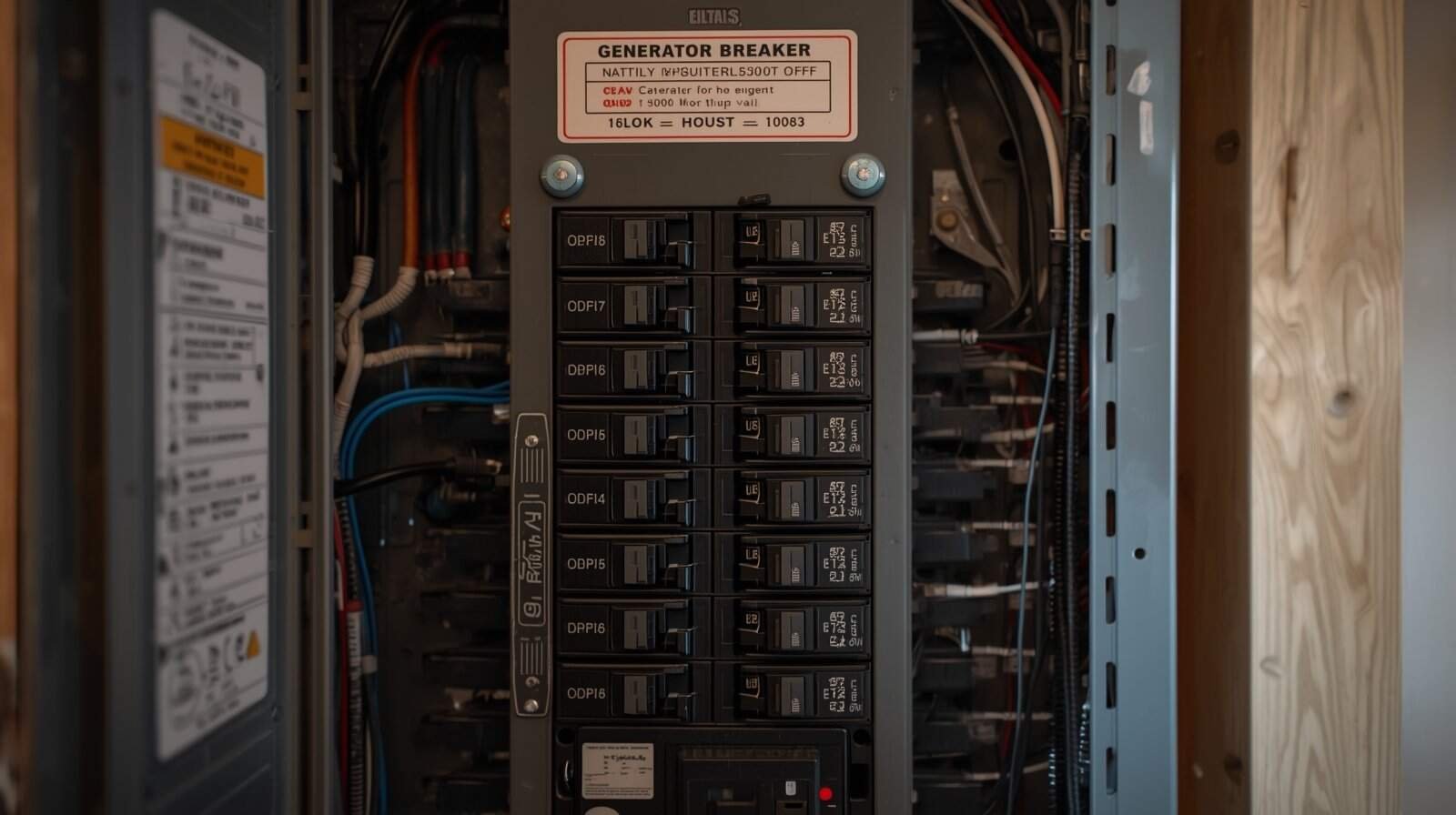
An interlock kit is designed to make generator use safer by preventing utility power and generator power from feeding the panel at the same time. When installed correctly, it physically forces a specific breaker sequence. However, many homeowners discover that even with an interlock installed, generator power still fails to reach household circuits.
What an Interlock Kit Actually Does
An interlock kit does not distribute power or regulate voltage. Its sole purpose is mechanical safety. It ensures the main utility breaker is off before the generator breaker can be turned on.
If generator power is not reaching the home, the interlock is often preventing flow because the required breaker positions are not fully satisfied.
If an interlock kit is installed but your home still stays dark, this visual flowchart shows the correct safe sequence (including the main breaker vs generator breaker relationship): Generator Runs but House Has No Power — Safety Setup Flowchart.
Breaker Sequence Errors That Block Power
Interlock systems require an exact order of operations. If the main breaker is not fully switched off, or if the generator breaker is not fully engaged, the interlock plate will block power flow.
This issue is especially common when breakers appear “on” but are not seated firmly. Reviewing the full connection process in generator runs but house has no power can help clarify the intended flow.
Mechanical Misalignment and Wear
Interlock plates rely on precise alignment. Over time, vibration, panel flex, or improper installation can cause slight shifts that prevent full breaker travel.
Even small misalignments can stop generator power without triggering any visible warning.
Generator Breaker Issues Inside the Panel
The generator breaker itself may be undersized, worn, or improperly installed. If it cannot close fully under load, power will not pass through to branch circuits.
If inlet power is confirmed but the panel remains dark, see generator inlet box has power but breaker panel doesn’t for related wiring path failures.
Why Interlocks Don’t Fix Wiring Problems
Interlock kits do not correct wiring errors, damaged conductors, or loose terminals. They only control breaker access.
If power routing issues persist despite proper interlock operation, the fault may lie deeper in the system or within transfer equipment. This behavior overlaps with scenarios described in transfer switch clicks but no circuits get power.
The Backfeeding Danger When Interlocks Are Bypassed
Some homeowners attempt to defeat or bypass an interlock when power does not flow as expected. This creates severe backfeeding hazards and violates electrical codes.
If there is any temptation to bypass safety devices, stop and review generator backfeeding explained.
Safe Checks Homeowners Can Perform
Confirm that breakers move freely, the interlock plate slides smoothly, and the main breaker is completely off before engaging the generator breaker. Inspect for visible damage or looseness.
Do not remove the panel cover or modify breaker hardware unless you are trained and following proper lockout procedures.
When Professional Help Is Required
If generator power still does not reach circuits after correct sequencing and inspection, professional diagnosis is required. Interlock issues can mask deeper electrical faults.
Conclusion
An interlock kit is a safety device, not a guarantee of power delivery. Understanding its limitations helps homeowners troubleshoot correctly and avoid unsafe improvisation.