


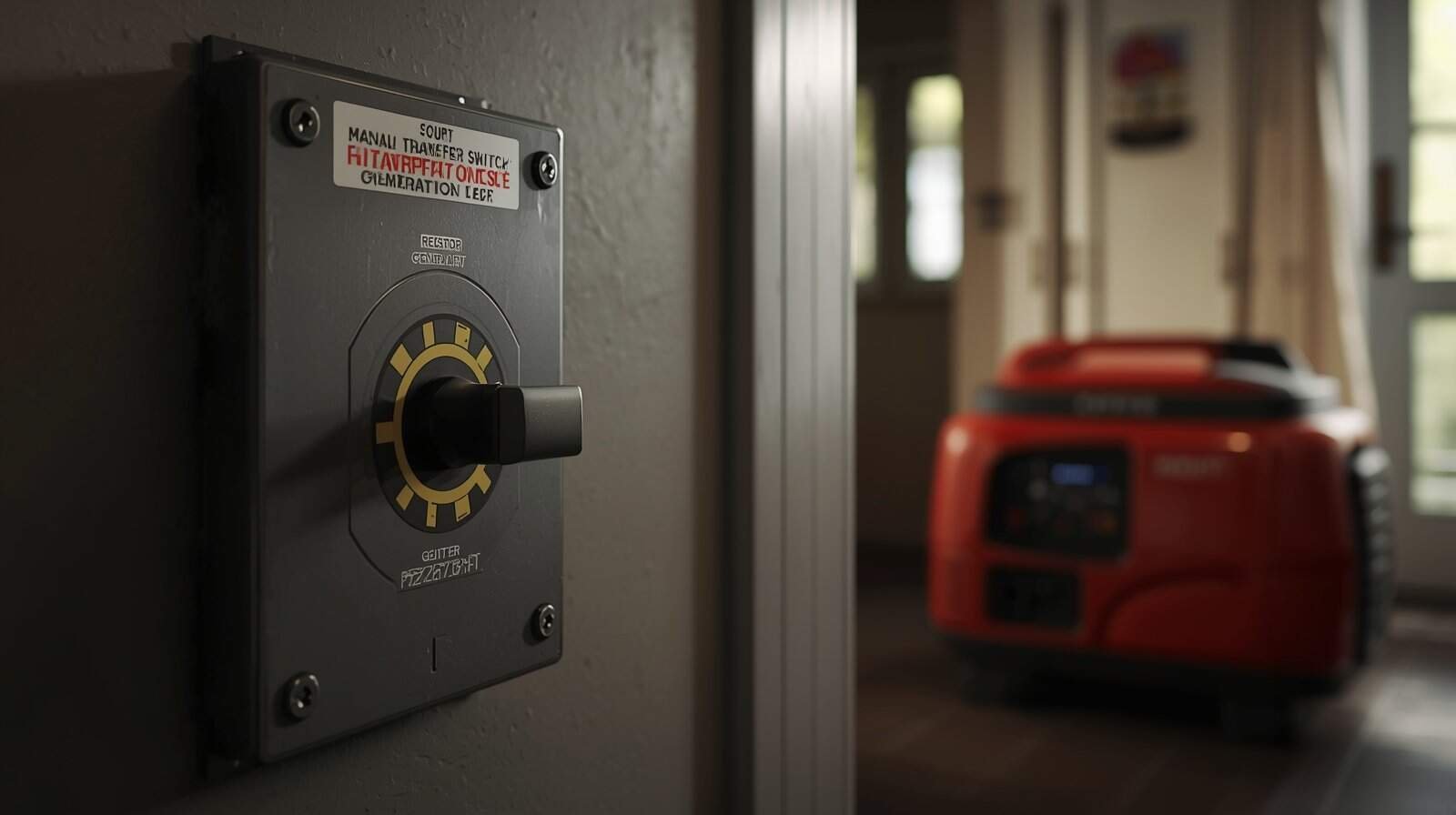
Hearing a transfer switch click or feeling it move into position often gives homeowners confidence that generator power is now feeding the house. Unfortunately, mechanical movement alone does not guarantee electrical continuity.
What the Clicking Sound Really Indicates
The clicking sound usually comes from internal relays or contactors moving. This confirms that the control mechanism is responding, but it does not confirm that power is successfully flowing through the switch.
Electrical contacts must fully close and maintain pressure under load for power to pass reliably.
Manual vs Automatic Transfer Switch Behavior
Manual transfer switches rely on physical lever movement to route power. Automatic switches use relays and control boards to sense utility loss and initiate transfer.
In both cases, a visible or audible response can occur even if internal contacts fail to engage properly.
Internal Contact Wear and Failure
Transfer switch contacts experience arcing, heat, and mechanical stress over time. Worn or pitted contacts may move but fail to carry current.
This type of failure often produces intermittent or complete power loss without obvious external symptoms.
Control Logic and Sensing Issues
Automatic transfer switches depend on voltage and frequency sensing. If control logic detects unstable generator output, it may prevent full engagement even though relays click.
This behavior overlaps with broader connection failures described in generator runs but house has no power.
Wiring Problems Downstream of the Switch
Even when the transfer switch operates correctly, loose or damaged wiring between the switch and breaker panel can stop power from reaching circuits.
If inlet power is present but panel power is absent, review generator inlet box has power but breaker panel doesn’t.
Why Interlocks and Transfer Switches Are Not Interchangeable
Some homes use interlock kits instead of transfer switches. Confusing the two systems can lead to incorrect assumptions during troubleshooting.
For interlock-specific failures, see interlock kit installed but generator power still doesn’t work.
The Risk of Improvised Workarounds
Attempting to force power through a malfunctioning transfer switch can result in backfeeding, equipment damage, or electrical shock.
If safe operation is unclear, stop and review generator backfeeding explained.
Safe Checks Homeowners Can Perform
Confirm the switch is fully in the generator position, verify generator output stability, and check for obvious signs of overheating or damage.
Do not open switch enclosures or bypass safety mechanisms.
Quick clarity: If the transfer switch clicks but nothing energizes, use this visual flowchart to verify the full connection path and stop points before you keep testing: Generator Runs but House Has No Power — Safety Setup Flowchart.
When Professional Service Is Required
If the transfer switch clicks but circuits remain unpowered, internal failure is likely. Professional inspection is necessary to restore safe operation.
Conclusion
A clicking transfer switch does not guarantee power delivery. Understanding how switches operate helps homeowners avoid false assumptions and unsafe troubleshooting.