


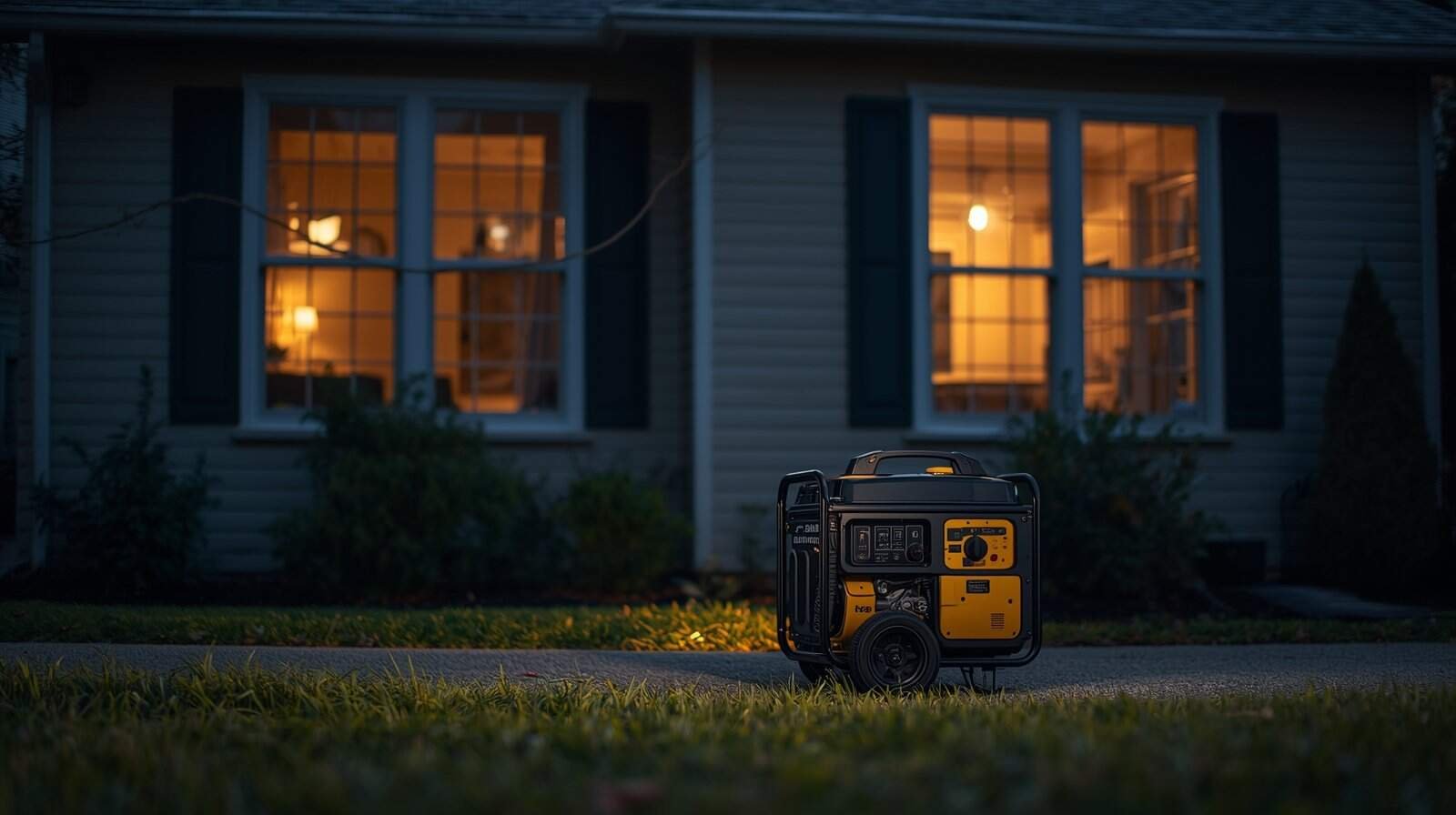
If a generator runs lights and phone chargers but a refrigerator, microwave, sump pump, well pump, or air conditioner will not start, the generator is not necessarily broken. The most common reasons are startup surge, total load, voltage drop, outlet or voltage compatibility, and appliance sensitivity to generator power.
The important question is whether the problem follows one demanding appliance or affects everything connected to the generator. A single motor-driven appliance that fails only at startup often points to a capacity or connection issue. Lights flickering heavily, electronics resetting, repeated breaker trips, or several unrelated devices behaving badly can point to a broader power-quality or generator problem.
Why One Appliance Works While Another Does Not
Appliances do not all ask for electricity in the same way. A lamp or phone charger may draw a relatively small, steady load. A refrigerator compressor, pump, or air conditioner may need a much larger burst of power for a brief moment when its motor starts.
Other equipment can be sensitive for different reasons. Modern electronics may care more about voltage stability or waveform quality than raw wattage. A 240-volt well pump may require an output and connection that a 120-volt generator receptacle cannot provide at all. A long or undersized extension cord can also cause enough voltage drop for a motor to struggle even when the generator itself has adequate rated wattage.
That is why “the generator has enough watts” is only one part of the answer.
Quick Guide: What Different Symptoms Usually Suggest
| What you see | Common possibilities | Safer next step |
|---|---|---|
| Lights and chargers work; refrigerator or pump will not start | Startup surge, overloaded generator, voltage drop | Disconnect other loads and compare startup requirements |
| Appliance starts, then generator breaker trips | Total load too high, overlapping motor starts, appliance fault | Reduce loads; do not repeatedly reset under the same condition |
| Motor hums or struggles | Low voltage, inadequate surge capacity, cord voltage drop | Shut the appliance off instead of letting the motor stall |
| Electronics reset while basic resistive loads work | Voltage/frequency instability, load changes, power-quality sensitivity | Disconnect sensitive electronics and simplify the load |
| A 240V appliance will not operate from a 120V outlet | Voltage/receptacle incompatibility | Do not improvise adapters; confirm generator and appliance requirements |
| Everything flickers, surges, or behaves strangely | Generator output, regulation, fuel/engine, connection, or wiring problem | Disconnect sensitive loads and stop using the generator if instability continues |
Startup Surge Is Often the Difference
Many motor-driven appliances require more power to start than they need once they are running. That brief startup demand can be high enough to exceed the generator’s short-term capability even though the appliance’s normal running wattage appears to fit comfortably within the generator rating.
This is common with refrigerators, freezers, sump pumps, well pumps, furnace blowers, and air conditioners. If several of these loads try to start at nearly the same time, the problem becomes more likely.
A generator may respond by slowing down, allowing voltage to sag, tripping a breaker, triggering overload protection, or failing to start the appliance cleanly. The appliance itself may hum, click, restart, or remain off.
If you are trying to determine whether your generator has enough capacity for the appliances you actually need, start with the What Size Generator Do I Need? guide, then use the Generator Sizing Calculator for a rough load-planning estimate.
Total Generator Load Still Matters After Startup
Startup surge gets a lot of attention, but the generator also has to support the combined running load after everything is operating. A generator can start one large appliance successfully and still become overloaded when a microwave, heater, pump, or second compressor is added later.
Think about loads in two layers:
- Running demand: the power required by everything already operating.
- Temporary startup demand: the extra power needed when a motor or compressor starts.
A practical outage plan leaves capacity for the next essential load to start instead of running the generator continuously at its limit. Staggering large appliances can often work better than trying to run all of them at once.
The Cord Can Make a Capable Generator Look Too Small
The generator may have enough output at its receptacle but still deliver inadequate voltage to the appliance if the extension cord is too long, too thin, damaged, or poorly connected. Resistance in the cord creates voltage drop, and motor loads are especially sensitive when they are trying to start.
Common clues include a motor that starts normally on utility power but hums on generator power, plug ends that become warm, lights that dim sharply when the appliance starts, or performance that gets worse when a longer cord is used.
Review Extension Cord Sizing for Generators before assuming the generator itself is undersized. Use an outdoor-rated cord that is properly sized for the load and length, and never compensate for a bad cord setup by moving the generator dangerously close to the house.
Voltage and Outlet Compatibility Can Stop an Appliance Completely
Not every generator outlet can power every appliance, even if the generator’s total wattage appears adequate. The appliance and generator must also match on voltage, receptacle configuration, amperage limits, and connection method.
A 120-volt generator outlet cannot simply be adapted into a proper 240-volt supply for a hardwired well pump, central air-conditioning equipment, or another 240-volt load. Likewise, a generator receptacle rated for a certain amperage cannot safely provide more current because an adapter happens to fit.
Hardwired appliances and home circuits may require approved transfer equipment rather than an extension cord. Do not use improvised adapters, dryer-outlet connections, or backfeeding to make an incompatible appliance work.
Some Electronics Care More About Power Quality Than Wattage
Modern televisions, computers, routers, chargers, UPS units, medical devices, and appliance control boards may use relatively modest wattage but still react badly to unstable generator output.
If voltage or frequency changes significantly as loads cycle, sensitive electronics may reset, disconnect, alarm, or refuse to operate even though basic lights continue working. That does not automatically mean the electronic device is defective.
If sensitive devices are resetting, buzzing, cycling, or behaving unpredictably, review Generator Power Problems That Damage Electronics. Disconnect expensive or critical electronics if the generator output appears unstable instead of repeatedly using them as test equipment.
When the Generator Itself Becomes More Suspect
One demanding appliance failing to start is often a load or compatibility problem. Several unrelated devices malfunctioning under light load is different.
Stop assuming the appliance is the problem if you see symptoms such as:
- Lights pulsing or becoming unusually bright or dim
- Multiple electronics repeatedly resetting
- Breaker trips with only modest loads connected
- The engine surging even under a simple load
- Burning smells, smoke, hot plugs, or melting insulation
- Voltage that appears persistently too high, too low, or unstable
- Several appliances that normally work independently all behaving badly
Those symptoms can involve overload, fuel delivery, engine speed, voltage regulation, damaged cords or receptacles, transfer equipment, or other generator faults. Remove sensitive loads and stop using the generator if the output remains abnormal.
A Safer Troubleshooting Sequence
When one appliance will not run, avoid repeatedly plugging it in and hoping for a different result. Use a simple sequence instead:
- Disconnect unnecessary loads. Give the appliance the largest practical amount of generator capacity.
- Check the appliance requirements. Look for voltage, amps or watts, and motor/compressor startup information.
- Check generator output and receptacle limits. Confirm the correct voltage and available amperage.
- Inspect the cord and connections. Look for excessive length, undersized wire, loose plugs, heat, damage, or moisture.
- Try only a normal, approved connection. Do not invent adapters or bypass protection.
- Watch what happens at startup. A breaker trip, engine bog, voltage sag, or motor hum provides useful clues.
- Stop repeated failed attempts. Motors and electronics should not be repeatedly stressed while you troubleshoot.
For a visual decision path through startup surge, overload, cord problems, voltage sensitivity, and safe next steps, see Why a Generator Powers Some Devices but Not Others.
What This Situation Does Not Automatically Mean
Some appliances working while others do not does not automatically prove that:
- The generator is defective
- The appliance is defective
- A larger extension cord alone will solve the problem
- The generator needs a higher breaker
- An adapter can make an incompatible outlet safe
- The appliance’s running-watt label tells you everything you need to know
The symptom is a starting point. The pattern—what works, what fails, and exactly when it fails—helps narrow the cause.
When to Stop Troubleshooting
Stop and leave the appliance disconnected if a motor repeatedly hums or stalls, a plug or cord becomes hot, breakers repeatedly trip, you smell burning insulation, the generator surges badly, or voltage appears unstable.
Do not open appliance panels, generator electrical compartments, transfer equipment, or household wiring during an outage unless you are qualified to work on that equipment. If the problem involves hardwired loads, repeated electrical faults, damaged wiring, or abnormal generator output that remains after loads are reduced, professional evaluation is the safer next step.
Generator Appliance Compatibility FAQ
Why will my generator run lights but not my refrigerator?
A refrigerator compressor usually needs a higher burst of power when it starts. The generator may have enough capacity for lights and chargers but not enough available surge capacity for the compressor, especially when other loads are already connected.
Why does my appliance hum but not start on generator power?
A motor that hums without starting may be seeing inadequate startup power or low voltage caused by overload, cord voltage drop, or another power-delivery problem. Turn it off rather than allowing the motor to remain stalled.
Can a generator have enough watts but still not run an appliance?
Yes. Voltage, outlet type, available amperage, startup surge, extension-cord losses, and power quality can all matter in addition to total wattage.
Why do electronics reset when a refrigerator or pump starts?
The motor’s startup demand may cause a temporary voltage or frequency disturbance. If resets are repeated or severe, disconnect sensitive electronics and reduce the generator load rather than accepting the behavior as normal.
Does a bigger generator always fix the problem?
No. More capacity can help with startup and overload problems, but it does not correct the wrong voltage, an incompatible receptacle, an undersized cord, unstable generator output, damaged equipment, or an unsafe connection method.
Bottom Line
When some appliances work on a generator and others do not, the difference usually comes down to how much power the appliance needs, how it needs that power delivered, and what happens during startup. Motors and compressors create surge demands, cords can cause voltage drop, electronics may react to unstable output, and some appliances simply require a different voltage or approved connection.
Start by simplifying the load, checking the appliance and generator ratings, and verifying the cord and connection path. If one large appliance fails while small loads remain stable, capacity or compatibility is the likely place to look first. If many devices behave abnormally even under light load, stop using sensitive equipment and investigate the generator or electrical setup before continuing.