


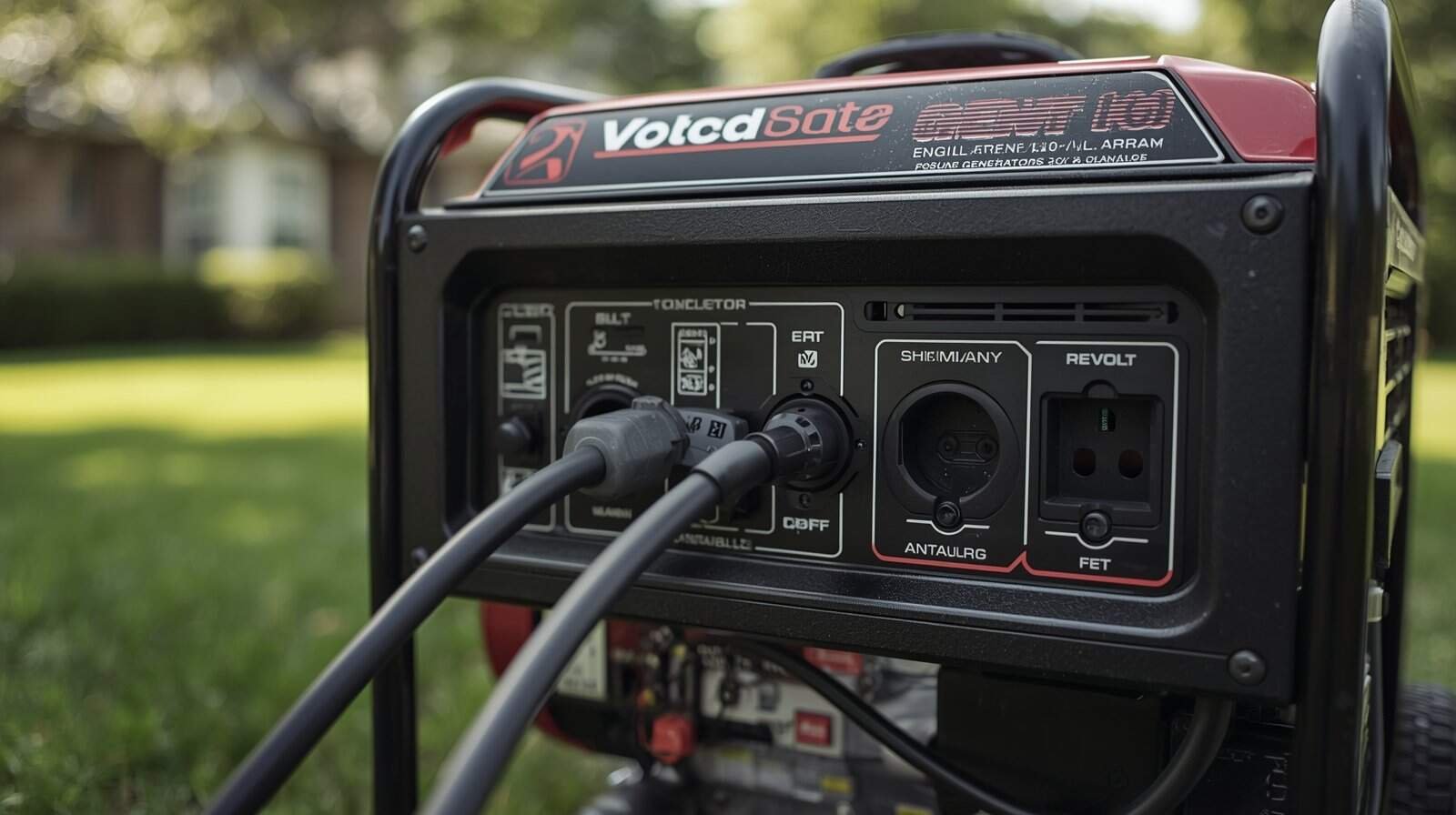
When a generator is running and supplying power to standard outlets but the 240‑volt outlet produces nothing, the situation can be confusing. Homeowners may assume the generator is defective, especially when larger equipment or transfer connections rely on that outlet.
In most cases, a dead 240‑volt outlet points to configuration, load, or internal protection behavior rather than total generator failure. Understanding how 240‑volt output is managed helps clarify what’s happening.
What It Means When the 240‑Volt Outlet Has No Power
On many portable generators, the 240‑volt outlet is supplied by a dedicated circuit path that differs from standard 120‑volt receptacles. Power may be available on one side of the generator but not the other.
If that path is interrupted or disabled, smaller outlets may continue working while the 240‑volt outlet remains dead.
Separate Breakers Protect the 240‑Volt Circuit
Most generators use individual breakers for different output circuits. The breaker protecting the 240‑volt outlet may trip without affecting 120‑volt outlets.
This can create the impression that the generator is functioning normally even though the high‑voltage output is unavailable. A related scenario is discussed in generator breaker is on but no power is coming out.
Load Imbalance Can Disable 240‑Volt Output
Some generators require balanced load across both legs to maintain 240‑volt output. Heavy use on only one side can destabilize voltage and interrupt power delivery.
Voltage irregularities related to this condition are explained in generator produces power but voltage is too low or unstable.
Why 240‑Volt Problems Affect Home Backup Connections
The 240‑volt outlet is commonly used for inlet boxes, transfer switches, and larger equipment. If that outlet is dead, power may never reach the home even though the generator appears to be running normally.
This situation is covered in more detail in generator runs but house has no power, which explores downstream connection checks.
Helpful visual: If your generator runs but output doesn’t behave as expected, this flowchart shows the safe, step-by-step path to verify connections before escalating: Generator Runs but House Has No Power — Safety Setup Flowchart.
Why Repeated Testing Can Increase Risk
Repeatedly plugging and unplugging high‑load connections or resetting breakers without understanding the cause can stress generator components.
Because 240‑volt circuits involve higher energy levels, mistakes can escalate quickly.
When to Stop Troubleshooting and Get Help
If the 240‑volt outlet remains dead despite visible breaker checks and reduced load, professional evaluation is the safest next step.
Clear escalation guidance is provided in when to call an electrician after an outage.
Conclusion
When a generator runs but the 240‑volt outlet has no power, the issue is often isolated to a specific circuit rather than the entire unit.
Recognizing how 240‑volt output is managed helps homeowners avoid unsafe assumptions and make better decisions during outages.