


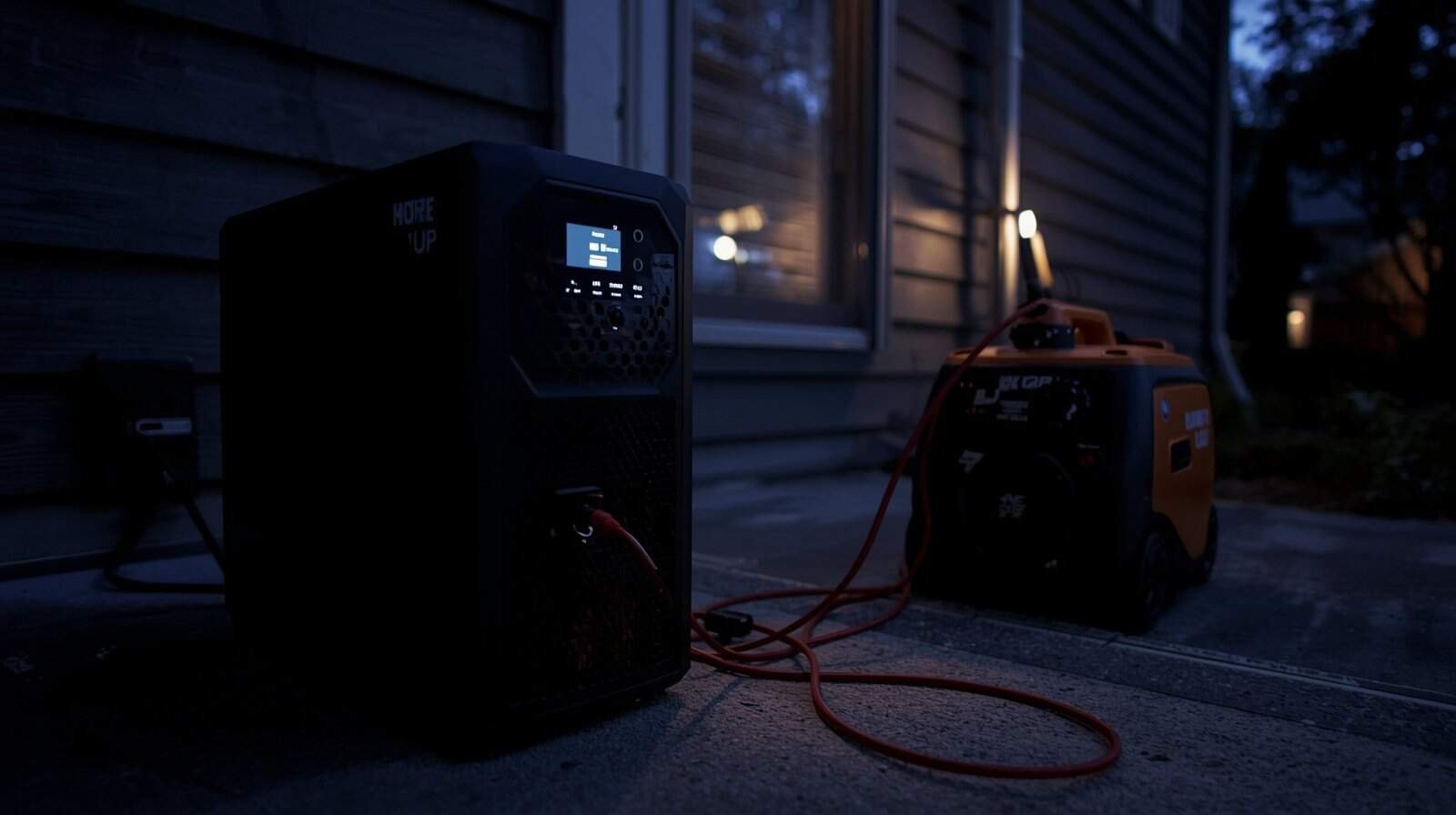
When generator power causes a UPS or medical device to alarm, it can be alarming for homeowners—especially during an outage when backup power is meant to provide reassurance. These alarms are not random. They are safety signals indicating that the electricity being supplied does not meet the device’s operating requirements.
This article explains why generator power often triggers alarms, what risks this behavior signals, and how to decide when generator use is appropriate—or when safer alternatives are needed.
Why Sensitive Devices React Differently to Generator Power
UPS systems and many medical devices are designed to detect subtle changes in voltage, frequency, and waveform quality. While generators can produce usable electricity, their output is rarely as stable or clean as utility power.
When a device senses irregularities outside its acceptable range, it may alarm, switch to battery mode, or shut down entirely to protect internal electronics.
Common Power Quality Issues That Trigger Alarms
Several generator-related conditions commonly cause alarms or warnings on sensitive equipment.
Voltage Fluctuations Under Load
As appliances cycle on and off, generator voltage can dip or spike briefly. These fluctuations may be insignificant to lights or tools but unacceptable for precision electronics.
Voltage instability is explored further in Generator Produces Power but Voltage Is Too Low or Unstable.
Frequency (Hz) Instability
Many UPS systems and medical devices require a stable frequency, typically 60 Hz in the U.S. Generators that cannot maintain consistent engine speed may drift outside this range, triggering alarms.
Non‑Sine Wave Output
Some portable generators produce distorted waveforms rather than clean sine waves. Devices with sensitive power supplies may interpret this distortion as unsafe power.
Why Medical Devices Are Especially Sensitive
Medical equipment is designed with strict safety margins. Devices such as oxygen concentrators, CPAP machines, and infusion pumps monitor incoming power closely to avoid malfunction.
If generator power falls outside approved limits, alarms may sound even if the device continues operating.
For medical‑specific planning guidance, see Backup Power for Medical Devices During Outages.
Why Ignoring Alarms Can Be Risky
Alarms are early warnings, not inconveniences. Continued operation on unstable power can shorten device lifespan, cause erratic behavior, or result in unexpected shutdowns.
Long‑term exposure to poor‑quality generator power can also damage electronics, as explained in Why Generator Power Problems Can Damage Electronics.
Important visual reference: This guide shows why sensitive devices may alarm even when other items work—and what to do safely next: Why a Generator Powers Some Devices but Not Others.
Safer Backup Power Options for Sensitive Equipment
In many cases, battery‑based power stations or properly sized UPS systems provide cleaner, more stable electricity than portable generators.
Hybrid setups—using batteries for sensitive loads and generators for heavy equipment—often offer the safest balance.
When to Stop Troubleshooting and Get Professional Help
If alarms persist, devices behave unpredictably, or medical equipment is involved, continued testing can increase risk.
Clear escalation guidance is outlined in When to Call an Electrician After an Outage.
Conclusion
When generator power causes UPS systems or medical devices to alarm, the issue is usually power quality—not device failure.
Understanding these signals helps homeowners make safer backup power decisions and protect both critical equipment and personal safety during outages.