


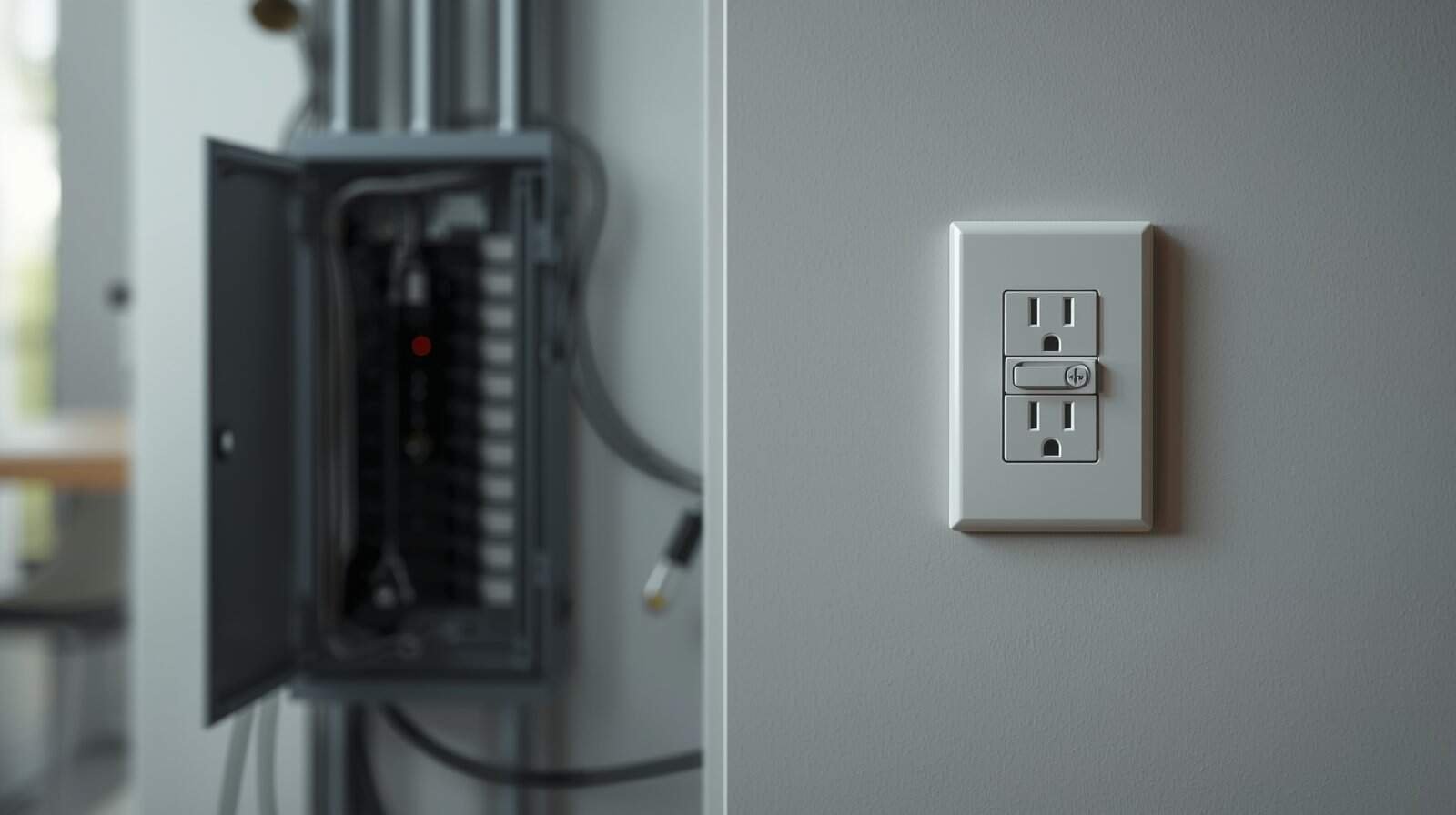
Quick note: After a power outage, it’s common for breakers and GFCI outlets to behave differently than they did before. This page is a safety-first visual guide to help you recognize patterns and know when to stop and call a professional.
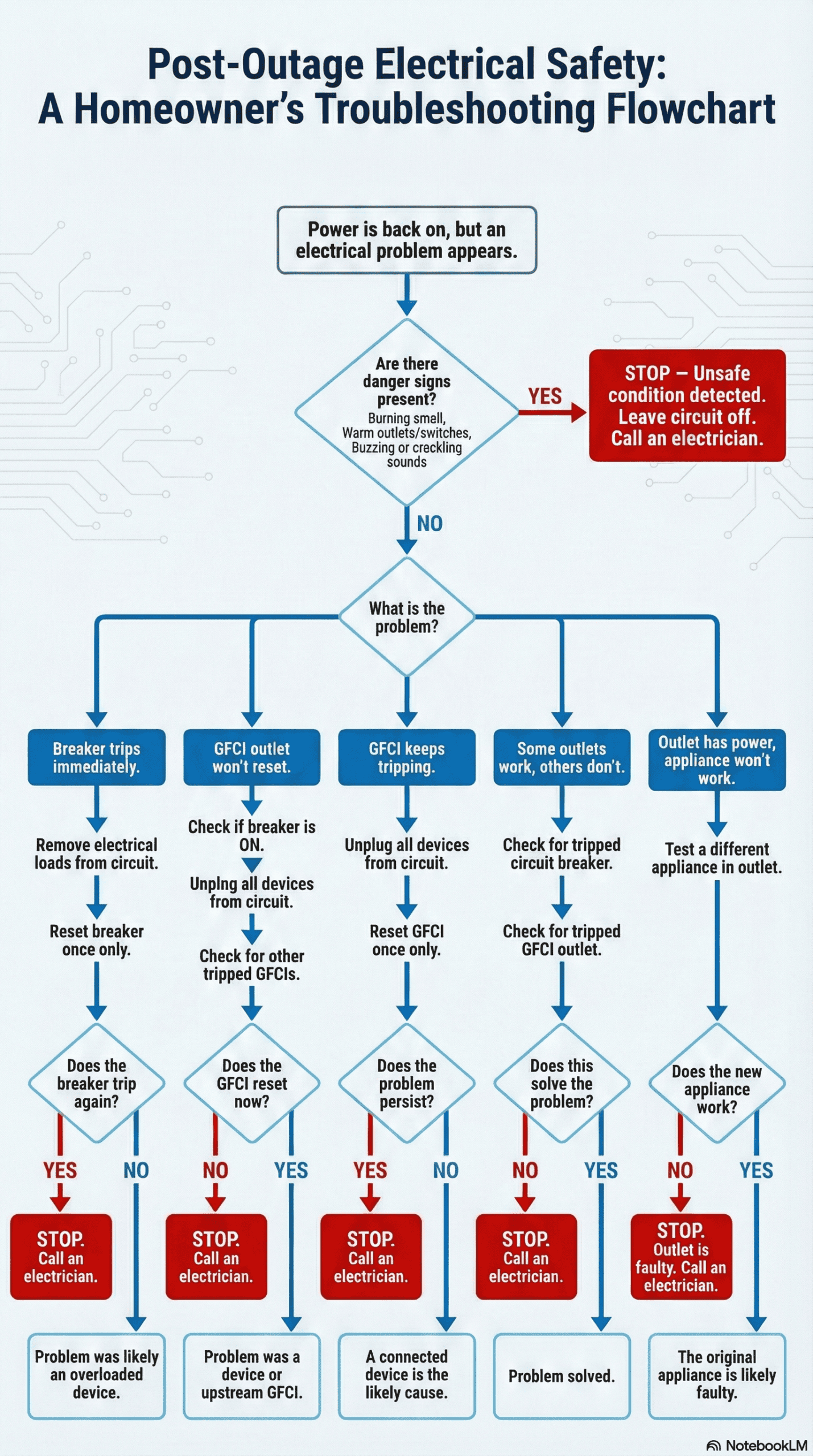
How to Use This Visual Guide
- Start at the top of the flowchart and follow the branch that matches what you’re seeing.
- If you hit a STOP box (burning smell, heat, buzzing/crackling, etc.), do not continue troubleshooting.
- Use the links below to jump to the most relevant deep-dive article on PowerPrepGuide.
Start Here Based on What You’re Seeing
- Breaker won’t reset or trips immediately
- GFCI won’t reset after the outage
- Some outlets work but others don’t
- When to call an electrician after an outage
What This Flowchart Is (and Isn’t)
This flowchart is designed to help homeowners interpret symptoms after power is restored and avoid unsafe trial-and-error resets. It is not a repair guide, and it does not replace professional diagnosis—especially when warning signs are present.
High-Risk Signs: Stop and Call a Professional
Stop troubleshooting and call a licensed electrician if you notice any of the following:
- A burning plastic or sharp metallic smell
- Outlets, switches, cords, or the breaker panel that feel warm or hot
- Buzzing, humming, crackling, or clicking sounds from outlets or devices
- Discoloration, scorch marks, or melted plastic
These signs can indicate active overheating or arcing behind walls—continuing to reset devices can increase fire risk.
Common Post-Outage Patterns (Plain English)
Pattern 1: A breaker trips immediately
This often points to an active fault on the circuit (or a device causing an immediate overload). If a breaker trips again right away, treat that as a safety signal—not something to force repeatedly.
Pattern 2: A GFCI won’t reset
GFCIs can refuse to reset when they detect a fault. After storms, moisture in outdoor, garage, or basement locations can also keep a GFCI from staying set until everything dries fully.
Pattern 3: A GFCI keeps tripping
Repeated tripping can happen due to moisture, downstream load issues, or a device with leakage current. If the problem persists after basic isolation attempts, stop and call a pro.
Pattern 4: Some outlets work, others don’t
This is often caused by an upstream GFCI that’s tripped (sometimes in a different room), a tripped breaker, or a stressed connection revealed by restoration.
Pattern 5: An outlet “has power” but appliances won’t work
This can be a deceptively dangerous symptom—sometimes caused by an unstable return path (neutral) or a high-resistance connection that only fails under load. If behavior is inconsistent or accompanied by flickering/buzzing, treat it as a stop condition.
Common Mistakes to Avoid
- Resetting breakers or GFCIs repeatedly “to see if it holds”
- Assuming an outlet tester or nightlight proves the circuit is healthy under real load
- Missing upstream GFCIs that protect multiple downstream outlets
- Ignoring faint burning smells or warmth because “everything seems to work”
FAQ
Can a power outage damage a breaker or GFCI?
Outages can expose existing weaknesses. Restoration can also create brief surges and electrical noise that trip sensitive protection devices. If a device will not reset or behaves inconsistently, treat it as a safety issue and consult a professional.
Why does everything seem fine until I plug something in?
Some electrical problems only appear under load. If plugging in a normal appliance causes flickering, buzzing, or repeated tripping, stop troubleshooting and get help.
Is it safe to keep resetting breakers?
No. A breaker or GFCI that won’t hold is often doing its job by preventing an unsafe condition from continuing.