


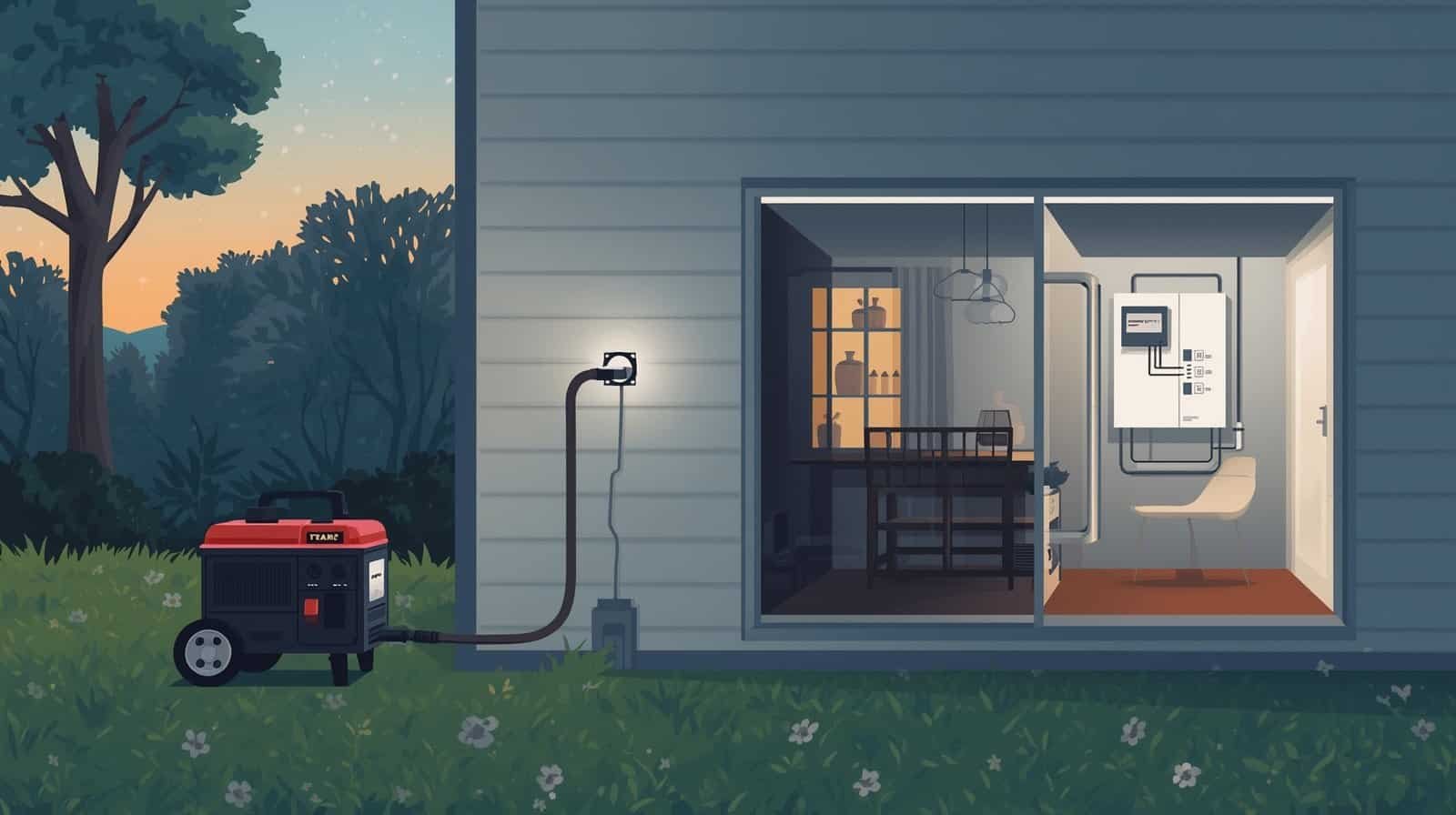
Your generator is running — but your house still has no power. In many cases, the generator isn’t the problem. The issue is that power is not traveling through the full connection path from the generator to your electrical panel. This Visual Guide below shows the correct, safe setup sequence and the most common break points that stop power from reaching your home.
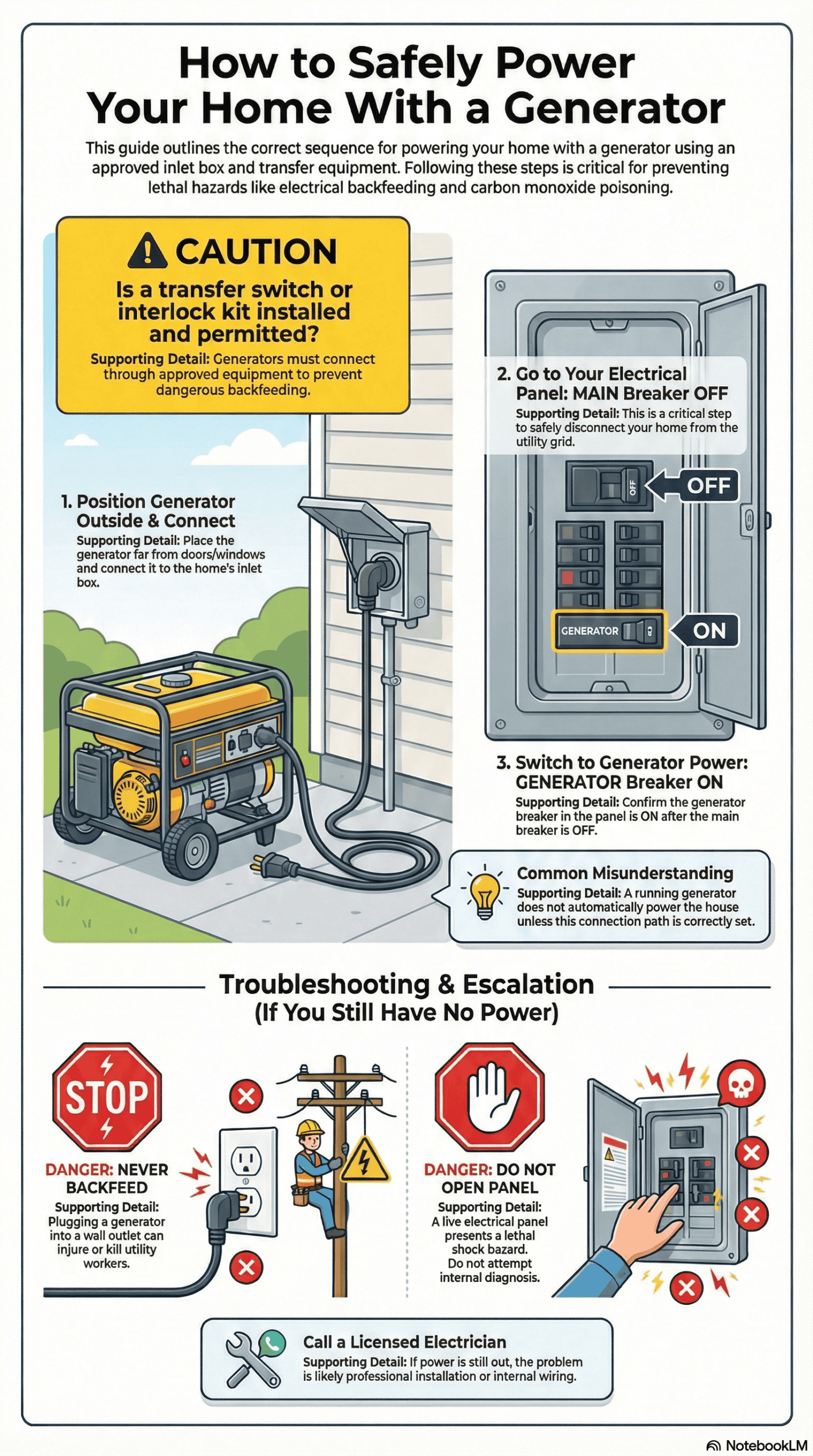
What This Visual Guide Covers
- The correct connection path: generator → inlet box → transfer equipment → panel
- Why a running generator does not automatically power your home
- Safe verification steps (no tools, no panel access)
- Clear STOP conditions and when to call a licensed electrician
Critical Safety Rules (Read First)
- Never backfeed power through a wall outlet or dryer receptacle.
- Do not open the electrical panel or remove covers.
- Do not “experiment” with wiring or breaker changes you don’t fully understand.
- If anything seems abnormal (heat, buzzing, burning smell, visible damage), stop and call a professional.
The Core Idea: Power Must Travel a Complete Path
When the generator is running but the house is dark, one of these is usually true:
- The home is not connected to the generator through approved transfer equipment, or
- The home is connected, but a break point (a switch position or protective device) is stopping power from reaching the panel.
Common Misunderstanding (Why This Happens So Often)
A generator can run perfectly and still power nothing inside the home if the transfer switch or interlock sequence isn’t set correctly. Homeowners often assume “generator running” equals “house powered.” In reality, the panel only receives power when the inlet and transfer equipment are configured correctly.
Safe Checks That Usually Solve It
Use the flowchart above to verify these items in order (no tools, no panel work):
- Approved connection exists: a transfer switch or interlock kit is installed (not cords into outlets)
- Correct transfer position: the switch/interlock is set to generator mode
- Utility isolation is active: the setup prevents utility and generator power from being on at the same time
- Inlet path is “open”: the generator output/inlet path isn’t blocked by a tripped device or incorrect position
If the chart indicates a STOP point, don’t force the next step. That’s your sign the issue is beyond safe homeowner verification.
Common Mistakes to Avoid
- Assuming the generator is faulty before verifying the inlet/transfer path.
- Skipping the transfer switch / interlock step (the most common reason the house stays dark).
- Backfeeding through an outlet “just to test” — this is dangerous and can harm people and equipment.
- Opening the panel to “take a look.” If the flowchart points to an internal issue, that’s professional territory.
- Chasing symptoms room-by-room instead of verifying the main connection path first.
When to Stop and Call a Licensed Electrician
Stop troubleshooting and call a licensed electrician if:
- The inlet/transfer setup appears correct but the home still won’t energize
- The inlet box appears to have power but the panel receives none
- Any protective device trips repeatedly
- You notice heat, buzzing, burning smell, or visible damage
- You’re not 100% sure what transfer equipment you have or how it’s installed
At that point, the problem is likely related to internal wiring, transfer equipment, or professional installation — and further troubleshooting should be handled by a pro.
FAQ
Why does my generator run fine but the house gets no power at all?
Most often, the home isn’t actually connected through approved transfer equipment (transfer switch or interlock), or that equipment isn’t set to generator mode. The generator can be operating normally while the panel remains isolated.
Does an inlet box automatically send power to the panel?
No. The inlet box is only one part of the path. Power still must pass through the transfer switch or interlock arrangement that safely isolates the home from utility power.
Why do some people say “just plug into the dryer outlet”?
That is a form of backfeeding and can be extremely dangerous. This guide intentionally avoids unsafe methods and focuses on approved setups.
What if only a few things work in the house?
That can happen if only certain circuits are selected or supported by the transfer setup. Use the flowchart to confirm the connection path first before assuming the generator is underpowered.
Is it safe for me to check breaker positions?
You can verify the obvious states indicated by your transfer equipment. Do not remove covers or open the panel. If the flowchart indicates internal wiring or installation problems, stop and call a licensed electrician.
Helpful Next Reads
If you want deeper explanations behind the key steps in this flowchart, start here:
- Generator Runs but House Has No Power: Transfer Switch and Inlet Box Checks
- Transfer Switch vs Interlock Kit: A Plain-English Comparison
- Generator Inlet Boxes Explained: What They Do and Why They Matter
- Backfeeding Symptoms Homeowners Miss (And Why It’s Dangerous)
Quick Reminder
This Visual Guide is designed for homeowner safety and decision clarity — not electrical work. If your home still won’t energize after the safe verification steps, the safest choice is to stop and escalate rather than experimenting.