


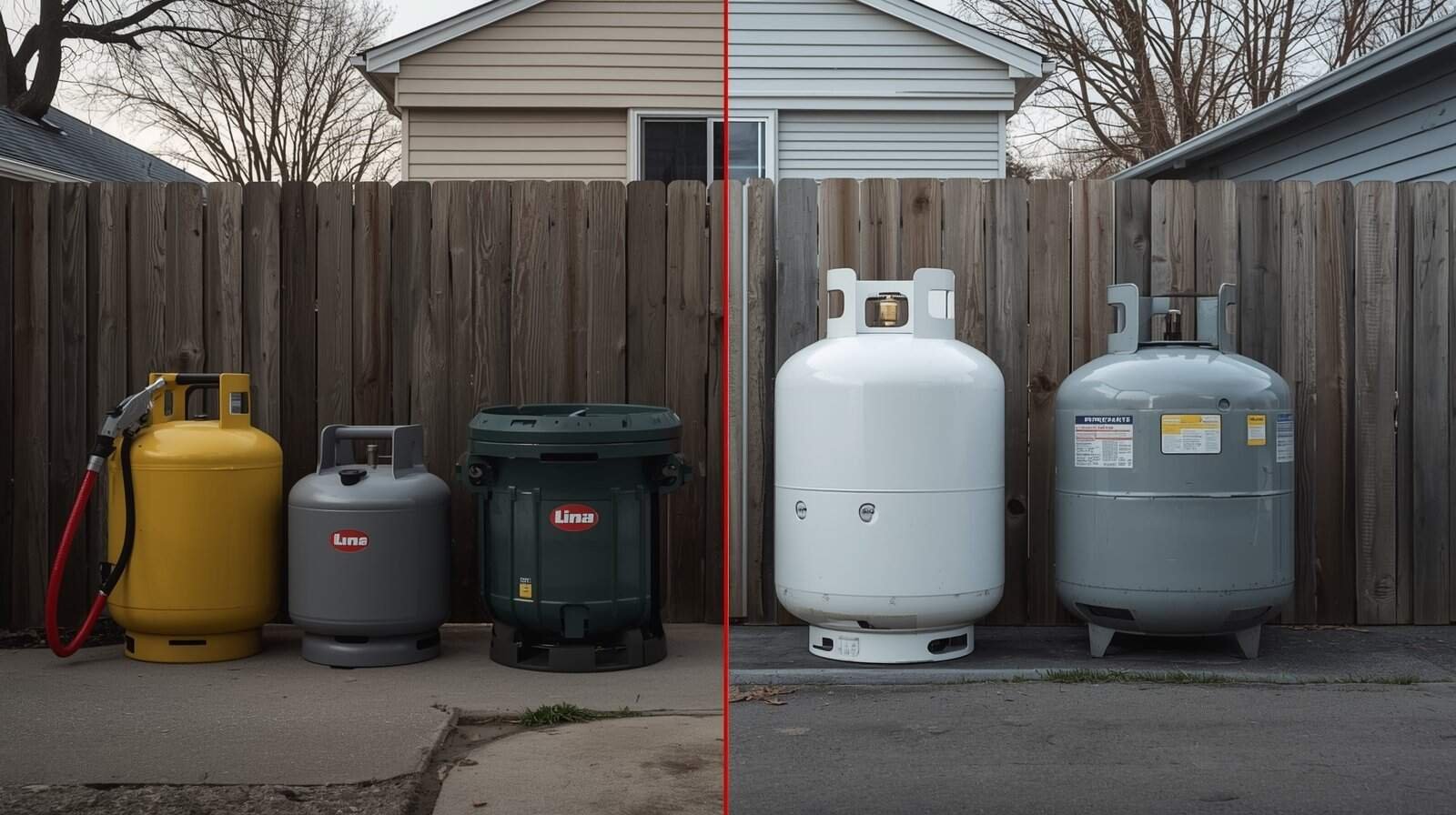
When planning backup power, many homeowners focus on generator size and runtime while overlooking one critical factor: fuel storage risk. Gasoline and propane behave very differently when stored, and those differences can affect safety long before a generator is ever turned on.
This article compares gasoline and propane storage risks so homeowners can better understand the tradeoffs involved in keeping fuel on hand.
Why Fuel Storage Risk Matters
Fuel storage risks are not limited to fire alone. Vapors, pressure buildup, leaks, and environmental exposure all contribute to potential hazards. Understanding how each fuel behaves helps homeowners make safer decisions.
Gasoline Storage Risks Explained
Gasoline is highly volatile and produces flammable vapors even at normal temperatures. These vapors can travel and ignite from distant ignition sources such as pilot lights or electrical sparks.
Gasoline also degrades over time, increasing the likelihood of container swelling, leaks, and poor generator performance if stored too long.
Propane Storage Risks Explained
Propane is stored under pressure in sealed tanks. While it does not degrade over time, propane presents different risks related to tank integrity, valve failure, and pressure release.
Propane leaks tend to dissipate outdoors but can accumulate dangerously in enclosed or poorly ventilated spaces.
Indoor vs Outdoor Storage Risk Differences
Gasoline should never be stored in living spaces due to vapor accumulation. Propane storage indoors is also restricted in many areas because of pressure and ventilation concerns.
Outdoor storage significantly reduces risk for both fuels when done correctly.
Which Fuel Is Safer to Store?
Neither fuel is inherently “safe,” but propane generally offers more stable long-term storage when tanks are properly placed and maintained. Gasoline requires stricter quantity limits and rotation.
For a broader operational comparison, see generator fuel types compared.
How Storage Risk Affects Refueling Safety
Storage conditions directly influence refueling safety. Poorly stored fuel increases spill risk and vapor exposure. Review refueling a generator safely for best practices.
When to Review Local Safety Guidance
Local fire codes and regulations may impose additional restrictions on fuel storage. Homeowners should consult local authorities for guidance specific to their location.
Conclusion
Gasoline and propane present different storage risks that homeowners should understand before choosing a generator fuel. Evaluating volatility, pressure, ventilation, and long-term stability helps reduce safety hazards while maintaining reliable backup power.