


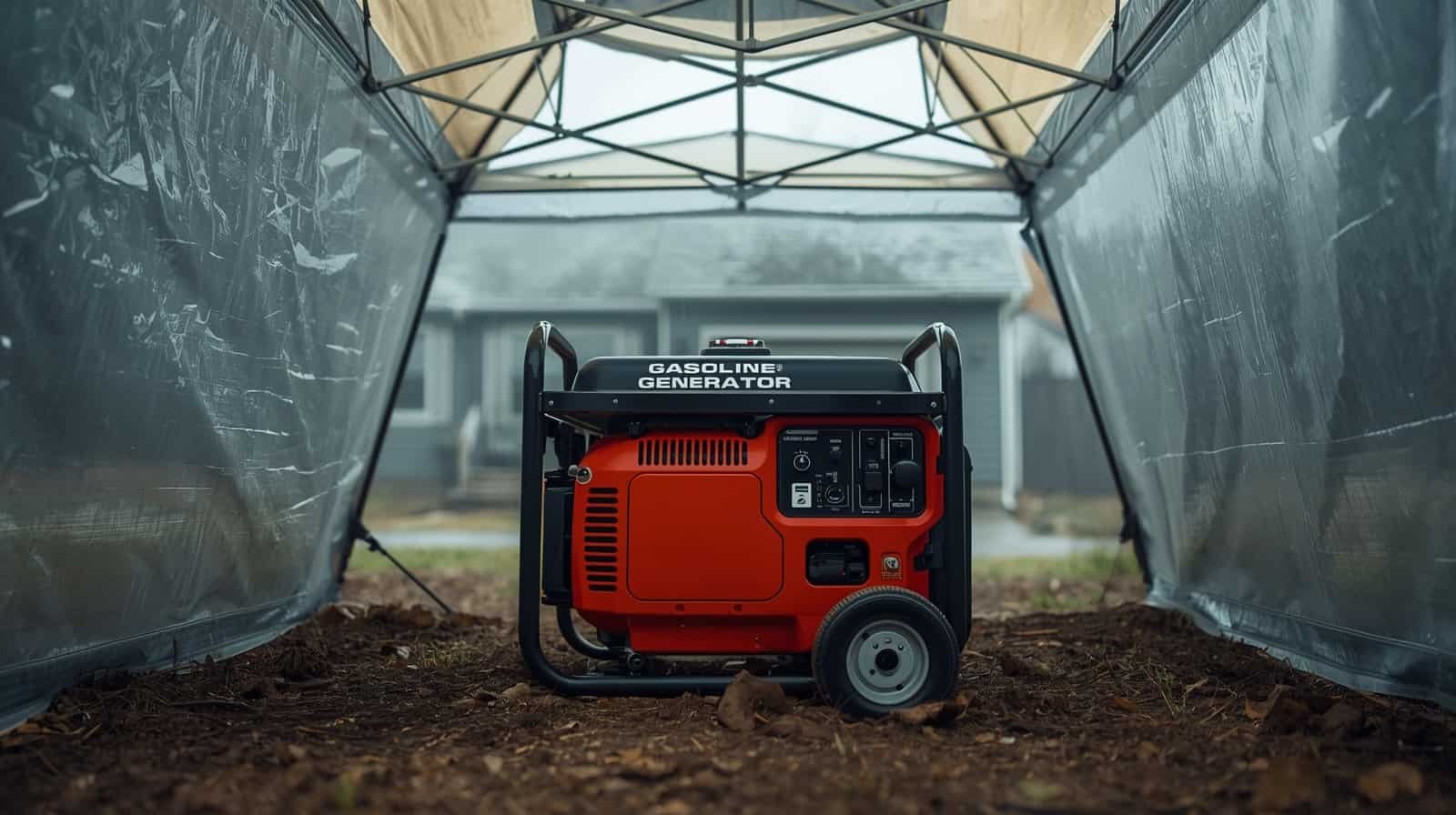
Short answer: Generator covers and tents can be safe — but only if they are specifically designed for operation while the generator is running. Improvised covers such as tarps, plastic sheeting, or enclosed tents can trap heat and exhaust, increasing the risk of fire and carbon monoxide poisoning.
When storms cause outages, protecting your generator from rain or snow is important. However, weather protection must never compromise ventilation, airflow, or safe placement distance from the home. The goal is to keep the generator dry from above while keeping it open to air on all sides.
Why Covering a Running Generator Is Risky
Portable generators produce significant heat, exhaust gases, and vibration during operation. Any cover used while the generator is running must allow unrestricted airflow around the engine and alternator while preventing water from entering electrical components and connection points.
If airflow is restricted, internal temperatures can rise quickly. Overheating increases the risk of fire, component damage, and shortened equipment lifespan — especially during multi-hour operation in storm conditions.
Carbon Monoxide Risk Does Not Decrease With a Cover
Carbon monoxide (CO) is colorless and odorless. Even short exposure can be deadly. A cover does not reduce exhaust output — it only blocks precipitation.
Improper covers can actually increase danger if they redirect or trap exhaust gases near the unit. For full exhaust safety guidance, review Generator Carbon Monoxide Safety.
Safe Generator Covers vs. Dangerous Improvised Solutions
Safe: Purpose-Built Generator Tents
Proper generator tents are designed with elevated canopies and open sides. They shield falling rain while allowing heat and exhaust to escape naturally.
Look for covers that:
- Are rated for use during active operation
- Remain open on multiple sides
- Allow clear exhaust direction away from structures
- Do not contact hot engine components
Unsafe: Improvised or Fully Enclosed Covers
Improvised solutions introduce serious risk. These include:
- Plastic tarps draped directly over the unit
- Garbage bags or plastic sheeting
- DIY wooden or plastic enclosures
- Fully enclosed camping tents
These materials can melt, collapse, trap exhaust, or block ventilation. In some cases, they create fire hazards in addition to carbon monoxide risk.
Why Garages, Porches, and Sheds Are Never Acceptable
Running a generator inside a garage, shed, porch, or partially enclosed patio is never safe — even if doors are open. Exhaust gases can accumulate quickly and seep into living areas.
Safe placement distance is more important than weather protection. Review How Far a Generator Should Be From the House before deciding where to operate.
Weather Protection Without Compromising Placement
The safest weather strategy combines three factors:
- Outdoor placement at least 20 feet from structures
- Open-sided rain protection
- Stable, elevated positioning above pooled water
Storms often bring wind-driven rain. Make sure the generator cannot tip or shift during gusts.
Rain creates unique shock and placement mistakes (especially when people try to “shelter” the generator too close to the home). For the full rule set and common wet-weather errors, read Can You Run a Generator in the Rain? Yes — But Only If You Do This.
Extension Cord Safety Still Applies
Covers protect the generator, but connection points must also remain dry. Use only outdoor-rated extension cords and keep connections elevated off wet ground.
Undersized or water-exposed cords can overheat or cause unstable voltage delivery. See Generator Extension Cord Safety for proper sizing and protection guidance.
Frequently Asked Questions
Can I use a tarp to cover my generator while it’s running?
No. Tarps can trap heat and redirect exhaust gases. They are not designed for safe active operation and may increase fire and carbon monoxide risk.
Are generator tents safe?
Only tents specifically rated for use while the generator is running are considered safe. They must allow full ventilation and remain open on multiple sides.
Can I build a small enclosure for my generator?
No. Homemade enclosures frequently restrict airflow and create hazardous exhaust buildup. Generators must remain in open-air environments.
Do inverter generators need weather protection?
Yes. Inverter generators are not waterproof. Even partially enclosed designs still require open-sided protection during rain.
Conclusion: Protect From Rain — Not From Airflow
Generator covers can reduce weather-related damage when used correctly. However, ventilation, placement distance, and carbon monoxide awareness are always the primary safety priorities.
Weather protection should never compromise airflow or exhaust direction. When in doubt, prioritize open-air operation and proper placement over convenience.