


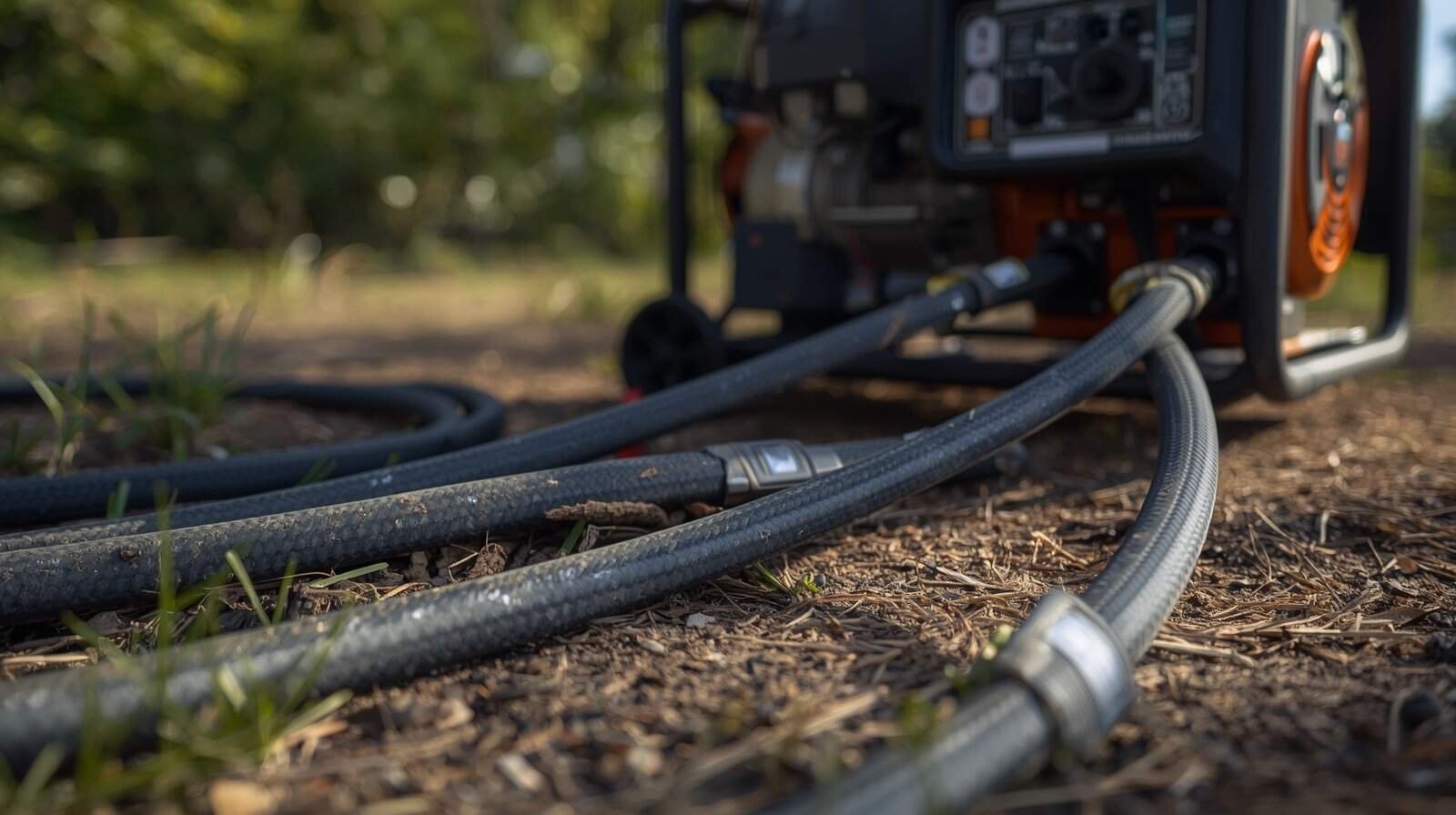
Short answer: Generator extension cords can be safe if they are outdoor-rated, heavy-gauge, properly grounded, and used in a way that avoids heat buildup and wet connection points. The most common risks come from cords that are too thin, too long, damaged, or exposed to rain and standing water.
Extension cords are often the first solution homeowners reach for when using a portable generator during an outage. While extension cords can be used safely, the wrong type — or improper setup — can create serious fire, shock, and equipment damage risks.
This guide explains what makes an extension cord generator-safe, the most common mistakes homeowners make, and when extension cords are no longer the safest option.
For detailed gauge and length recommendations, see Extension Cord Sizing for Generators.
Why Extension Cords Are a High-Risk Point in Generator Setups
Generators produce substantial electrical output, especially when powering refrigerators, sump pumps, heaters, or power tools. That load travels entirely through the extension cord. If the cord is undersized, damaged, or improperly rated, it becomes the weak link in the system.
Unlike household wiring protected inside walls, generator extension cords are exposed to weather, foot traffic, bending, and tension. Those real-world stresses increase both overheating and shock risk — especially during long outages when cords stay deployed for hours or days.
What Makes an Extension Cord Generator-Safe?
Generator-safe extension cords are heavy-gauge, outdoor-rated cords designed to handle higher amperage loads. They are typically shorter and thicker than standard household cords.
Look for cords that are:
- Rated for outdoor use (weather-resistant insulation)
- Heavy-gauge (lower AWG number = thicker wire)
- Grounded (three-prong configuration)
- Free of cuts, compression damage, or loose connectors
- Equipped with tight, secure plug ends (no wobble)
Proper sizing is critical. Detailed gauge guidance is explained in Extension Cord Sizing for Generators.
Common Generator Extension Cord Mistakes
- Using indoor-rated cords outdoors
- Daisy-chaining multiple cords together
- Running cords under rugs or through tightly closed doors
- Allowing cords to sit in water, snow, or mud
- Using cords that feel warm, softened, or have discolored plug ends
Daisy-chaining cords increases resistance and voltage drop. Every added connection point becomes a heat and failure point, especially in damp conditions where moisture can enter loosely joined plugs.
Voltage Drop: The Hidden Appliance Killer
Long or undersized extension cords cause voltage drop — meaning appliances receive lower voltage than required. Motors may struggle to start, hum excessively, or run hotter than designed.
Over time, this stresses compressors, electronics, and circuit boards. Appliance damage during generator use is often caused by poor cord selection rather than generator malfunction.
Wet Conditions Increase Shock Risk
Rain, snow, and standing water amplify risk at connection points. Outdoor-rated cords reduce exposure but do not eliminate it. Connections should be elevated off the ground and shielded from direct precipitation.
This is also where many homeowners make the worst “rain mistake”: moving the generator too close to the house to keep cords short. Rain safety must be handled without compromising placement and ventilation.
For the full wet-weather rule set (including what to do during storms and what NOT to do), see Can You Run a Generator in the Rain? Yes — But Only If You Do This.
When Extension Cords Are No Longer the Safest Option
Extension cords are appropriate for powering individual appliances. They are not ideal for powering multiple home circuits or managing whole-home loads.
If you are trying to power your home rather than a few isolated devices, fixed connection methods are significantly safer. Review Generator Inlet Boxes Explained to understand safer integration options.
Carbon Monoxide Safety Still Applies
Electrical safety does not replace exhaust safety. Even with perfect extension cord setup, generators must be operated outdoors and positioned at a safe distance from the home.
Improper placement remains one of the leading causes of generator-related fatalities. Review Generator Carbon Monoxide Safety for placement and detection guidance.
Conclusion: Extension Cords Are Part of the System — Not an Afterthought
Extension cords are often treated as accessories. In reality, they are critical load-bearing components in generator setups. Choosing the correct gauge, length, and rating — and avoiding common mistakes — reduces fire risk, protects appliances, and improves overall backup power safety.
If extension cords feel like a temporary or improvised solution, that may be a sign your backup system needs reevaluation.