


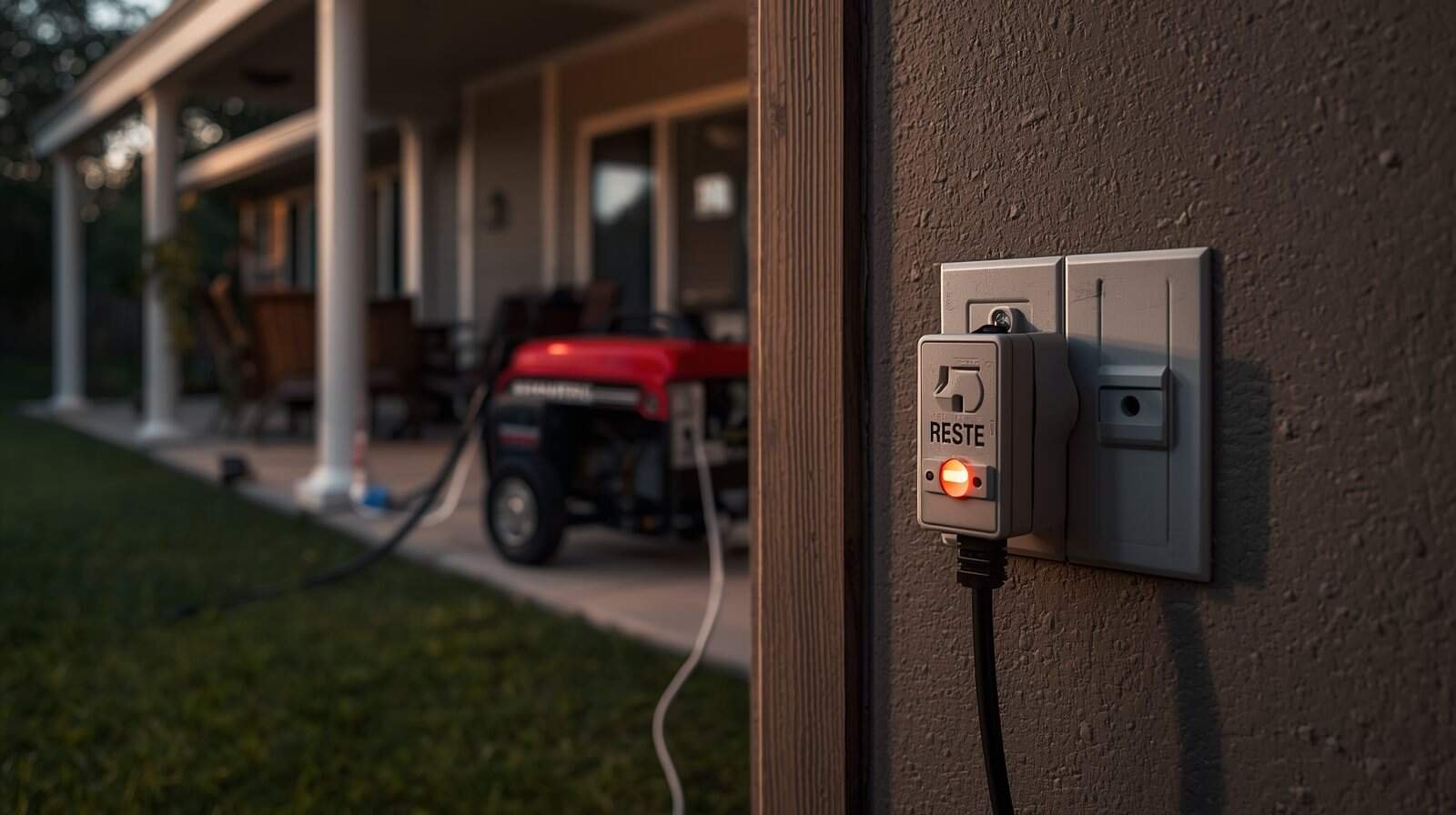
When a generator is running but GFCI outlets repeatedly trip, it can feel like power is available but unusable. Appliances may lose power suddenly, outlets may need constant resetting, and the situation can quickly become frustrating.
In most cases, this behavior is not a faulty outlet. It is a safety response triggered by electrical conditions that GFCI devices are designed to detect.
What It Means When GFCI Outlets Trip on Generator Power
GFCI outlets monitor the flow of electricity and trip when they detect imbalance or leakage that could indicate shock risk. When powered by a generator, those conditions may appear more frequently.
Repeated tripping usually signals grounding differences, moisture intrusion, or unstable power rather than an outlet failure.
Grounding Differences Between Generators and Homes
Generators and residential electrical systems handle grounding differently. When power sources are changed, GFCI outlets may sense current returning through unintended paths.
This mismatch can cause immediate or repeated tripping even when appliances appear to be operating normally.
Moisture and Outdoor Connections Increase Sensitivity
Generators are often used outdoors, where moisture, humidity, or damp extension cords can introduce leakage paths that GFCI outlets detect.
This behavior is especially common after storms or in humid conditions and is discussed further in GFCI keeps tripping after an outage.
Power Quality Issues Trigger GFCI Protection
Voltage instability or uneven power delivery can confuse GFCI sensing circuits. Fluctuating current may appear as leakage, causing nuisance trips.
Related power quality behavior is covered in generator runs but power is weak or inconsistent, which often overlaps with GFCI complaints.
How This Differs From Generator Breaker Trips
A GFCI trip protects against shock hazards, while a generator breaker trip protects against overload or short circuits. The two are often confused but respond to different risks.
If the generator’s own breaker is tripping instead, see generator breaker keeps tripping for a related but distinct scenario.
Why Repeated GFCI Resets Can Be Risky
Repeatedly resetting a tripped GFCI without addressing the cause can expose users to shock hazards. GFCI devices trip for safety reasons, not convenience.
Persistent tripping should be treated as a warning, not an inconvenience.
When to Stop Troubleshooting and Get Help
If GFCI outlets continue tripping despite dry conditions and reduced load, further testing may increase risk. Generator-related grounding and power quality issues often require professional evaluation.
Clear escalation guidance is provided in when to call an electrician after an outage.
Conclusion
When GFCI outlets keep tripping on generator power, the outlets are responding to conditions they are designed to protect against. While inconvenient, this behavior helps reduce shock risk.
Recognizing the cause early helps homeowners avoid unsafe resets and make safer power decisions during outages.