


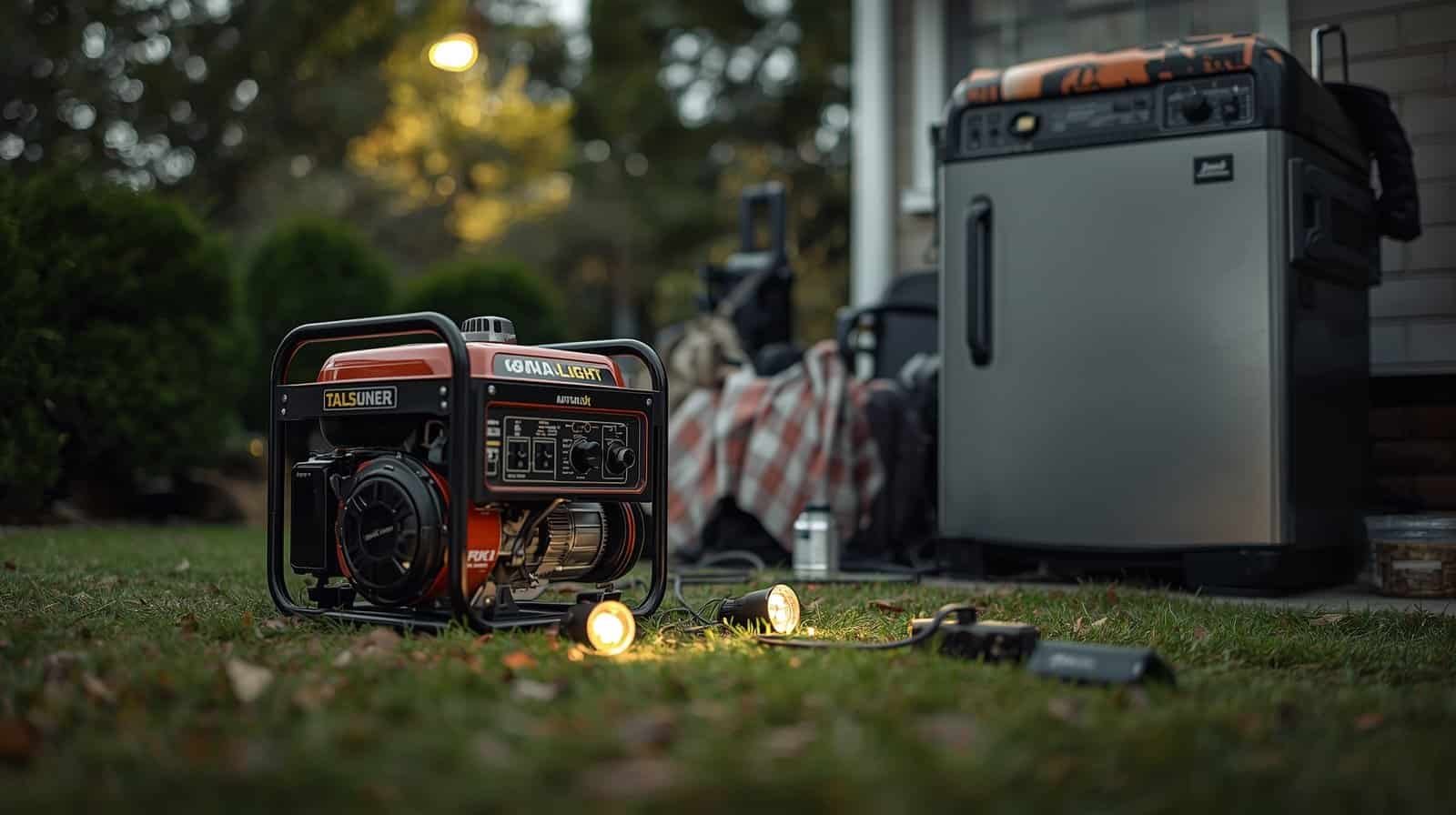
It can be confusing when a generator powers some devices—like lights or chargers—while other appliances refuse to start or shut off unexpectedly. This behavior is common and often misunderstood, leading homeowners to assume a generator failure when the real issue is electrical demand, voltage stability, and device sensitivity.
What This Situation Usually Means (and What It Doesn’t)
When some devices work and others don’t, the generator is rarely “broken.” In most cases, it is producing power, but not in a way that meets the starting or operating requirements of certain appliances. This partial operation is often an early warning sign that the generator is at or near its practical limits.
Why Some Devices Work While Others Don’t
Different devices place very different demands on a generator. Simple resistive loads, such as incandescent lights or basic heaters, draw power steadily and predictably. More complex devices—especially those with motors, compressors, or electronic controls—require higher starting current and stable voltage.
A generator can appear to function normally while still being unable to meet the demands of certain devices.
Starting Current vs Running Power
Many appliances draw two to three times their normal running wattage when starting. This surge, known as inrush current, can overwhelm a generator even if its rated capacity seems sufficient.
When inrush demand exceeds available capacity, the generator may briefly dip in voltage, preventing the appliance from starting while smaller devices continue to operate.
Need a faster diagnosis? This visual guide shows why generators often power small devices but struggle with motors and compressors—and what safe adjustments to try next: Why a Generator Powers Some Devices but Not Others.
Voltage Sensitivity and Modern Electronics
Modern electronics are designed to shut down when voltage falls outside safe ranges. This protective behavior can make it seem like the generator “refuses” to power certain devices, even though power is technically present.
For a deeper explanation of unstable output behavior, see generator produces power but voltage is too low or unstable.
Load Balancing and Outlet Selection
Generators often provide multiple outlets tied to different windings or breakers. Plugging high-demand devices into the same outlet group can overload one circuit while others remain lightly loaded.
Redistributing loads across outlets can sometimes restore operation without reducing total demand.
Extension Cords and Delivery Losses
Undersized or excessively long extension cords increase resistance and reduce voltage at the appliance. This effect may only become apparent with higher-demand devices.
Confirm proper cord selection using extension cord sizing for generators.
Why This Problem Is Easy to Misdiagnose
Because some devices continue to work, homeowners often rule out generator problems too quickly. In reality, partial operation often signals capacity limits, voltage instability, or delivery losses—not a fully functional setup.
If output appears inconsistent across all outlets, review generator runs but produces no power for related internal causes.
Protecting Sensitive Equipment
Repeated failed starts or unstable voltage can damage electronics and motor windings over time. Avoid forcing devices to start repeatedly when they fail to run, as this increases heat and electrical stress.
For broader risk context, see why outages damage electronics.
When to Stop and Reassess
If reducing load and redistributing devices does not restore stable operation, continued use may cause damage. Shut the generator down and reassess capacity needs, outlet configuration, or environmental factors.
If some things work but your home still doesn’t feel “powered,” use this visual guide to confirm you’re actually connected through the correct inlet and transfer path: Generator Runs but House Has No Power — Safety Setup Flowchart.
Conclusion
A generator that powers some devices but not others is often signaling electrical limits rather than failure. Understanding starting current, voltage sensitivity, and power delivery helps homeowners recognize when generator power is no longer reliable—or safe—to push further.