


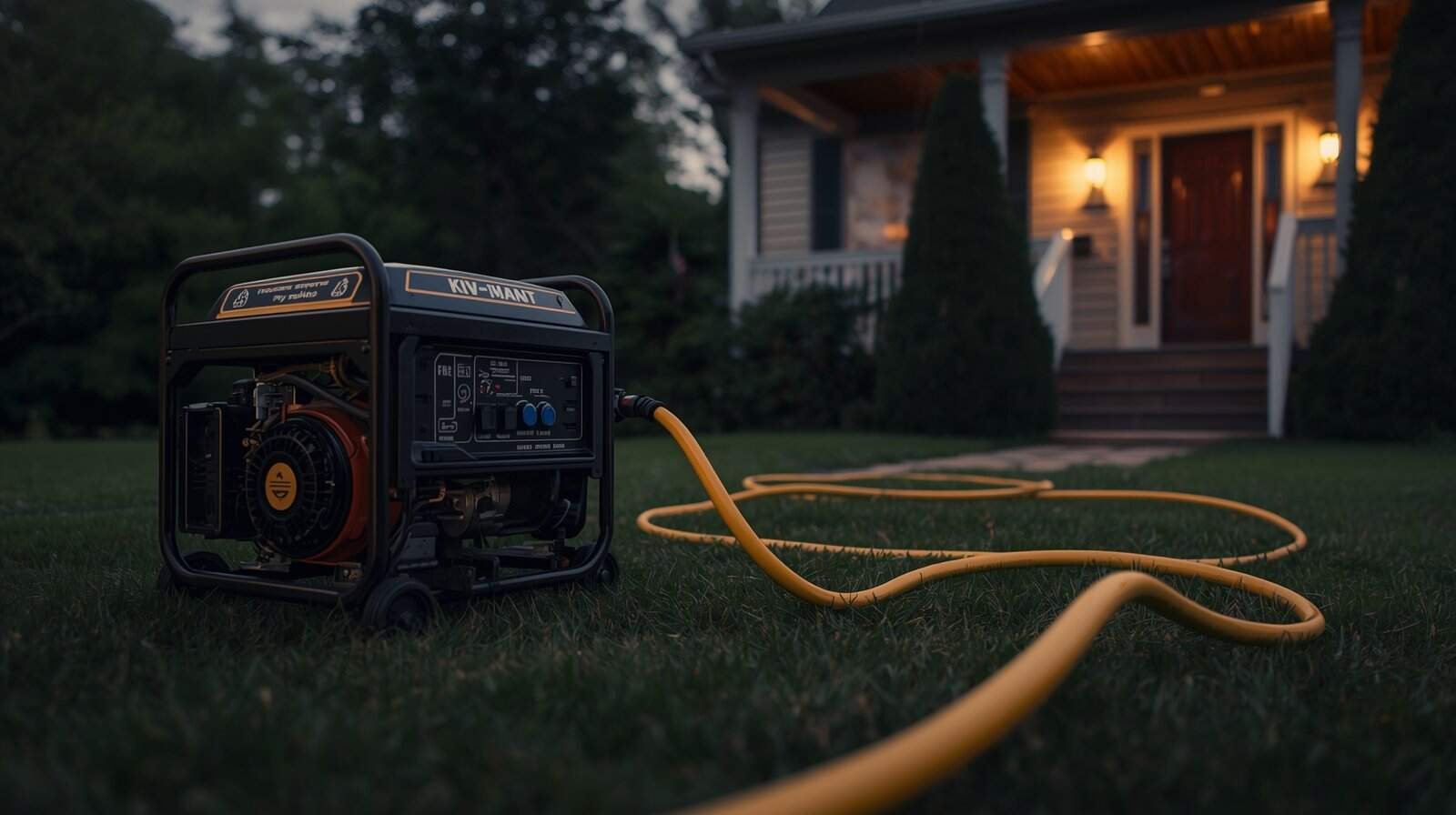
A generator that runs smoothly with no load but struggles or shuts down as soon as extension cords are connected is sending an important signal. In many cases, the generator itself is functioning correctly—the problem lies in how power is being delivered through the cords.
This scenario is common during outages and often misunderstood. Understanding how extension cords affect electrical load helps prevent equipment damage and unsafe operating conditions.
Why Extension Cords Change Generator Behavior
When a generator is running without cords connected, it is under little to no electrical demand. Once cords are attached, resistance is introduced into the system, and the generator must work harder to maintain voltage and frequency.
If the cords are undersized, excessively long, or damaged, they can restrict power flow enough to cause voltage drop or overload conditions that stress the generator.
Undersized Cord Gauge and Voltage Drop
Extension cords that are too thin for the electrical load create resistance. This resistance causes voltage to drop between the generator and the connected devices.
Appliances may struggle to start, generators may sound strained, or protective systems may shut the unit down entirely.
Proper cord selection is explained in Extension Cord Sizing for Generators: Gauge, Length, and Overheating Risks.
Excessive Cord Length Increases Electrical Stress
Long extension cords amplify voltage drop, even when the gauge appears adequate. The farther electricity must travel, the more resistance it encounters.
This can lead to unstable power delivery, especially when multiple appliances attempt to start simultaneously.
How Cord-Related Voltage Issues Affect Generators
Generators respond to voltage instability by increasing engine effort or activating protective shutdowns. Homeowners may misinterpret this as a generator failure.
Related voltage behavior is covered in Generator Produces Power but Voltage Is Too Low or Unstable.
Outlet vs Cord Confusion
In some cases, generator outlets test correctly, but power fails to reach appliances through the cord. This often points to internal cord damage or connector problems rather than generator output issues.
This scenario is discussed in Generator Outlet Has Power but Extension Cord Doesn’t.
Why Repeated Testing Can Increase Risk
Continuously connecting and disconnecting cords while experimenting with loads can overheat cords, damage generator outlets, and stress connected appliances.
Electrical heat and resistance problems often worsen with repeated attempts rather than improving.
When to Stop and Seek Professional Guidance
If generator behavior remains unpredictable, cords become warm, or power quality affects critical devices, professional evaluation may be necessary.
Clear escalation guidance is outlined in When to Call an Electrician After an Outage.
Conclusion
When a generator runs fine until extension cords are connected, the issue is usually related to cord size, length, or condition—not the generator itself.
Recognizing these limits helps homeowners choose safer setups and avoid preventable damage during power outages.