


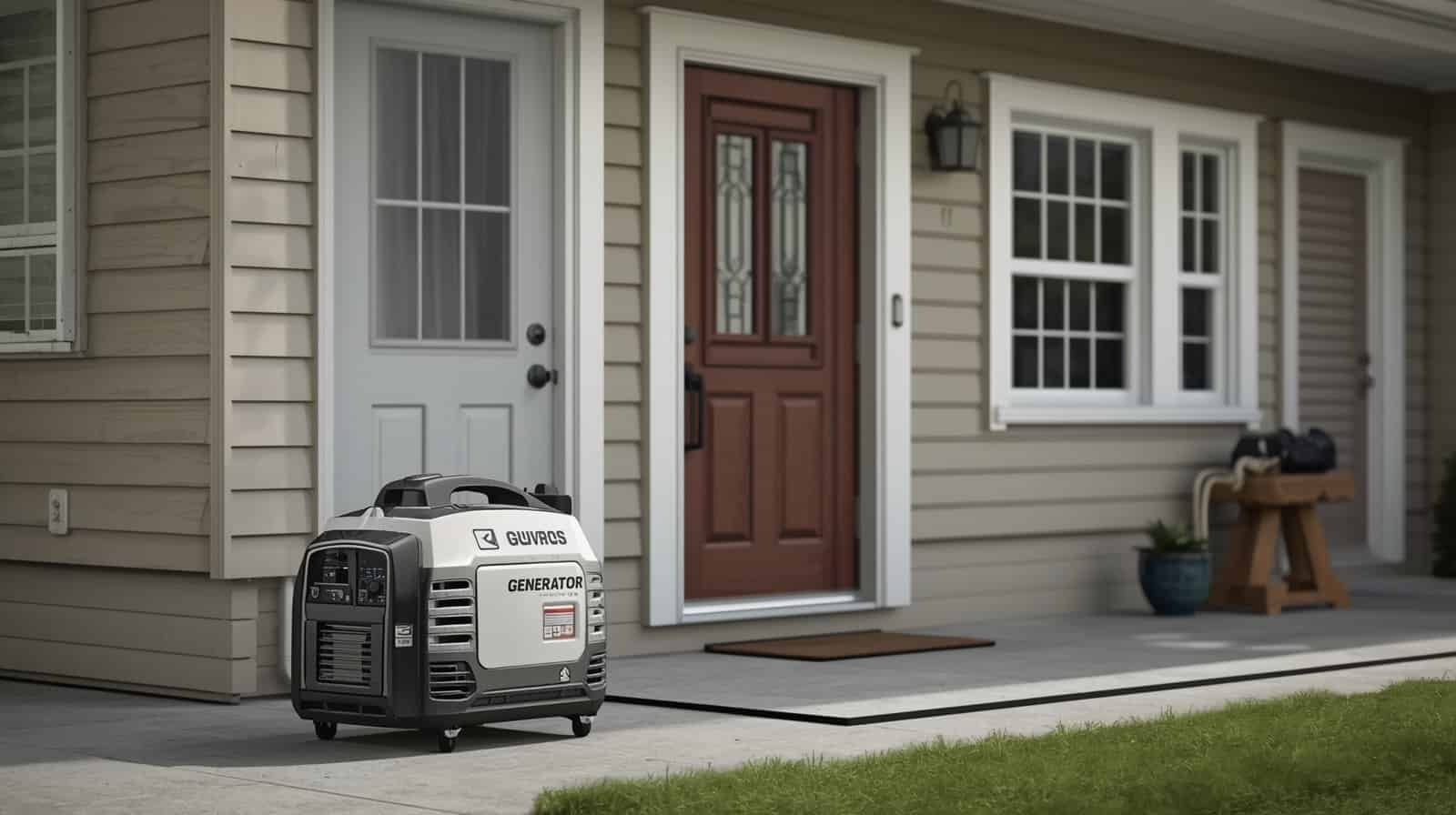
One of the most common — and dangerous — generator mistakes homeowners make is placing the unit too close to the house. Convenience should never override placement safety. Improper generator distance significantly increases the risk of carbon monoxide exposure.
In general, portable generators should be placed at least 20 feet away from the home, with exhaust directed away from doors, windows, and vents. More distance is always safer.
Why Generator Distance Matters
Portable generators produce carbon monoxide (CO) during normal operation. This gas is colorless and odorless, meaning it can accumulate indoors without warning.
Carbon monoxide does not need a wide opening to enter a structure. It can travel through soffit vents, crawl space openings, open windows, door gaps, and HVAC intake vents. When a generator is too close to the home, exhaust can be drawn inside through normal air movement patterns.
The 20-Foot Rule — And Why More Is Better
Safety agencies commonly recommend a minimum distance of 20 feet between a generator and the home. This guideline reduces the likelihood that exhaust gases will enter living areas under typical airflow conditions.
However, 20 feet is a minimum — not a guarantee. Wind direction, building design, and storm conditions can all influence exhaust travel. If space allows, increasing distance further improves safety.
If you are unsure about overall exhaust risk, review Generator Carbon Monoxide Safety for a full breakdown of how CO exposure occurs.
Factors That Affect Safe Placement
Distance alone is not the only consideration. Several environmental and structural factors influence exhaust behavior:
- Wind direction: Wind can redirect exhaust back toward the home.
- Building layout: Corners and recessed entryways trap airflow.
- Elevation changes: Lower placement areas may allow exhaust pooling.
- Vent locations: Soffit and crawl space vents can draw exhaust inward.
During storms, pressure changes and reduced ventilation may increase accumulation risk. If operating during wet conditions, placement considerations are further explained in Can You Run a Generator in the Rain?.
Why Garages, Porches, and Covered Areas Are Unsafe
Running a generator in a garage — even with the door open — is extremely dangerous. Covered patios, enclosed breezeways, and carports also restrict airflow and allow exhaust buildup.
These locations create partial enclosures that trap carbon monoxide near the home. Open doors and windows do not provide reliable ventilation.
Electrical Convenience Must Never Override Placement
Placing a generator closer to the home may seem convenient for shorter extension cord runs. However, electrical convenience must never justify unsafe placement.
If longer distances require better electrical integration, review Generator Extension Cord Safety for proper cord setup guidance and Generator Inlet Boxes Explained for safer fixed connection options.
Carbon Monoxide Detectors Remain Essential
Even when the generator is positioned at a safe distance, carbon monoxide detectors provide critical early warning. Install working CO detectors on every level of the home and near sleeping areas.
If a CO alarm sounds during generator operation, move to fresh air immediately and do not re-enter until placement has been corrected.
Conclusion: Distance Is a Life-Safety Control
Placing a generator at least 20 feet from the home — with exhaust directed away from openings — is one of the most effective ways to reduce carbon monoxide risk.
Distance, airflow awareness, and working CO detectors work together to protect households during outages. When in doubt, increase distance rather than compromise safety.