


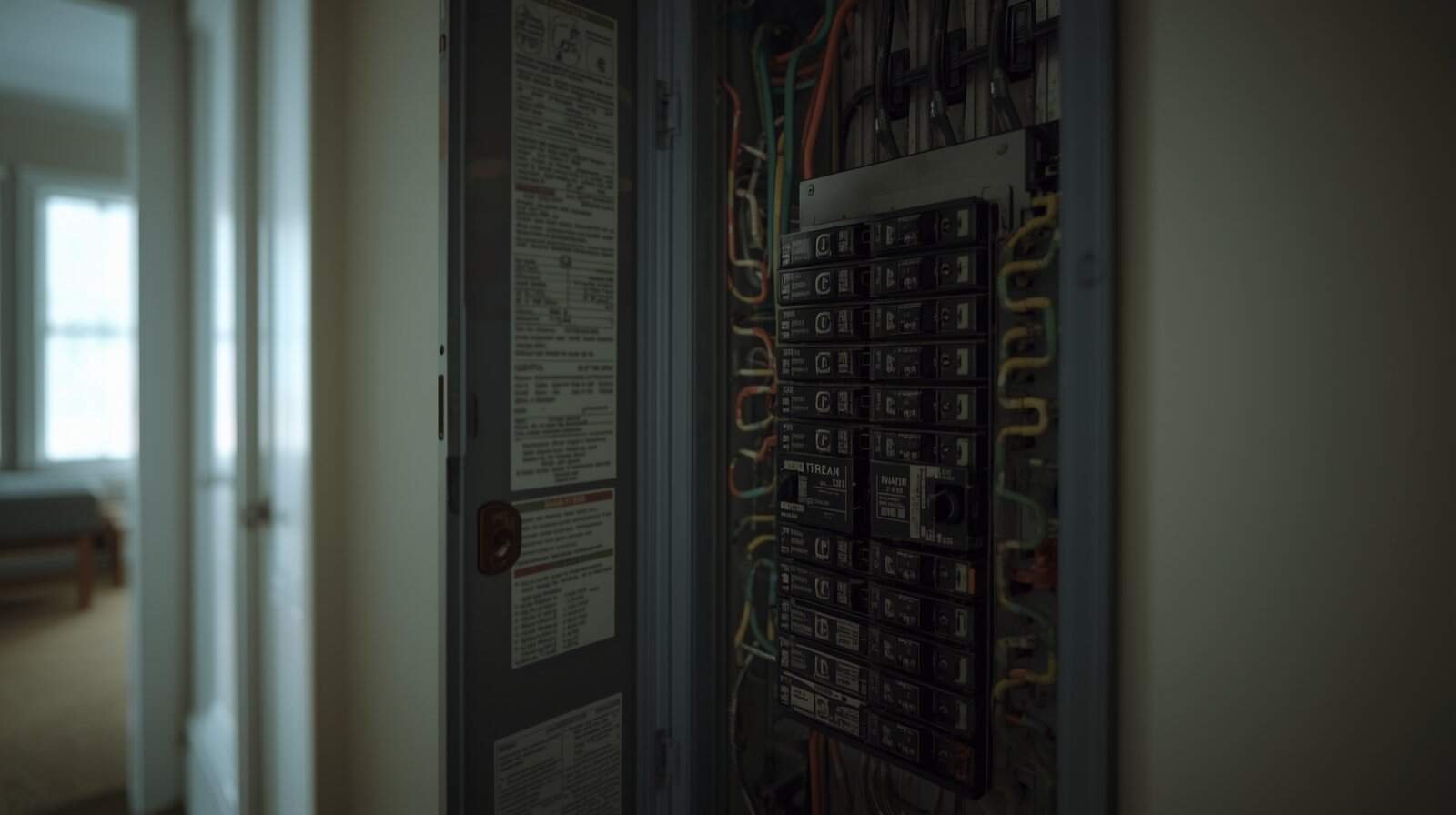
Most homeowners assume that if something is wrong electrically, a breaker will trip and make the problem obvious. In reality, many of the most dangerous electrical conditions develop quietly—with power still flowing and no breaker reacting at all.
Understanding how electrical loads actually work helps explain why heat, flickering, and long-term damage can occur even when everything appears “normal” on the surface.
What Electrical Load Really Means in a Home
Electrical load is simply the amount of power your home is asking the electrical system to deliver at a given moment. Every light you turn on, every appliance that runs, and every device that charges adds to that demand.
Loads also change constantly. A refrigerator cycles on and off, a furnace blower ramps up, a microwave draws a heavy burst, and a phone charger quietly sips power in the background. Your electrical system is built to handle these shifts—but only within the limits of the wiring, connections, and protective devices serving each circuit.
That’s why “the house has power” doesn’t always mean the system is healthy. A circuit can be energized and still be under stress, especially if it’s operating near capacity or if parts of the circuit have aged.
Why Breakers Don’t Always Trip When Problems Exist
Breakers are designed to react to specific kinds of dangerous conditions—mostly severe overloads, short circuits, and certain fault patterns. What they are not designed to do is detect every unsafe condition that can develop over time.
Many electrical hazards are gradual. A loose connection can heat slowly without creating the sudden current spike that causes an immediate trip. A worn outlet can develop resistance and get warmer every week while the breaker sees nothing “abnormal” from a current standpoint.
In other words, breakers are an important safety layer—but they are not a perfect early-warning system for every type of electrical stress.
Resistance: The Hidden Enemy Inside Electrical Systems
Resistance is what happens when electricity has a harder time flowing through a connection than it should. It can come from loose terminals, corrosion, worn contact points inside outlets, aging wire splices, or heat-damaged insulation.
Here’s the key concept: resistance converts electrical energy into heat. If that resistance is happening inside a wall box or behind a panel, you may not notice it at first. But the heat still builds.
Over time, that heat can darken insulation, loosen connections further, and eventually create arcing—one of the most common starting points for electrical fires. The system may remain “working” right up until it doesn’t.
Why Overloaded Circuits Can Stay Energized
Overload doesn’t always look like a dramatic event. Many homes run certain circuits close to their limits day after day—especially kitchen circuits, bathroom circuits, home office circuits, and garages.
When a circuit is near capacity, you can get heat buildup at outlets and connections even if the breaker never trips. That’s because the current may be high enough to stress weak points but not high enough to cross the breaker’s trip threshold.
If you want a deeper explanation of how circuits can run “too hot” without tripping, see overloaded circuits without tripped breakers.
How Heat Develops Without Obvious Warning
Heat is often the first physical signal that something isn’t right. An outlet that feels warmer than the wall around it, a switch plate that feels slightly hot, or a faint “hot plastic” smell are all clues that electricity is encountering resistance somewhere it shouldn’t.
Sometimes heat shows up after a known stress event (like an outage restoration) because weak connections are pushed harder when devices restart. But heat can also show up during normal use—especially when a high-draw appliance is plugged into a marginal outlet or when a circuit is routinely carrying too much load.
A related example is covered in warm or hot outlet after an outage, which shows why warmth is a meaningful signal even when “everything still works.”
Why Older Panels and Wiring Struggle More
Electrical systems installed decades ago were not designed for the constant, high-demand load profiles most modern homes now create. Homes today may run multiple refrigerators, freezers, home office equipment, air purifiers, dehumidifiers, space heaters, and chargers—sometimes all on circuits that were originally intended for far lighter use.
Even when nothing is “broken,” older panels and wiring can operate outside their comfort zone. Connections loosen over decades, breakers age, bus bars wear, and insulation degrades. The system can still deliver power while quietly accumulating stress.
If your home’s electrical infrastructure is older or you’ve noticed frequent electrical oddities, review aging breaker panels for warning signs that the panel itself may no longer be a reliable foundation.
When Load Problems Become Fire Risks
Many electrical fires begin where heat and resistance were allowed to persist unnoticed. The common pattern is slow: a connection warms, insulation degrades, resistance increases, heat grows, and eventually arcing or ignition occurs.
Because this often happens inside walls, junction boxes, or panel components, there may be very little warning beyond subtle heat, occasional flickering under load, faint odors, or intermittent behavior that comes and goes.
This is why “load behavior” is not just a convenience issue. It’s part of home electrical safety.
Knowing When to Stop and Get Professional Help
If you notice repeated warmth at outlets or switches, unexplained burning smells, flickering that happens when loads turn on, buzzing sounds, or inconsistent power behavior that does not trip breakers, it’s time to stop guessing.
Those symptoms often point to resistance, loose connections, or panel-level issues that require proper testing—testing that homeowners should not attempt inside an energized electrical system.
Clear escalation boundaries are covered in when to call an electrician after an outage. Even though that guide is written with outages in mind, the same “stop and call a pro” signals apply when abnormal electrical behavior appears under normal power.
Conclusion
Electrical systems don’t always fail dramatically. Many dangerous conditions develop slowly, quietly, and without triggering protective devices.
Understanding how electrical load, resistance, and capacity really work helps homeowners recognize early warning signs—and take action before minor stress becomes major damage.