


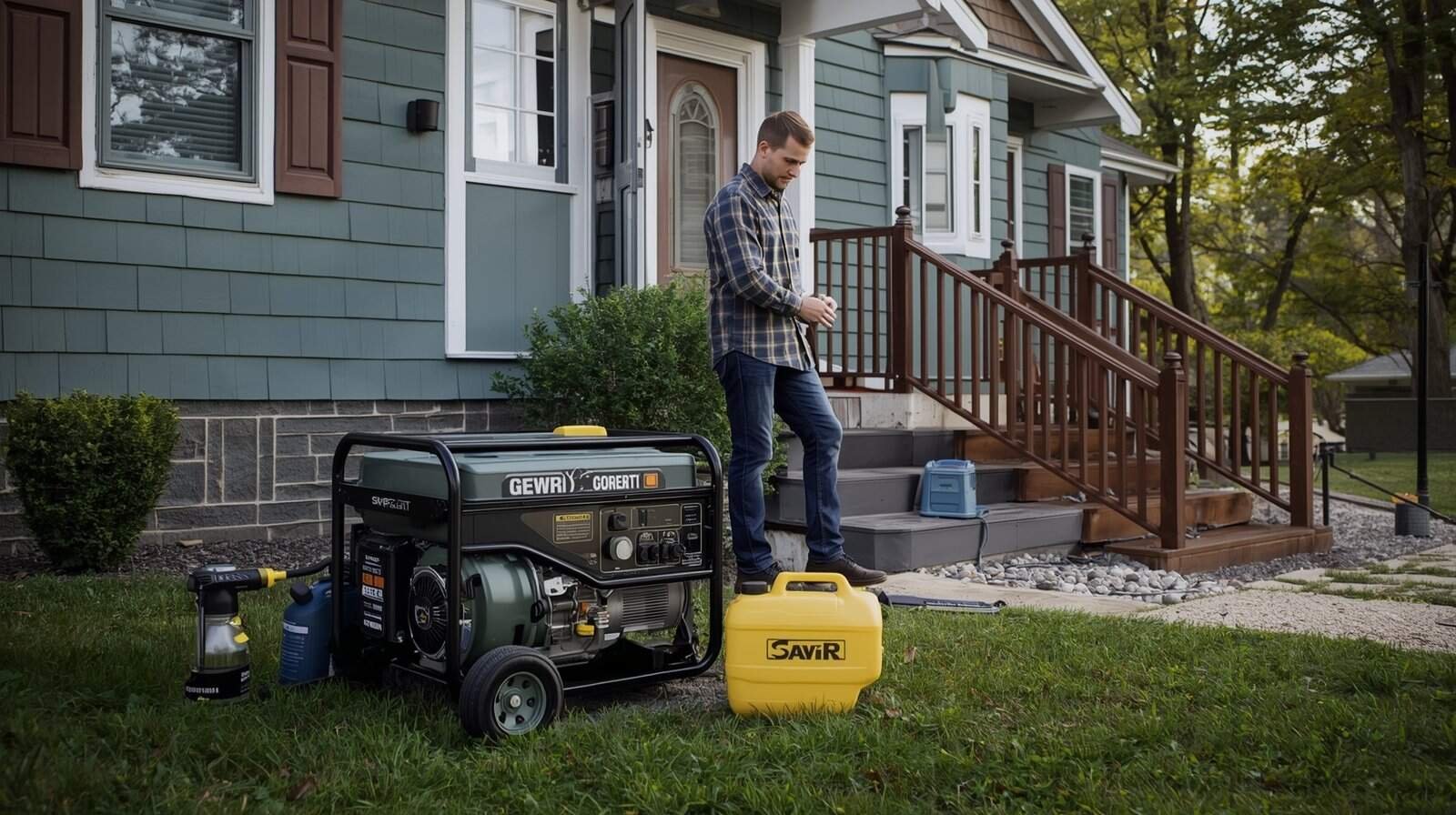
This guide focuses on fuel consumption and planning, not how long a generator can safely run from a maintenance standpoint. Fuel consumption is one of the most important—and often misunderstood—aspects of generator ownership. Knowing how much fuel a generator uses helps you plan runtimes, estimate operating costs, and store fuel safely for outages.
Fuel use varies widely based on generator size, electrical load, fuel type, and operating conditions. Understanding these factors allows you to prepare realistically rather than guessing during an outage.
What Determines Generator Fuel Consumption
Electrical load
The amount of power being drawn is the biggest factor. Generators consume significantly more fuel at higher loads. Running only essential appliances reduces fuel use and extends runtime.
Startup surges can increase fuel use
Motors and compressors often draw a brief surge of power when starting, which can temporarily increase generator workload and fuel burn. Staggering appliance startups and avoiding repeated cycling can help reduce wasted fuel during longer outages.
Generator size and efficiency
Larger generators burn more fuel even at idle. Smaller, properly sized generators often operate more efficiently when matched to actual household needs. See what size generator you need for sizing guidance.
Fuel type
Gasoline, propane, and dual-fuel generators all have different burn rates and storage considerations. Propane often burns more consistently, while gasoline is widely available but degrades over time.
Operating conditions
Temperature, altitude, and maintenance condition affect fuel efficiency. Cold starts and poor airflow increase consumption.
Typical Fuel Use Examples
While exact numbers vary, portable generators often consume:
- 0.5 to 1 gallon of gasoline per hour at moderate load
- Less fuel per hour when loads are carefully managed
These estimates highlight why load planning is critical during extended outages.
Fuel Planning for Outages
Estimate daily fuel needs
Multiply hourly consumption by planned runtime to estimate daily fuel requirements. Shorter run cycles can dramatically reduce fuel use.
Store fuel safely
Fuel should be stored in approved containers away from living spaces. Follow local regulations and never store fuel indoors.
Plan refueling safely
Always shut the generator off and allow it to cool before refueling to prevent fire risk.
Balancing Runtime and Fuel Availability
Extended runtimes increase fuel demand and wear. Understanding safe operating limits helps balance reliability with longevity. Review how long a generator can run safely for planning guidance.
Conclusion
Fuel consumption depends on load, generator size, and operating conditions. Careful planning and conservative operation extend runtime, reduce costs, and keep backup power dependable during outages.