


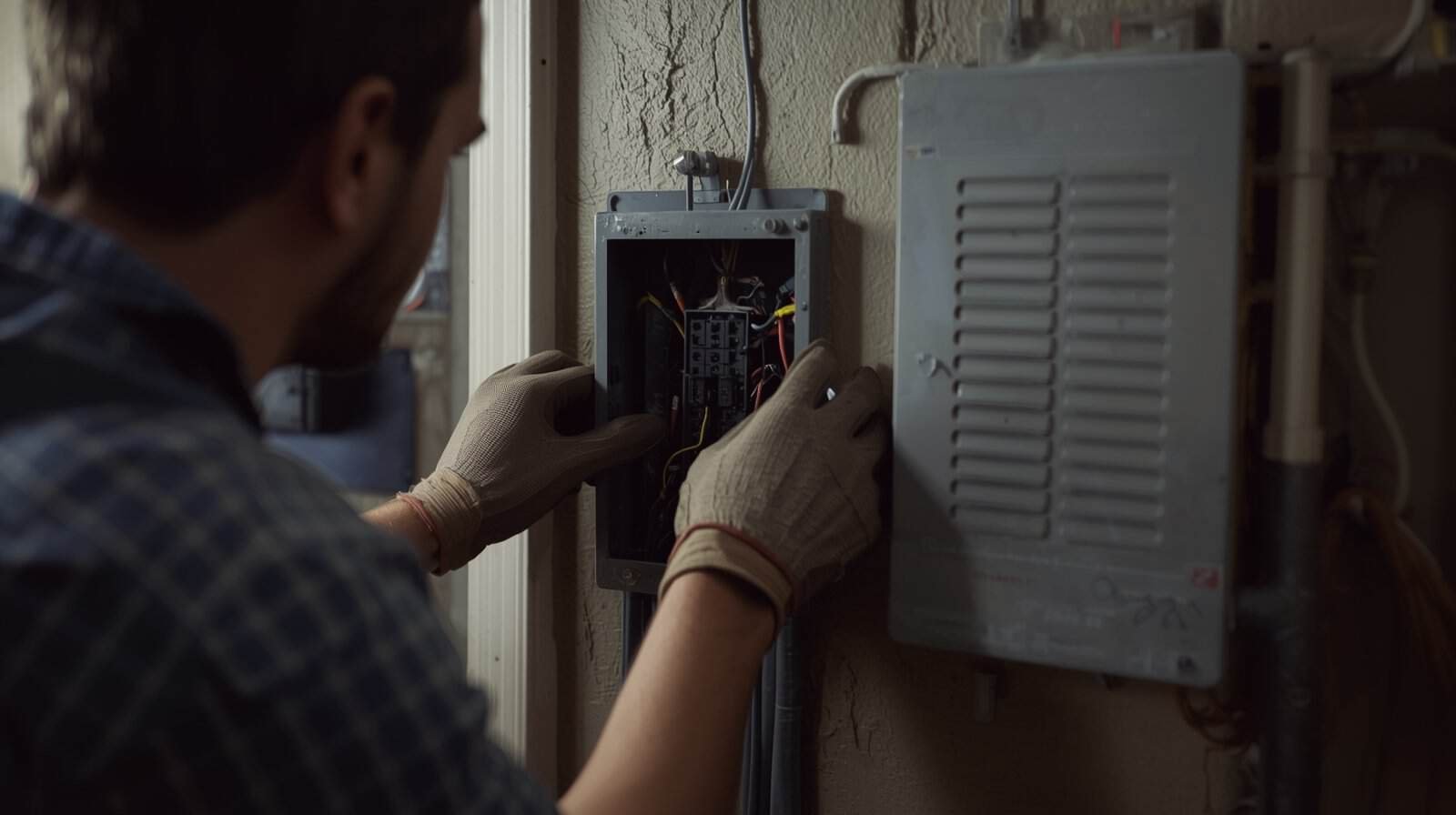
Short answer: Loose electrical connections are dangerous because they create resistance, and resistance creates heat. That heat can build slowly behind walls or inside electrical boxes for months or years without tripping a breaker—making loose connections one of the most common hidden causes of outlet damage, arcing, and electrical fire risk.
Loose electrical connections are one of the most common and most dangerous hidden problems in residential wiring. Unlike a dead outlet or a breaker that trips immediately, a loose connection often fails quietly. It may keep working “well enough” while slowly overheating, damaging insulation, weakening components, and increasing fire risk over time.
This guide explains what a loose electrical connection actually is, why it becomes dangerous, how it develops, and why homeowners often miss the warning signs until visible damage finally appears.
What a Loose Electrical Connection Actually Is
A loose electrical connection happens when a wire is not tightly secured to a terminal, splice, breaker, or connector. Even a connection that is only slightly loose can interfere with the normal flow of electricity.
Instead of current moving cleanly through a solid contact point, electricity meets resistance. That resistance turns part of the electrical energy into heat. Over time, that heat can damage outlet bodies, wire insulation, connectors, and nearby materials inside walls or junction boxes.
Why Loose Connections Are Especially Dangerous
Heat can build without obvious symptoms
Loose connections often heat gradually and may never trip a breaker. That is what makes them deceptive. People tend to assume that if a breaker never trips, the circuit must be safe. In reality, a loose connection can sit below the trip threshold while still generating enough heat to damage materials over time.
Because this heating happens inside boxes, walls, or ceiling spaces, damage can progress for a long time before anyone notices it.
Loose connections can begin arcing
As the contact point weakens further, electricity may start jumping across tiny gaps instead of flowing smoothly. This is called arcing. Arcing creates extremely high localized temperatures and can scorch insulation, damage conductors, and ignite nearby materials.
That is one reason loose connections are such a serious fire risk. The problem is not only heat buildup—it is the possibility that a weak connection becomes an arcing connection.
Symptoms can be intermittent and misleading
Loose connections often create electrical behavior that comes and goes. Lights may flicker one day and seem normal the next. An outlet may work fine with a phone charger but fail when a heavier load is plugged in. Devices may shut off unexpectedly or behave strangely without any single “big failure.”
Because the symptoms are inconsistent, homeowners often assume the issue is minor, temporary, or unrelated to the wiring itself. That delay gives the damage more time to build.
How Loose Connections Develop Over Time
Electrical systems go through repeated heating and cooling cycles whenever power is used. That expansion and contraction can gradually loosen terminals and connectors over many years.
Other contributing factors include:
- Age and wear in older devices or wiring components
- Vibration from appliances, foot traffic, or general household activity
- Improper installation or poor-quality terminations
- Repeated high-load use on outlets, switches, or circuits
Loose connections are not always the result of one dramatic event. More often, they develop slowly as a system ages and weak points are exposed under normal household use.
Why Homeowners Often Miss the Warning Signs
Loose connections are usually hidden behind cover plates, inside walls, above ceilings, or within junction boxes. When symptoms do appear, they are often indirect rather than obvious.
Many homeowners first notice related warning signs like:
- Burning or hot-plastic odors
- Warm outlets or switches
- Buzzing or humming sounds
- Scorch marks or discoloration
- Flickering or unstable power behavior
Those connected warning signs are explained in more detail in Burning Smell After a Power Outage: What It Means and What to Do, Warm or Hot Outlet After an Outage: Is It Dangerous?, and Scorch Marks or Discoloration Around Outlets: What They Mean.
Why Loose Connections Can Create Wider System Risk
Some loose connections affect more than one outlet. If the weak point is on a shared conductor, a neutral, or another upstream connection, the problem can create unstable voltage, intermittent outages, or erratic appliance behavior across a larger part of the system.
That is why loose connections can sometimes look like a “mystery power problem” rather than an outlet problem. The visible symptom may appear in one room while the real fault is located somewhere else in the circuit path.
Because those effects are not always localized, identifying the actual source often requires professional inspection and testing.
When to Call an Electrician
Loose electrical connections are not a homeowner repair issue. If you experience recurring flicker, unexplained warm outlets, burning smell, buzzing, visible discoloration, or inconsistent power behavior, a licensed electrician should inspect the system.
These symptoms are especially important if they repeat under normal use or appear after outages, surges, or heavy-load operation. Clear escalation boundaries are outlined in When to Call an Electrician After an Outage: Clear Signs You Shouldn’t Ignore.
Why Early Detection Matters
Loose connections are dangerous precisely because they often stay hidden while damage slowly accumulates. By the time heat damage becomes visible on the outside, the inside has usually been under stress for much longer.
Finding and correcting the problem early can prevent larger repairs, reduce fire risk, and protect the rest of the system from ongoing damage. That is why repeated “small” electrical symptoms deserve to be taken seriously—especially when they involve heat, sound, smell, or inconsistent operation.
Conclusion
Loose electrical connections are one of the most common hidden hazards in home wiring. They create resistance, resistance creates heat, and that heat can quietly damage wiring and components long before the problem becomes obvious.
Because the warning signs are often subtle and intermittent, homeowners should treat repeated odor, warmth, buzzing, flicker, or discoloration as meaningful clues—not random annoyances. Early professional evaluation is the safest way to stop a hidden problem before it turns into visible damage or fire risk.