


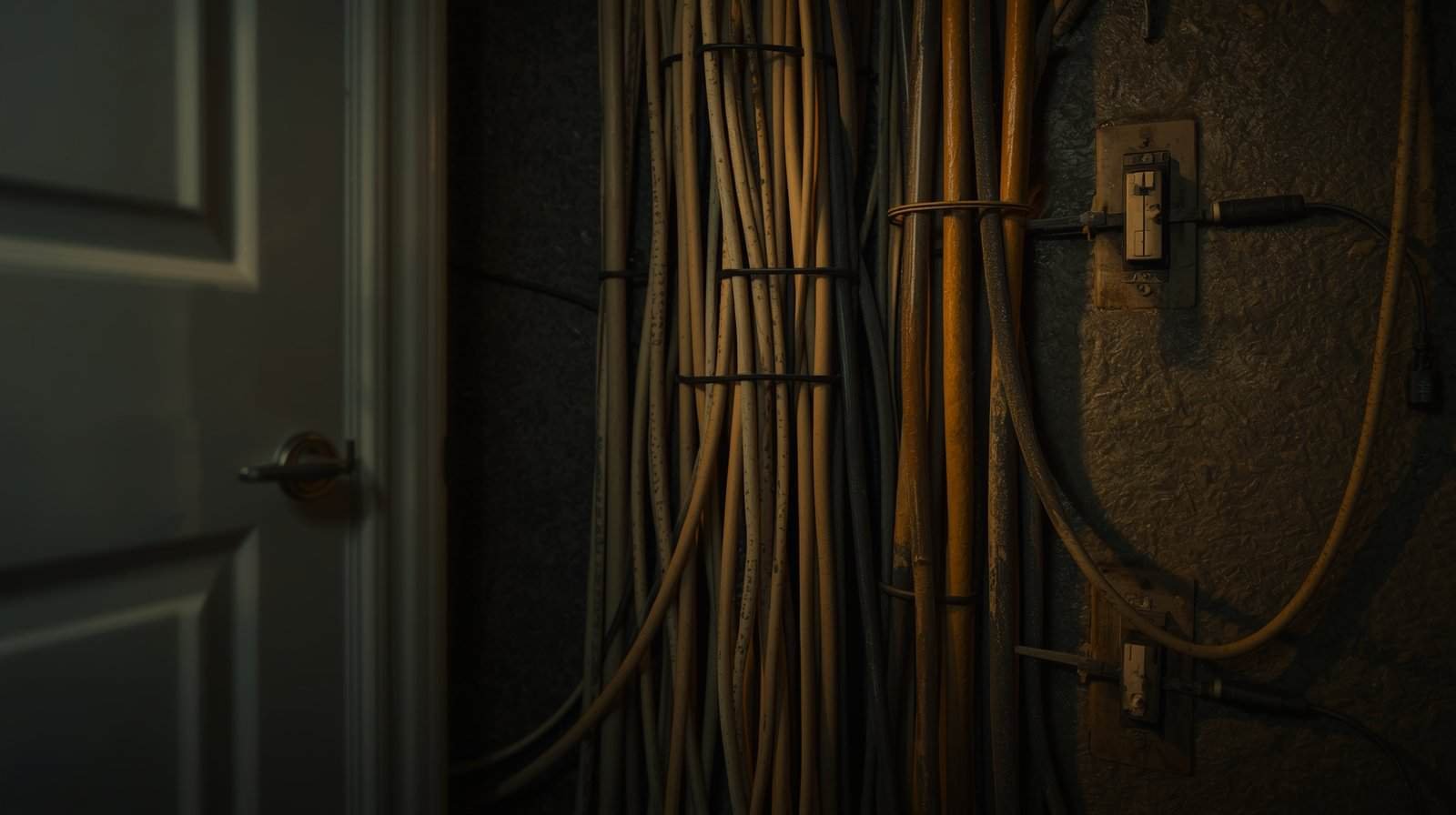
Short answer: Yes, circuits can overload without tripping a breaker right away. That happens because many overloads build gradually, not instantly. When current stays high long enough to create heat—but not high enough to trigger an immediate trip—wiring, outlets, and connections can slowly overheat behind the walls.
Many homeowners assume breakers always trip the moment a circuit becomes unsafe. In reality, some overload conditions are quieter and slower. A circuit can run too warm for too long, especially in older homes or on heavily used branches, without producing the dramatic breaker trip people expect.
This hidden behavior is one reason electrical fires can develop even in homes that seem to have working protection. The danger is not always a sudden failure. Sometimes it is gradual heat damage that builds over months or years.
What Circuit Overload Really Means
A circuit becomes overloaded when the connected electrical demand stays above what the wiring and components can safely carry for long enough to create excess heat. This is different from a short circuit, which is usually abrupt and dramatic.
Overloads often develop through normal-looking use patterns: too many devices on one branch, a circuit serving more modern equipment than it was designed for, or heavy loads running for longer periods than the system can comfortably handle.
That is why overloads are easy to miss. Nothing may “fail” immediately. The system may simply run hotter than it should.
Why Breakers Don’t Always Trip During Overloads
Breakers are designed with time-delay behavior. That delay is intentional, because many circuits experience harmless short-duration current increases when appliances start up. If breakers reacted instantly to every temporary increase, nuisance trips would be constant.
The problem is that moderate overloads can linger in a zone where they create heat without forcing an immediate trip. If the load remains elevated long enough, wiring and terminations can slowly overheat while the breaker still stays on.
Age can make this more concerning. Older breakers, worn panels, heat stress, or internal deterioration may reduce how predictably the system responds under sustained overload conditions.
How Hidden Overloads Create Fire Risk
When wiring carries too much current for too long, insulation heats up. Repeated heat cycles gradually weaken that insulation and can damage outlet bodies, wire terminations, and hidden junction points.
Once insulation degrades, the risk of arcing and localized overheating increases. This is how a circuit can move from “overworked” to “dangerous” without any one dramatic event in between.
The hidden-heat side of this problem is closely related to the broader risk explained in Overheated Wiring Inside Walls.
Common Situations That Lead to Undetected Overloads
Undetected overloads often happen because today’s usage patterns are harder on older electrical systems than many homeowners realize.
- Multiple high-draw devices sharing one circuit
Space heaters, kitchen appliances, bathroom heaters, hair tools, microwaves, and window AC units can stress one branch quickly when used together. - Older homes with fewer dedicated circuits
Many older homes were wired for lighter, simpler electrical use. Modern device density makes those circuits more likely to operate near their limit. - Long-duration continuous loads
Some devices do not create a dramatic spike, but they do create steady heat over time. That sustained stress can be just as important as startup demand. - Extension cords and temporary load sharing
Homeowners sometimes spread devices physically around a room without realizing they are still electrically loading the same branch circuit.
Why Older Panels and Breakers Increase the Risk
Panel condition matters because protective performance depends on components responding consistently under heat and load. Aging breakers and older panel connections can become less reliable over time, especially in homes with heavy modern demand.
If panel components are already running warm, corroded, or degraded, that can reduce the safety margin when a circuit is under sustained load. In other words, overload risk is not only about the branch wiring—it is also about whether the panel is still responding the way it should.
That broader panel-aging pattern is explained in Aging Breaker Panels.
Warning Signs of a Circuit That May Be Overloaded
Overload problems often show up through repeated small clues rather than one clear failure. Watch for patterns like:
- Warm outlets, plugs, or switch plates
- Lights dimming when appliances turn on
- Buzzing or humming under load
- Intermittent burning odors without a clear source
- Power strips, cords, or adapters that feel unusually warm
- Recurring electrical oddities on the same branch even when breakers stay on
These signs matter because overload damage often begins at the weakest point in the circuit, not necessarily at the breaker itself.
When Overload Concerns Require Professional Evaluation
Repeated warmth near wiring, unexplained insulation damage, recurring odor, or electrical symptoms that seem tied to heavier use should not be ignored just because breakers are not tripping.
If multiple signs appear together, the issue may have moved beyond “a busy circuit” and into a broader fire-risk pattern. In those cases, professional evaluation is the safer next step.
For broader escalation guidance, see When Home Electrical Systems Become a Fire Risk. If mixed or partial-power behavior is also part of the picture, this post-outage safety flowchart helps explain why not all dangerous electrical conditions trigger an obvious breaker response right away.
Why Early Action Matters
Overload damage is easier to stop early than after insulation has been weakened or connection points have already been heat-stressed. The longer a circuit operates near or beyond its safe practical limit, the more likely it is that the damage will spread to outlets, splices, and hidden wiring areas.
That is why understanding overload behavior matters. The real danger is not just whether a breaker trips today. It is whether the circuit is quietly accumulating heat every time it is used.
Conclusion
Overloaded circuits do not always announce themselves with an immediate breaker trip. Sometimes the circuit simply runs too hot, too often, for too long—allowing hidden damage to build silently behind walls and inside boxes.
Recognizing that risk helps homeowners take repeated warmth, odor, flicker, and load-related symptoms more seriously. Breakers are important protection, but they are not a guarantee that a stressed circuit is safe under every real-world condition.