


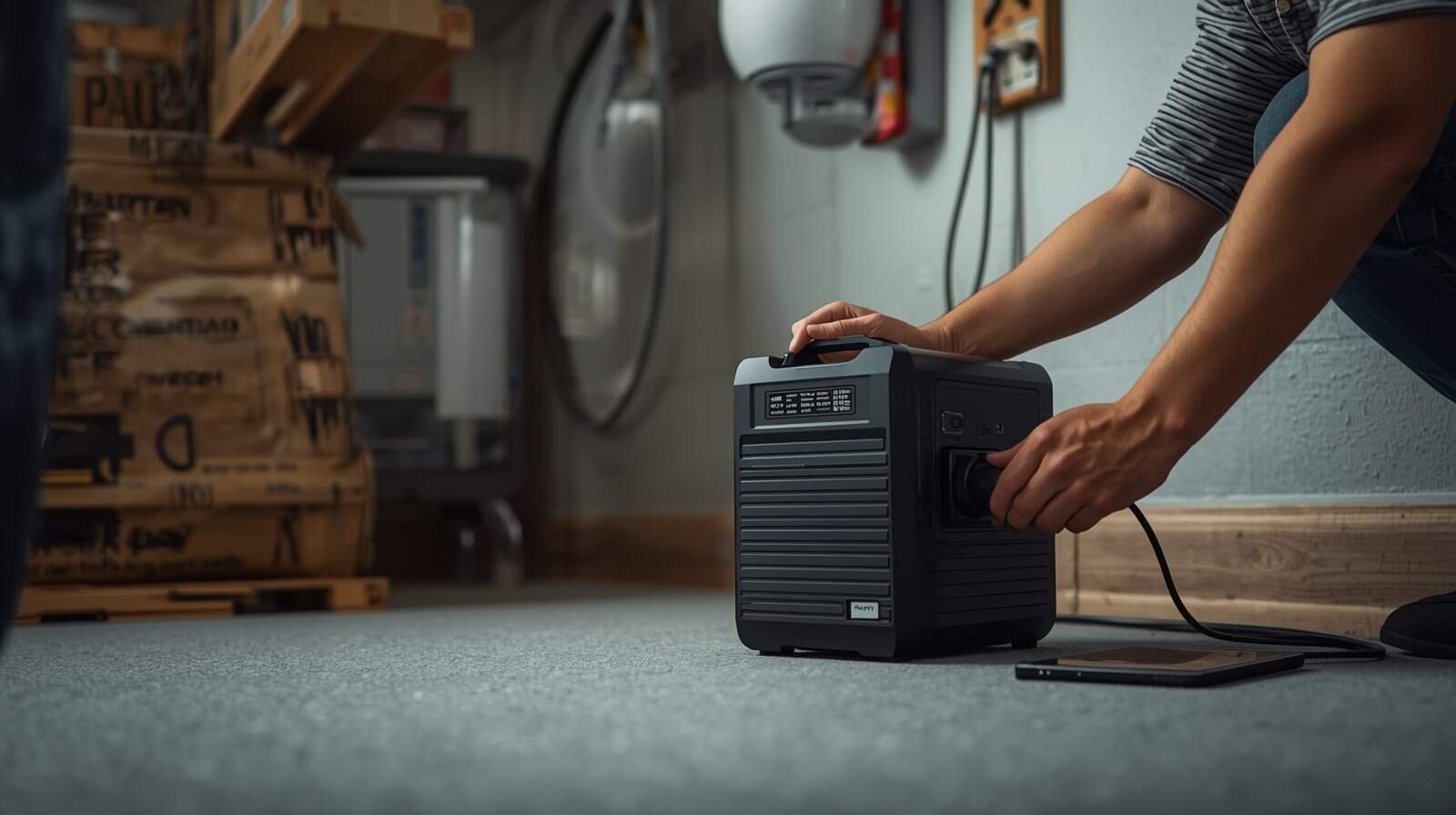
When a power station won’t charge, it can quickly turn a manageable outage into a stressful situation. Charging failures are often caused by simple issues such as input limitations, cable problems, or protection modes—not permanent damage. This guide walks through safe, practical checks homeowners can use to identify the most common causes and decide what to do next.
Before troubleshooting: safety first
Power stations contain high-capacity batteries and sensitive electronics. Before checking anything:
- Disconnect all loads from the power station
- Turn the unit off if possible
- Allow the unit to cool if it feels warm
- Work in a dry, well-lit area
If the unit shows physical damage, swelling, burning smells, or error messages related to overheating, stop and consult the manufacturer.
Quick checks that solve many charging problems
Start with the simplest explanations. Many charging issues are resolved in minutes.
Confirm the charging source is active
Make sure the outlet, generator, or vehicle port you are using is actually supplying power. Test it with another device if possible.
Check the charging cable and connectors
Loose connectors, damaged cables, or incompatible adapters are common failure points. Inspect cables for bent pins, heat damage, or looseness.
Verify input limits
Power stations have strict input voltage and wattage limits. If the charging source exceeds or falls outside the accepted range, the station may refuse to charge.
Common reasons a power station won’t charge
The battery is too cold or too hot
Most lithium-based power stations stop charging outside a safe temperature range. Cold weather and direct sun exposure are frequent culprits during outages.
The battery is already near full
Charging may slow dramatically or pause near full capacity. This is normal battery management behavior.
Protection mode is active
Internal protection systems may temporarily disable charging after overloads, overheating, or abnormal input conditions.
The input source is insufficient
Low-wattage sources may not provide enough power to begin charging, especially if the battery is deeply discharged.
Charging issues by source type
Wall outlet charging problems
If charging from a wall outlet fails, check for tripped breakers, GFCI outlets, or power strips that may be limiting output.
Generator charging problems
Some generators produce unstable voltage that power stations reject. Eco modes and light generator loads can also cause charging interruptions.
Vehicle charging problems
Vehicle outlets are typically limited to low wattage. Long cables and engine-off conditions can further reduce charging reliability.
Solar charging problems
Solar charging depends on sunlight, panel angle, cable quality, and voltage compatibility. Even partial shade can dramatically reduce input.
When resetting the power station helps
Many power stations can be reset by powering the unit off completely, disconnecting all cables, waiting several minutes, and restarting. Always follow the manufacturer’s guidance.
Signs the issue may be more serious
- Charging never starts from multiple known-good sources
- Error codes persist after resets
- The battery drains unusually fast once charged
- Visible damage or swelling
These symptoms may indicate internal battery or charging circuit issues.
What to do next if charging still fails
If basic checks don’t resolve the issue, document the problem, note any error codes, and contact the manufacturer. Avoid opening the unit or attempting internal repairs.
If charging problems continue or your power needs exceed what a battery-based system can reliably provide, understanding the differences between a portable power station and a generator can help you choose a more suitable backup power solution.
Frequently asked questions
Can I charge a power station while it’s in use?
Some models allow pass-through charging, but it may reduce efficiency or trigger protection modes depending on load.
Is it safe to leave a power station plugged in?
Most modern units manage charging automatically, but long-term storage should follow manufacturer recommendations.
Where this fits in outage planning
A reliable charging plan is just as important as battery capacity. Understanding input limits, temperature effects, and redundancy options helps ensure your power station is useful when you need it most.