


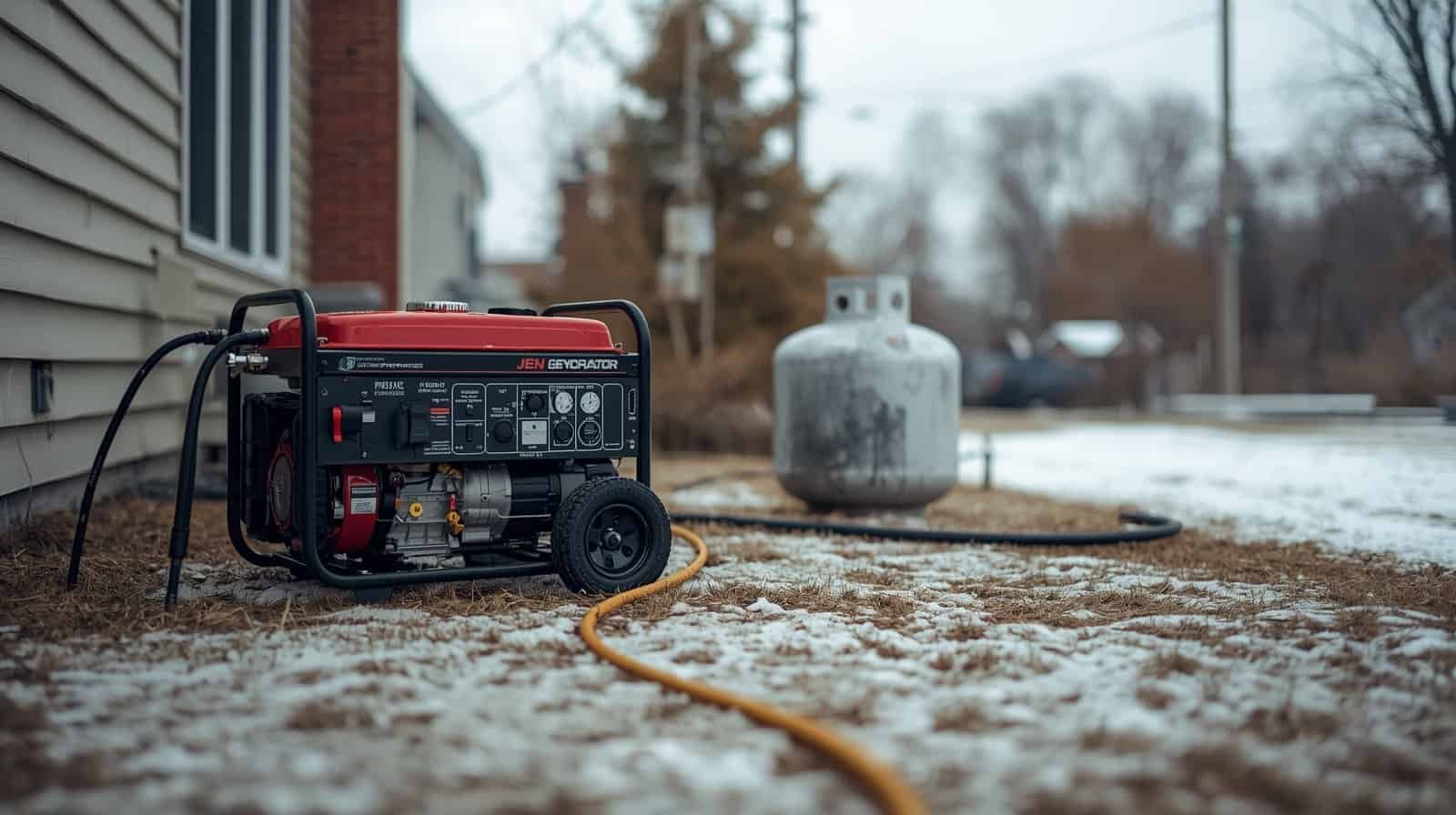
Propane generators are popular for backup power because propane stores well and avoids many gasoline-related issues. However, cold weather introduces unique challenges that can cause propane generators to stumble, surge, or shut down unexpectedly.
Why Cold Weather Affects Propane Generators
Propane must vaporize before it can burn. In cold temperatures, this vaporization process slows significantly, reducing the pressure available to the generator’s engine. Unlike gasoline, propane relies heavily on ambient temperature to maintain proper flow.
As temperatures drop, even full propane tanks may struggle to supply enough vapor to meet engine demand. Because these shutdowns often appear suddenly and without warning, homeowners sometimes mistake cold-weather fuel issues for random failures. If your generator stops unexpectedly even without heavy load, see generator keeps shutting off for broader shutdown causes.
Regulator Freeze and Pressure Drop Explained
One of the most common cold-weather issues is regulator freeze. As propane expands from liquid to gas, it absorbs heat. In freezing conditions, moisture in the air can freeze inside or around the regulator, restricting flow.
When pressure drops, the generator may start normally but stall once a load is applied.
Common Cold-Weather Symptoms
Cold-related propane issues often appear as intermittent problems. The generator may surge, lose power under load, or shut off entirely after running for a short time.
These symptoms overlap with other shutdown causes. For comparison, review generator won’t stay running under load to understand how fuel flow limitations appear once electrical demand increases.
Tank Size, Fill Level, and Temperature
Smaller propane tanks are more susceptible to cold-weather problems because they have less surface area to absorb heat. Low fill levels further reduce vaporization capacity.
In cold climates, larger tanks or multiple tanks may perform more reliably than small portable cylinders.
Safe Ways to Improve Cold-Weather Performance
Keep propane tanks off frozen ground and away from wind exposure. Avoid insulating regulators or tanks with makeshift materials, which can trap moisture and worsen freeze-ups.
Never attempt to heat tanks with open flames or electrical heaters.
When Propane May Not Be the Best Choice
In extended cold spells, propane generators may struggle to deliver consistent power. Dual-fuel generators allow switching to gasoline when propane vaporization becomes unreliable.
For broader fuel considerations, see generator fuel types compared.
Runtime Expectations in Cold Weather
Cold conditions can reduce effective runtime by limiting fuel flow rather than fuel quantity. Monitor performance closely and avoid pushing generators to maximum load.
See how long a generator can run safely for load management guidance.
Conclusion
Propane generators can be reliable in cold weather, but temperature-related vaporization and regulator freeze issues are common. Understanding these limits—and recognizing when conditions exceed propane’s capabilities—helps homeowners plan safer, more dependable backup power.