



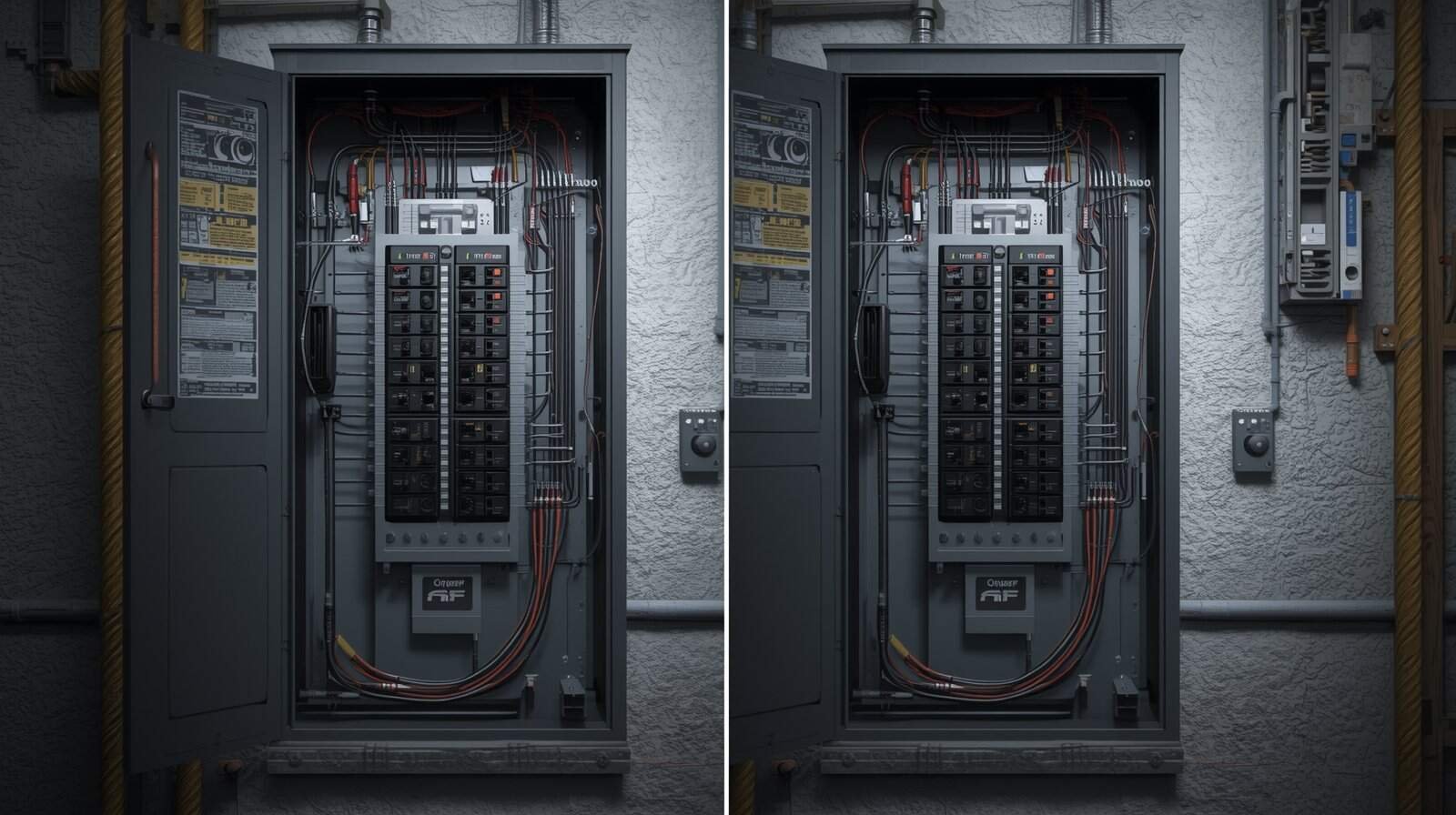
Once homeowners decide to use a generator for backup power, a second question quickly follows: how should that generator connect to the home’s electrical system? Two common solutions are transfer switches and interlock kits. While both can be safe when installed correctly, they work very differently and are not interchangeable.
This guide explains transfer switches and interlock kits in plain language so you can understand what each does, where each works best, and what safety tradeoffs are involved.
What a Transfer Switch Does
A transfer switch is a dedicated device that physically switches selected household circuits from utility power to generator power. When activated, it isolates those circuits from the grid and routes generator electricity only to approved loads.
Because the circuits are pre-selected, transfer switches reduce guesswork during outages. Homeowners know exactly what will be powered, and there is little risk of accidental overload if the system is designed correctly.
What an Interlock Kit Does
An interlock kit is a mechanical device installed on the main electrical panel. It prevents the main breaker and the generator breaker from being turned on at the same time, ensuring the home cannot feed power back into the utility grid.
Interlock kits allow flexibility because homeowners can choose which circuits to run during an outage by manually switching breakers. This flexibility comes with greater responsibility and requires careful load management.
Key Safety Differences
Both systems exist to prevent dangerous backfeeding, which can endanger utility workers and damage equipment. Transfer switches provide built‑in circuit isolation, while interlock kits rely on correct breaker operation.
Because interlock kits require active decision‑making during outages, they demand a higher level of user awareness. Improper use can result in overloaded circuits or unsafe conditions.
Electrical panel behavior during outages can also reveal underlying issues that affect generator connections. If breakers trip unexpectedly or refuse to reset, review breaker won’t reset before assuming a transfer device issue.
Installation and Code Considerations
Transfer switches are often easier for inspectors to approve because their function is clear and circuit‑specific. Interlock kits must be compatible with the exact panel model and installed according to local codes.
Local electrical codes vary, and professional installation is strongly recommended for both options to ensure compliance and safety.
Cost and Complexity Tradeoffs
Transfer switches typically cost more upfront due to additional hardware and labor. Interlock kits are often less expensive but shift more responsibility to the homeowner during operation.
Choosing between them is not just about price, but about how much manual involvement you want during an outage.
Once you’ve chosen a transfer switch or interlock kit, this visual guide shows the safe, correct “generator-to-panel” setup path that prevents the most common no-power situations: Generator Runs but House Has No Power — Safety Setup Flowchart.
Which Option Makes Sense for Most Homes?
Homes that want simplicity and predictability often favor transfer switches. Households comfortable managing loads and seeking flexibility may prefer interlock kits.
For broader planning context, see whole‑home backup vs portable backup and inverter vs generator for home backup.
Safety Reminders
Regardless of connection method, generators must be operated outdoors and away from openings to prevent carbon monoxide hazards. Safety fundamentals are covered in generator safety resources.
While transfer equipment prevents electrical backfeeding, it does not reduce exhaust risks. Generator placement and carbon monoxide exposure must be addressed separately. Review generator carbon monoxide safety to understand how improper placement can create serious hazards.
Conclusion
Transfer switches and interlock kits both provide safe ways to connect a generator when properly installed and used. The right choice depends on your comfort level, budget, and how much control you want during an outage.