


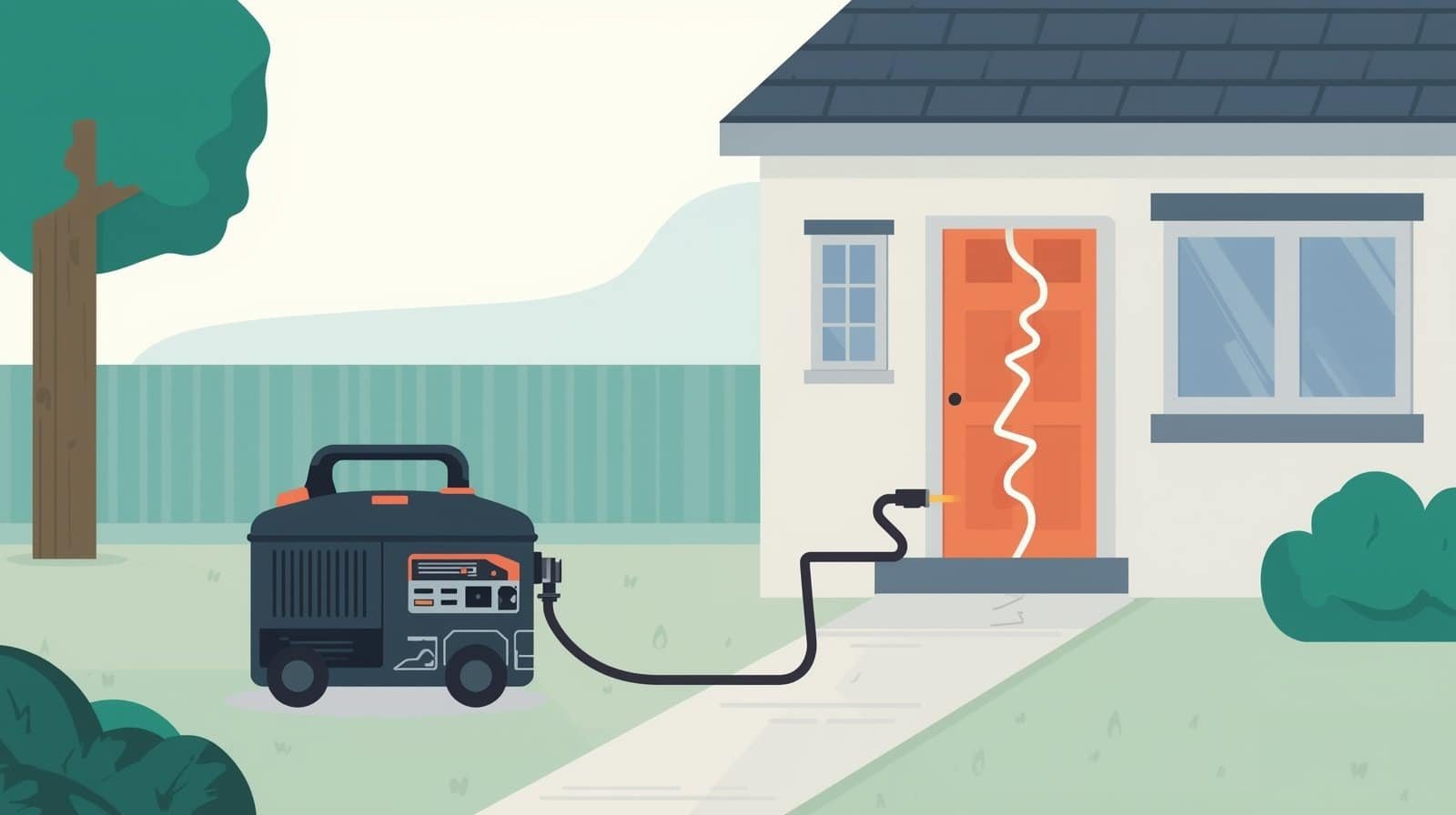
Your generator is running, but the power doesn’t seem right. Maybe lights work but appliances won’t start. Maybe a UPS beeps, electronics won’t charge, or devices act “weird.” This Visual Guide helps you sort a temporary overload from unsafe power quality—and shows clear stop points so you don’t accidentally damage electronics or appliances.
Start With Protection: When “Weird Power” Is a Stop Condition
If you see any of these signs, treat it as a stop condition and focus on protection first:
- UPS, medical devices, or electronics alarming (beeping, error lights, warnings)
- Lights flickering or noticeably dimming when devices start
- Appliances cycling on and off repeatedly
- Electronics refusing to charge or behaving erratically
In these scenarios, don’t “keep trying” to see what happens. Continued use can quietly damage motors, compressors, chargers, and sensitive electronics. Disconnect sensitive devices and stop further troubleshooting until the situation is evaluated or you switch to a safer power source for electronics.
What This Visual Guide Helps You Decide
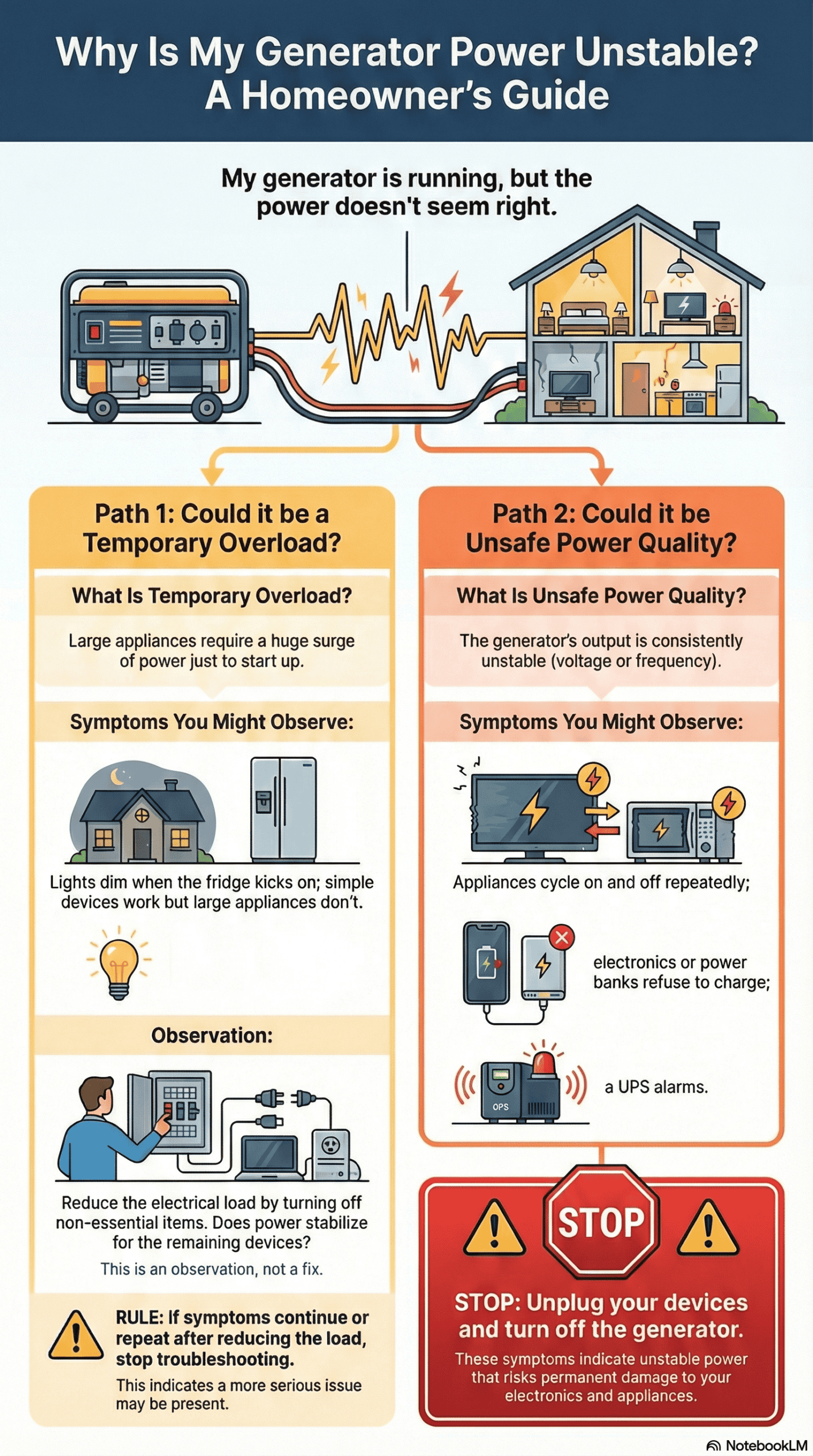
This flowchart is designed to answer one question: Is this a temporary overload-type situation, or is the power quality unsafe? It helps you:
- Recognize when behavior is likely a startup surge / temporary overload
- Recognize patterns that indicate unstable voltage or frequency
- Protect high-risk devices (medical equipment, UPS units, chargers, electronics)
- Know when to stop and seek professional evaluation or change equipment
Temporary Overload vs Unsafe Power Quality
Path 1: Temporary overload (a common scenario)
Some generators can run lights and small devices, but struggle when a large appliance tries to start. Large appliances often need a strong startup surge (especially compressors and motors). That can look like:
- Lights dim briefly when the fridge or a large appliance kicks on
- Small devices work, but a large appliance won’t start
- Performance improves when fewer things are running
Important: In this Visual Guide, “overload” is treated as an observation, not a repair. If symptoms repeat, persist, or spread to other devices, you stop troubleshooting—because that pattern can also indicate unstable power quality.
Path 2: Unsafe power quality (voltage or frequency instability)
If power feels weak even with small loads, many devices are affected, a UPS alarms, electronics won’t charge, or appliances cycle repeatedly, treat that as a power-quality problem. That pattern often points to output that is consistently unstable (voltage or frequency). Continued use can cause cumulative damage—sometimes without an obvious “failure moment.”
Common Mistakes to Avoid
- Assuming “some power” means it’s safe. A generator can produce power that still isn’t healthy for electronics.
- Letting a UPS alarm “while you finish something.” Alarms are a warning that the power is outside expected bounds.
- Testing more devices to see what happens. If power quality is unsafe, each test can increase the risk of damage.
- Thinking this is only a “big appliance problem.” Charging failures and cycling behavior can signal broader instability.
When to Stop Troubleshooting and Escalate
Stop and escalate if:
- Multiple devices behave oddly (not just one appliance)
- Power feels weak or unstable even with small loads
- Electronics won’t charge or UPS/medical devices alarm
- Appliances cycle on/off repeatedly
- The pattern repeats after you reduce the load
The safest next step may be professional evaluation, switching equipment, or using a battery power station/UPS strategy for sensitive electronics rather than continuing to run them on questionable generator output.
FAQ
Why do lights work but a larger appliance won’t?
Large appliances may need a higher startup surge than your generator can provide. That can look like “selective power,” where simple loads work but motors or compressors struggle. If the pattern spreads or repeats with small loads, treat it as a power-quality issue and stop.
Why would a UPS beep on generator power?
UPS units are designed to detect power outside expected voltage/frequency ranges. A UPS alarm is a warning sign that the power may be unstable and that sensitive devices could be at risk.
Is “cycling on and off” a bad sign?
Yes. Repeated cycling can indicate unstable output that devices can’t tolerate. It can also stress motors and compressors. If cycling happens, treat it as a stop condition and avoid continued testing.
Why won’t my electronics or power banks charge?
Some chargers and inverter-based devices require stable input to charge correctly. If charging fails or behaves erratically, don’t keep trying different devices—this can be a signal that the output is unstable.
Should I keep using the generator for lights if only electronics seem affected?
Proceed cautiously. If there are any signs of broad instability (flicker, dimming, cycling, alarms), stop and reassess. If the power seems stable for simple loads only, consider separating sensitive electronics onto safer backup options.
Helpful Next Reads
If you want deeper explanations for the scenarios referenced in this flowchart, start here:
- Generator Produces Power but Voltage Is Too Low or Unstable
- Generator Runs but Frequency (Hertz) Is Unstable
- Why Generator Power Problems Can Damage Electronics (And How to Prevent It)
- Why Some Appliances Work on Generators and Others Don’t
Quick Reminder
This Visual Guide is for homeowner safety and decision clarity—not generator repair. If power feels unstable, devices alarm, or electronics won’t behave normally, the safest move is to protect your equipment and escalate rather than “testing your luck.”