


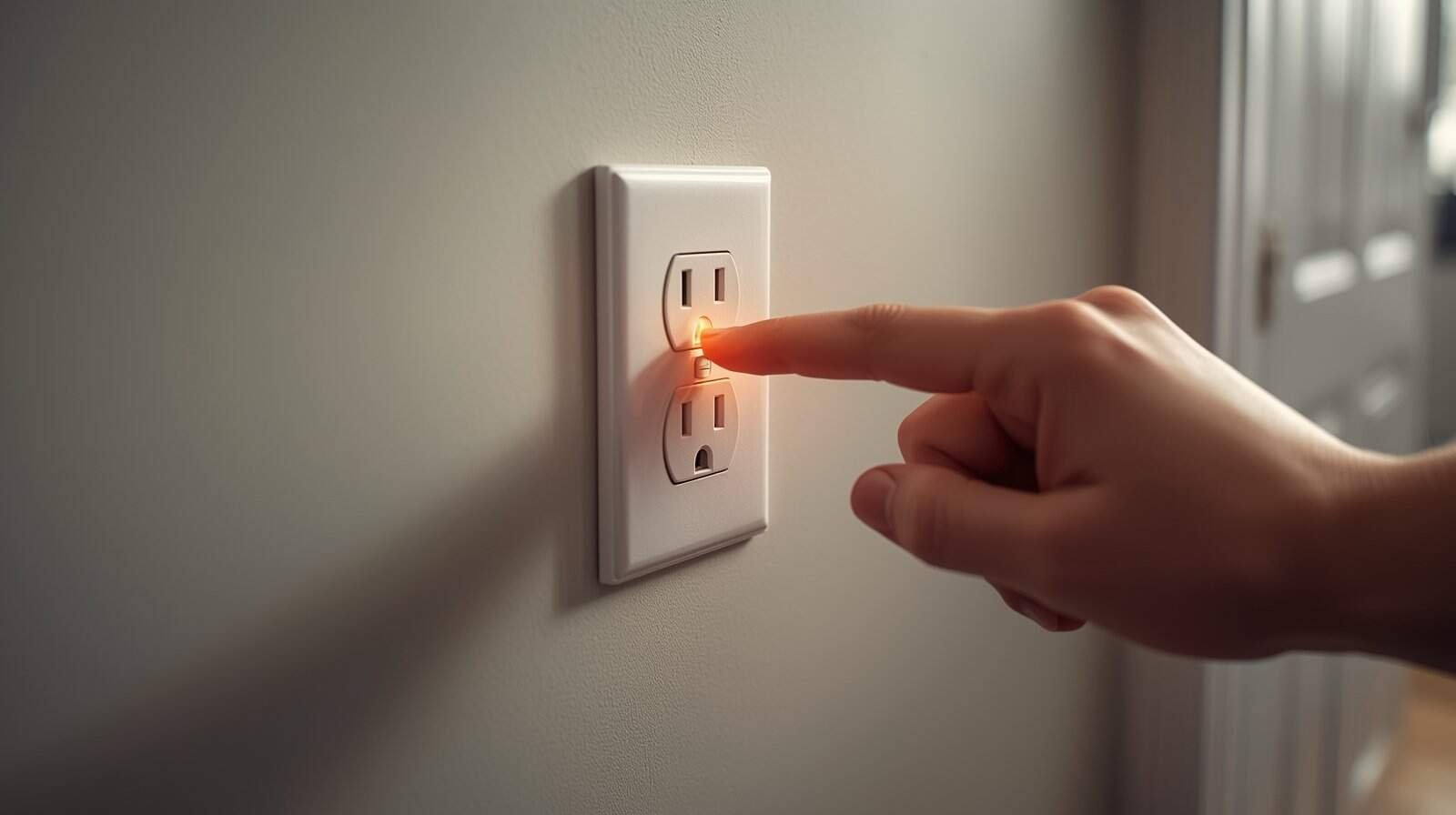
If an outlet feels warm or hot after a power outage, treat it as a serious electrical warning sign. Outlets are designed to stay close to room temperature during normal use. Noticeable warmth usually means resistance, overload, or damage somewhere in the circuit.
This guide explains why outlets heat up after outages, what risks that heat can signal, which safe checks are reasonable for homeowners, and when you should stop and call a licensed electrician.
Why an Outlet May Feel Warm After an Outage
Outages and power restoration events put electrical systems under unusual stress. When power returns, multiple devices may restart at once, voltage can fluctuate, and weak connections can begin to fail under load.
Heat at an outlet is often the result of electricity encountering resistance—meaning energy is being converted into heat instead of flowing cleanly through the connection. Even if everything “seems to work,” that heat is information you shouldn’t ignore.
Loose or Degraded Wiring Connections
Loose wiring connections inside an outlet box are one of the most common causes of heat. A loose connection acts like a bottleneck: current struggles to pass through cleanly, creating resistance and heat at the weakest point.
After an outage, this can show up suddenly because restored load and minor voltage fluctuations push a marginal connection over the edge.
Overloaded Circuit After Power Restoration
When power returns, refrigerators, freezers, sump pumps, HVAC components, and other motor-driven appliances often try to start around the same time. That surge can temporarily overload a circuit, especially in older homes or on heavily used branch circuits.
Even if the breaker doesn’t trip, the increased current can heat up outlets that were already near capacity.
Heat Damage From Surges or Previous Stress
Surges during restoration can weaken outlet contacts, degrade insulation, or damage connected equipment. In some cases, the outlet doesn’t fail immediately—it simply begins running hotter during normal use afterward.
That delayed heat is one reason post-outage “everything looks fine” isn’t always a reliable sign of safety.
How Dangerous Is a Warm or Hot Outlet?
Any noticeable heat at an outlet is a potential fire risk. Heat can damage insulation inside the wall, loosen connections further, and create conditions where arcing begins behind the outlet plate.
There’s also an important difference between slightly warm and hot:
- Slightly warm: still not normal, but may be load-related. It warrants reduced use and careful attention.
- Hot to the touch: higher urgency. Stop using the outlet and treat it as unsafe until evaluated.
If the outlet is hot enough that you instinctively pull your hand away, don’t continue testing. That level of heat is not a “watch it and see” situation.
Immediate Safety Steps to Take
Keep these steps simple and low-risk. The goal is to reduce load and prevent escalation—not to diagnose wiring.
- Unplug devices from the outlet: If it’s safe to do so, remove anything drawing power.
- Avoid continued use: Don’t move the load to another plug on the same receptacle and assume it’s fine.
- Turn off the circuit breaker if the outlet remains hot: If you can identify the correct breaker safely, shutting off the circuit reduces risk while you decide next steps.
- Pay attention to sensory warnings: Note any odor, sound, or discoloration.
If you smell burning or see discoloration, treat the situation as urgent and avoid re-energizing the circuit.
How Heat Relates to Other Post-Outage Warning Signs
Warm outlets rarely appear in isolation. Heat often shows up alongside other sensory warnings that point to resistance or arcing inside the wall.
If you notice odor, buzzing, or visible damage, these related guides may help you interpret the full pattern:
- Burning Smell After a Power Outage: What It Means and What to Do
- Buzzing or Humming From Outlets or Switches After Power Is Restored
- Scorch Marks or Discoloration Around Outlets: What They Mean
These symptoms tend to cluster because they share the same underlying causes: loose connections, overload, moisture intrusion, or damaged components.
When to Call an Electrician
Call a licensed electrician if any of the following are true:
- The outlet remains warm after unplugging devices
- The outlet becomes hot or heats up repeatedly under normal use
- You notice burning odors, buzzing, crackling, or discoloration
- Multiple outlets on the same circuit feel warm or behave inconsistently
Heat at outlets—especially when power is uneven—signals elevated risk. This visual decision guide explains when to stop using power and call for help.
For broader escalation guidance (and clear stop conditions), use When to Call an Electrician After an Outage. Heat is one of the most reliable “stop here” signals because it often indicates hidden damage.
Conclusion
A warm or hot outlet after an outage is not normal and should not be ignored. Outlet heat is a sign of resistance, overload, or damage—and those conditions can escalate into arcing or fire if the circuit stays energized.
If you reduce load and the warmth disappears, continue to monitor cautiously. But if heat persists, returns, or appears alongside odor or noise, stop using the outlet and bring in a professional. Acting early is how homeowners prevent minor electrical stress from becoming a serious hazard.