


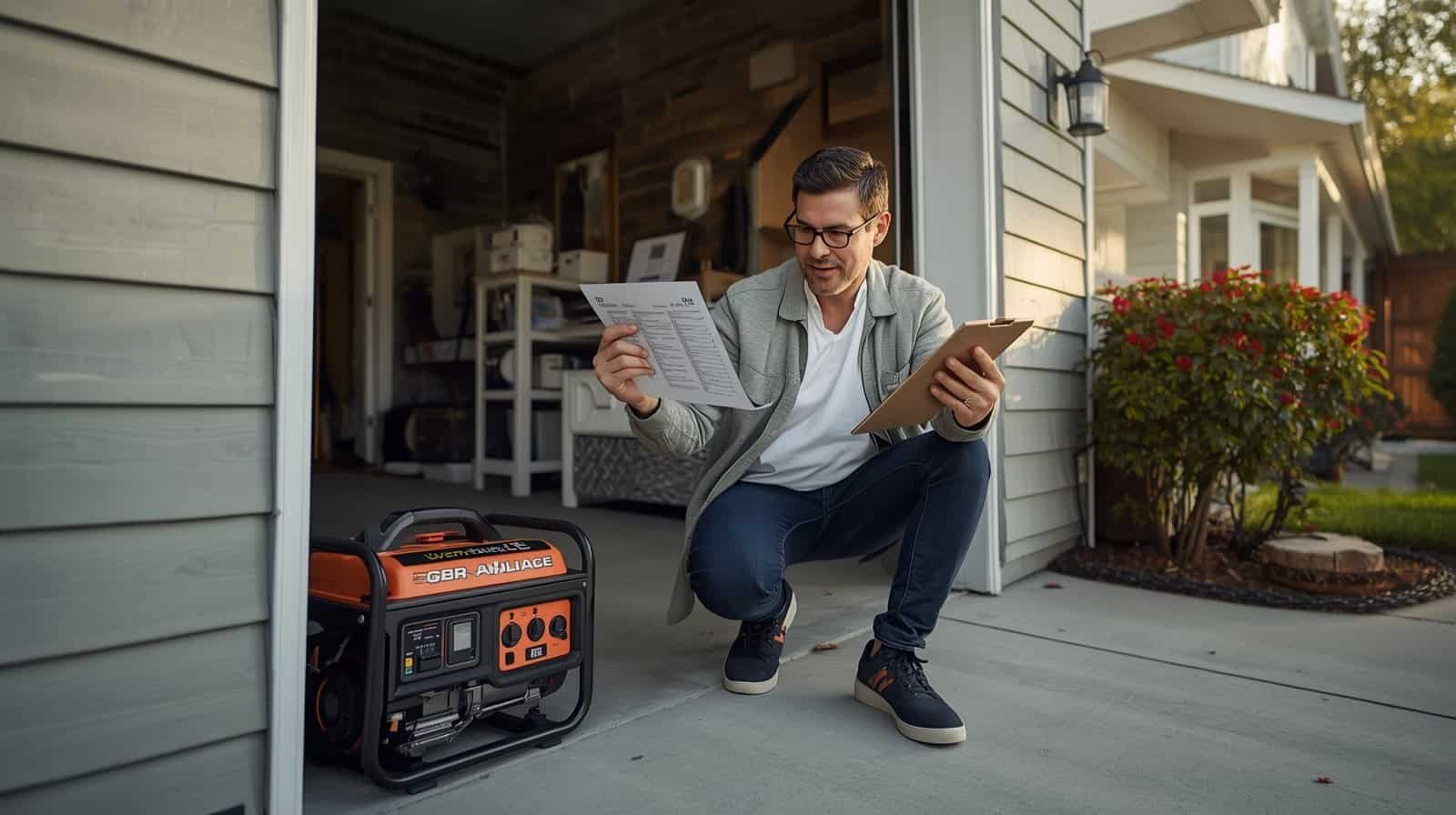
Choosing the correct generator size is one of the most important decisions homeowners make when preparing for power outages. A generator that is too small may fail to start essential appliances, while an oversized unit can cost more than necessary and waste fuel.
The goal is not to power everything—it’s to power what matters reliably and safely.
Understanding Generator Wattage
Generators are rated by the amount of electrical power they can produce. This output is measured in watts, and two different wattage figures matter when selecting a generator.
Running watts
Running watts represent the continuous power required to keep an appliance operating once it is already on. Refrigerators, lighting, TVs, and electronics all rely on running wattage to stay powered.
Starting watts
Many appliances require extra power for a brief moment when starting. Motors, compressors, and pumps often draw two to three times their running wattage during startup.
Visual reference: This guide shows why running watts alone aren’t enough—and why some appliances fail even when others work: Why a Generator Powers Some Devices but Not Others.
Why this matters: A generator can appear “powerful enough” on paper, yet still struggle in real use if startup surges aren’t accounted for. This is one of the most common reasons homeowners are disappointed after buying a generator.
Step-by-Step: How to Calculate Generator Size
List essential appliances
Identify the devices you need to power during an outage. Common priorities include refrigeration, heating systems, sump pumps, medical equipment, and basic lighting.
Add running wattage
Total the running watts of all essential appliances to estimate your continuous electrical load.
Account for starting surges
Add the highest single starting watt requirement to your running watt total. This helps ensure the generator can handle the most demanding appliance without stalling or shutting down.
Typical Generator Size Ranges
Small portable generators in the 2,000–3,500 watt range can power limited essentials. Mid-size units around 5,000–7,500 watts often support refrigerators, pumps, and multiple household loads. Larger generators above 10,000 watts are typically used for whole-home or heavy-duty applications.
Balancing Runtime and Fuel Consumption
Larger generators consume more fuel, especially under heavy loads. Oversizing can lead to unnecessary fuel use during extended outages. Understanding runtime limits helps balance capacity with efficiency.
Learn more in our guide on how long a generator can run safely.
When a Generator May Not Be the Best Fit
For short outages or low-wattage needs, battery-based systems may be more practical and easier to manage indoors. Comparing options can prevent overspending on capacity you rarely use.
See our comparison of portable power stations versus generators.
Avoiding Common Sizing Mistakes
Oversizing can strain budgets, while undersizing can lead to voltage drops, appliance startup failures, or repeated breaker trips. Improper sizing may also contribute to electrical problems during use.
If your generator runs but produces no power at the outlets, review our troubleshooting guide on generators that run without output.
Stop and reassess if: appliances repeatedly fail to start, lights flicker heavily, breakers trip under modest loads, or the generator sounds strained even with minimal devices connected. These are signs the generator may be undersized or operating unsafely.
Conclusion
Calculating the right generator size ensures reliable backup power without unnecessary expense or risk. By understanding running watts, startup surges, and appliance priorities, homeowners can choose equipment that performs safely and predictably during outages.