


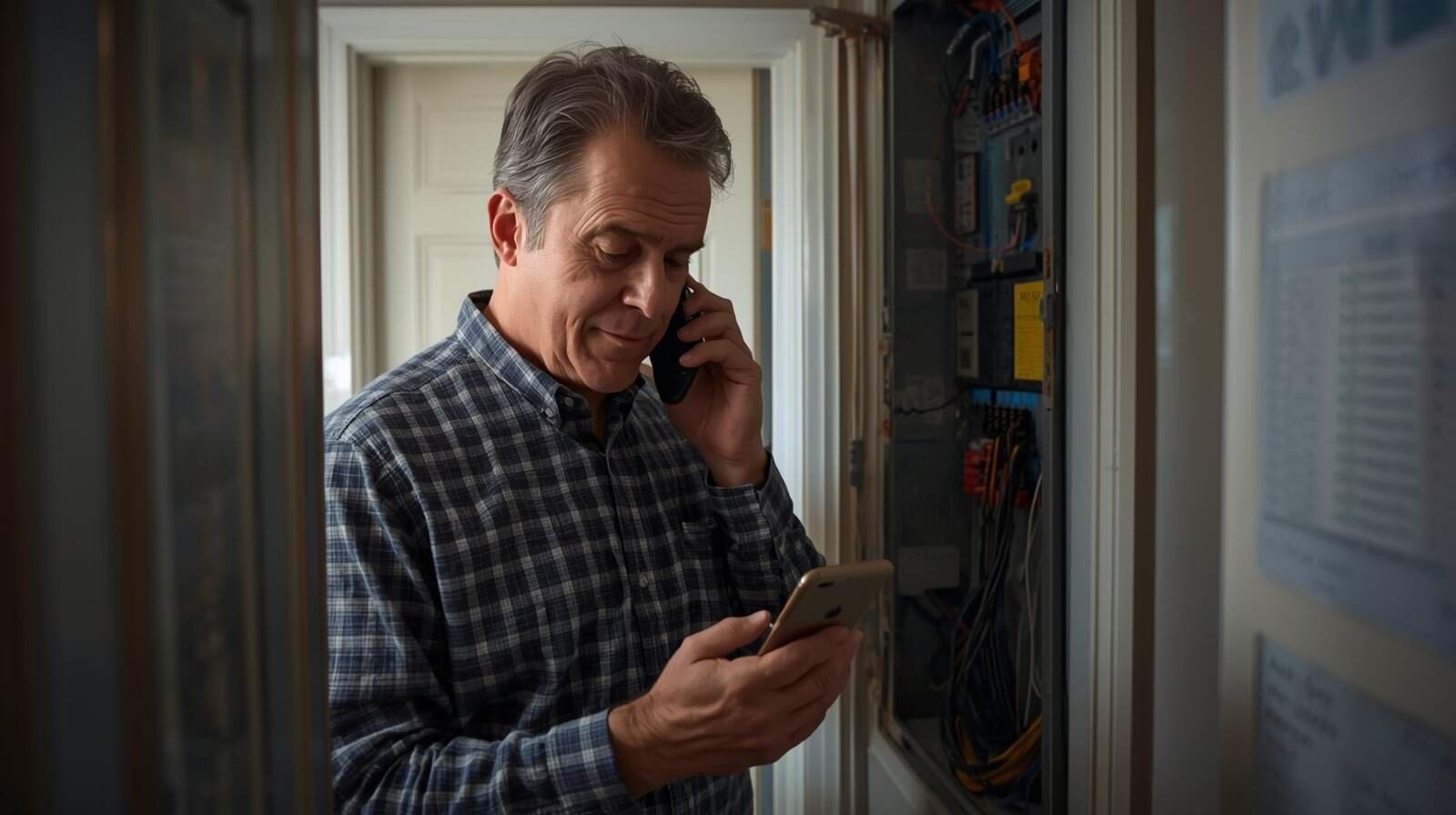
Short answer: Call a licensed electrician after an outage if you see heat, burning smell, buzzing/crackling, repeated breaker trips, partial power patterns, or power that becomes unstable after restoration. These are often signs of hidden faults that can escalate into equipment damage or fire risk.
Power outages can leave behind electrical problems that aren’t always obvious. Some issues resolve once power is restored. Others signal conditions that require professional evaluation to prevent safety hazards, equipment damage, or overheating inside walls.
This guide explains the clear “stop and escalate” signs—especially after an outage or restoration event. PowerPrepGuide helps you recognize risk patterns, not perform electrical repairs.
Last reviewed for accuracy and safety standards: February 2026
How to use this guide: A single symptom doesn’t always mean danger. What matters most is pattern, persistence, and escalation.
If problems repeat, worsen, spread to more rooms, or combine with heat/odor/sound, that’s your signal to involve a professional.
Why Electrical Problems Can Appear After Power Is Restored
When power returns, a home experiences a sudden surge of activity. Appliances restart, motors cycle on, HVAC equipment tries to recover, chargers reconnect, and multiple circuits see load at the same time. That surge of demand can make weak connections and stressed components reveal themselves.
In many cases, the outage did not “cause” the problem—it exposed it. Moisture, age, vibration, or past heat damage can quietly weaken connections for months. Restoration simply becomes the moment current begins flowing again through a weak point.
This is why it’s common to notice trouble within minutes or hours after power returns. The most important takeaway is that “power is back” does not always mean “everything is safe.”
Immediate Safety Red Flags
Some warning signs should be treated as active hazards. If you notice any of the following, stop using the affected outlets/circuits and avoid continued testing or repeated resets.
- Burning smells resembling hot plastic, insulation, or electrical components
- Smoke or visible scorch marks around outlets, switches, or the panel area
- Sparks, crackling, or popping when plugging in devices or operating switches
- Warm or hot outlets/switches that feel noticeably heated
Stop & Escalate Immediately
Heat, smell, and sound are not “minor glitches.” They often indicate overheating, arcing, or insulation damage—conditions that can escalate quickly even if power still seems to work.
Persistent Problems That Don’t Resolve on Their Own
Some post-outage issues persist even after basic safe observation. These patterns often indicate an ongoing fault on a circuit, a failing connection point, or a protective device responding to something unsafe.
Common persistence patterns include:
- Breakers that trip repeatedly or won’t stay reset
- Lights that flicker or dim consistently after restoration
- Outlets that work for small devices but fail under real load
Repeated tripping is not a nuisance. It’s your system telling you something is still wrong. If you need context on why repeated trips matter and where safe homeowner checks end, use Breaker Won’t Reset or Trips Immediately.
Partial Power or Uneven Power Patterns
Partial power is one of the most important escalation categories after an outage. It can show up as “half the house works,” certain rooms are dead, or large appliances behave inconsistently. These patterns often point to service-level problems, loose connections, or voltage imbalance—issues that typically require professional testing.
Partial power also increases confusion because some devices keep working, which can lead people to keep experimenting. That’s when risk stacks: more plugging/unplugging, more breaker toggling, more load changes, and more heat at weak points.
If your home shows uneven power behavior, review Half the House Has Power: Causes and Safe Checks. If it matches your situation and does not resolve quickly, escalation is the safer choice.
Problems That Start Immediately When Power Comes Back
If symptoms begin the moment power is restored—especially flicker, unusual appliance behavior, or electronics acting “glitchy”—treat it as a higher-risk scenario. Restoration can involve brief instability, and weak points may fail right when current starts flowing again.
What matters is whether the behavior settles quickly or persists. If it persists, the risk is no longer “normal restoration noise.” It becomes a sign of unstable power or a stressed connection that may be heating under load.
For a clear explanation of restoration-related surge and instability patterns, see Surge After Power Restoration: What to Check and How to Protect Your Home.
The Limits of Safe Homeowner Troubleshooting
Homeowners can safely observe symptoms, reduce load, and verify obvious conditions like whether a breaker appears tripped. But there is a hard boundary where further testing becomes risky.
A good rule is this: if the next step requires opening the panel, probing wiring, bypassing protection devices, or repeatedly forcing resets, you are past the safe limit. Those actions can increase hazard exposure and may worsen heat damage at weak connections.
What PowerPrepGuide does not do:
We do not provide instructions for live electrical repairs, panel work, rewiring, or code modifications. Our role is to help you recognize risk and know when to escalate safely.
Why Professional Evaluation Matters
Many of the most dangerous post-outage issues are invisible without proper testing. Loose connections, arcing conditions, overheating inside walls, and neutral/service problems may not show obvious signs until damage is already progressing.
Licensed electricians can evaluate:
- Whether voltage is stable and safe under load
- Whether breaker behavior indicates a persistent fault
- Whether connection points are heating or arcing
- Whether the issue is utility-side or inside the home
If you prefer a quick decision path for partial power and escalation boundaries, this Partial Power Safety Flowchart reinforces when professional evaluation is the safest choice.
When to Call an Electrician Without Delay
Call a licensed electrician promptly if you observe:
- Heat, odor, smoke, or visible damage near outlets, switches, or the panel
- Buzzing, crackling, arcing, or popping sounds
- Repeated breaker trips that do not resolve after reducing load
- Partial power patterns (some rooms work, others dead) or unstable behavior
- Multiple warning signs occurring together
If you feel uncertain, that uncertainty is data. Electrical problems are safest to address early, before heat damage builds over time.
Frequently Asked Questions
Should I keep resetting a breaker after an outage?
No. One firm reset after reducing load may be reasonable, but repeated trips are a stop signal. If it trips again, leave it off and escalate.
What if only some rooms have power?
That pattern often suggests a service-level or connection problem and may involve unsafe voltage imbalance. Treat it as higher risk and escalate if it doesn’t resolve quickly.
Is flickering normal after power comes back?
Brief flicker can happen during restoration. Persistent flicker—especially combined with dimming, buzzing, or device resets—should be treated as a warning sign.
Do I call the utility or an electrician?
If the issue appears service-wide (partial power patterns, repeated instability, multiple homes affected), start with the utility. If the issue seems isolated to your home’s circuits or persists without a clear utility event, an electrician is appropriate.
Final Perspective
Knowing when to call an electrician after an outage protects your home and your safety. Electrical warning signs are not inconveniences—they are signals that something may be wrong beneath the surface.
If symptoms persist, worsen, spread, or involve heat, odor, or sound, stop troubleshooting and involve a professional. Early evaluation is how small post-outage issues are prevented from becoming serious hazards.