


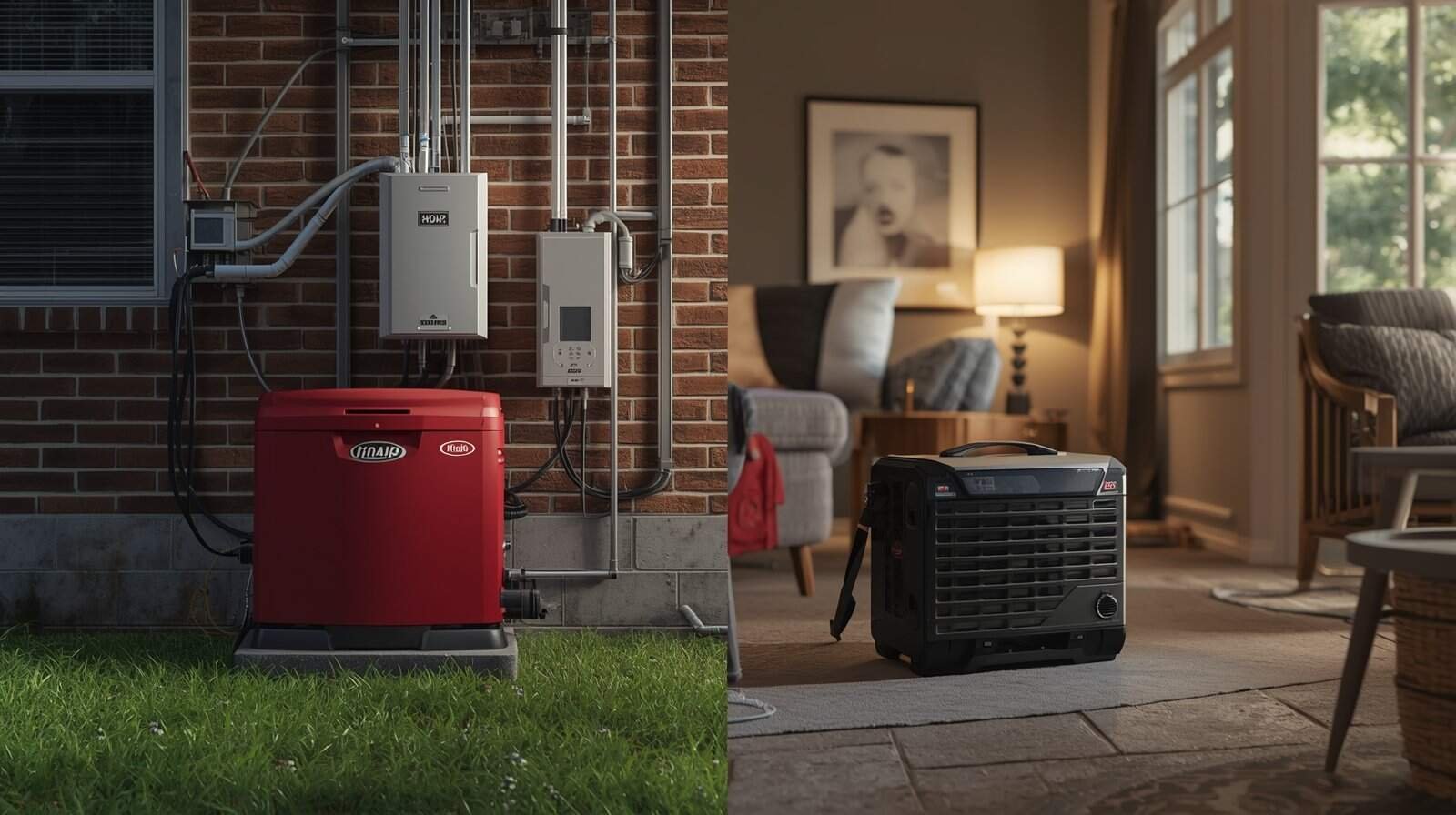
When preparing for power outages, homeowners often face a critical decision: invest in a whole-home backup system or rely on portable backup equipment. Both approaches provide resilience — but they solve very different problems.
This guide compares whole-home systems and portable backup options in terms of coverage, cost, complexity, and real-world usability so you can choose a solution aligned with your actual outage risks.
What Is a Whole-Home Backup System?
A whole-home backup system is a permanently installed generator (or large integrated system) connected directly to the electrical panel through an automatic transfer switch. When utility power fails, the system activates automatically and restores power to most or all household circuits.
- Automatic startup during outages
- Integrated with main panel
- Designed for extended outages
- Typically powered by natural gas or propane
These systems aim to replicate normal electrical operation with minimal homeowner involvement.
What Is a Portable Backup System?
Portable backup systems include portable generators and battery-based power stations. These units power selected appliances or circuits and require manual setup during outages.
- Lower upfront cost
- Manual startup and connection
- Suitable for essential loads only
- Flexible and scalable
Portable systems are well-suited for households that experience occasional outages or only need to power specific devices.
Coverage: Full Replication vs Essential Loads
Whole-home systems are designed to power nearly everything — HVAC, well pumps, kitchen appliances, lighting, and more.
Portable systems focus on priority loads such as refrigeration, medical devices, sump pumps, lighting, and communication devices. Understanding what truly needs power — versus what is simply convenient — is a key planning step.
Installation and Complexity
Whole-home systems require professional installation, permitting, and integration with the main panel. Ongoing maintenance and fuel supply management are part of ownership.
Portable systems require more involvement during an outage. Homeowners must manage fuel, placement, load balancing, and safe connections.
If you are considering connection methods for portable generators, review Transfer Switch vs Interlock Kit to understand safe integration options.
Cost Considerations
Whole-home systems involve significant upfront investment, including equipment, installation, and potentially gas line upgrades.
Portable systems cost less initially but may require fuel planning and runtime management. Fuel consumption varies by load size. For realistic planning, see How Much Fuel a Generator Uses and What Size Generator Do I Need?.
Reliability and User Involvement
Whole-home systems reduce manual involvement. When installed correctly, they start automatically and manage load distribution through integrated controls.
Portable systems require active decision-making during outages. Homeowners must determine which appliances to power and monitor fuel levels carefully.
Medical and Critical Equipment Planning
Households with medical devices or critical refrigeration needs must evaluate runtime reliability and redundancy. Automation may reduce stress during emergencies, but even whole-home systems require proper maintenance and fuel availability.
For structured planning, review Medical Power Outage Planning.
Which Option Makes Sense for Most Homes?
Homes in areas with frequent, long-duration outages may benefit from whole-home automation. Homes experiencing occasional short outages often find portable systems sufficient.
Many households adopt a layered strategy: a portable generator for essential loads combined with surge protection and prioritized circuit planning.
Conclusion
Whole-home backup systems prioritize convenience and automation. Portable systems prioritize flexibility and affordability.
The best choice is not the largest system available — it is the one aligned with your outage frequency, budget, and ability to manage equipment safely and responsibly.