


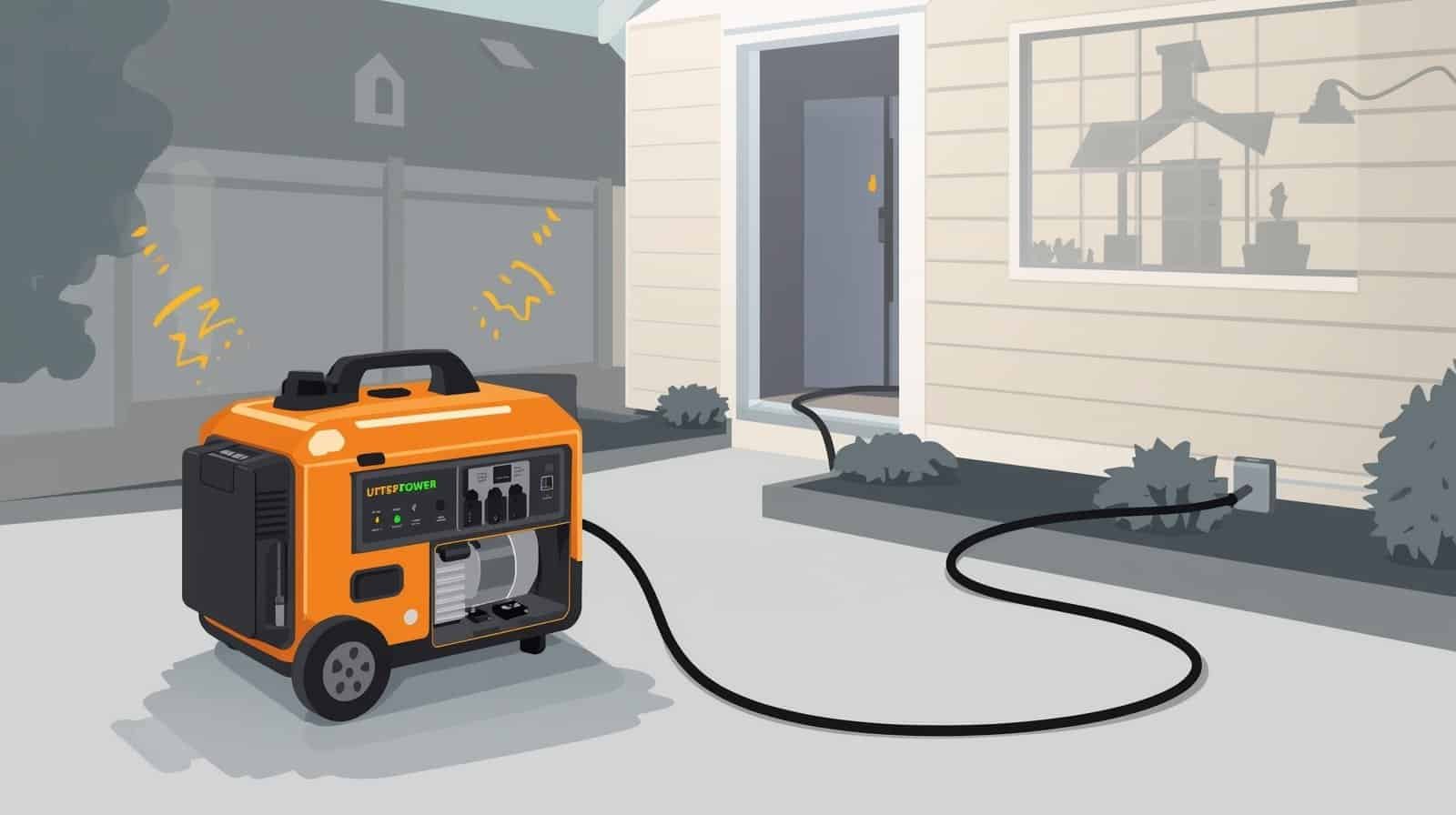
Does your generator idle normally… but shut off soon after you plug appliances in? That usually means the engine is struggling under load, not that your home wiring suddenly “broke.” This visual guide helps you recognize the most common causes of shutdowns under load, run a few safe checks (no tools required), and know exactly when to stop and call a professional.
Safety first: If you smell fuel, see smoke, hear loud knocking, or the generator won’t restart after cooling down, stop troubleshooting and call for service.
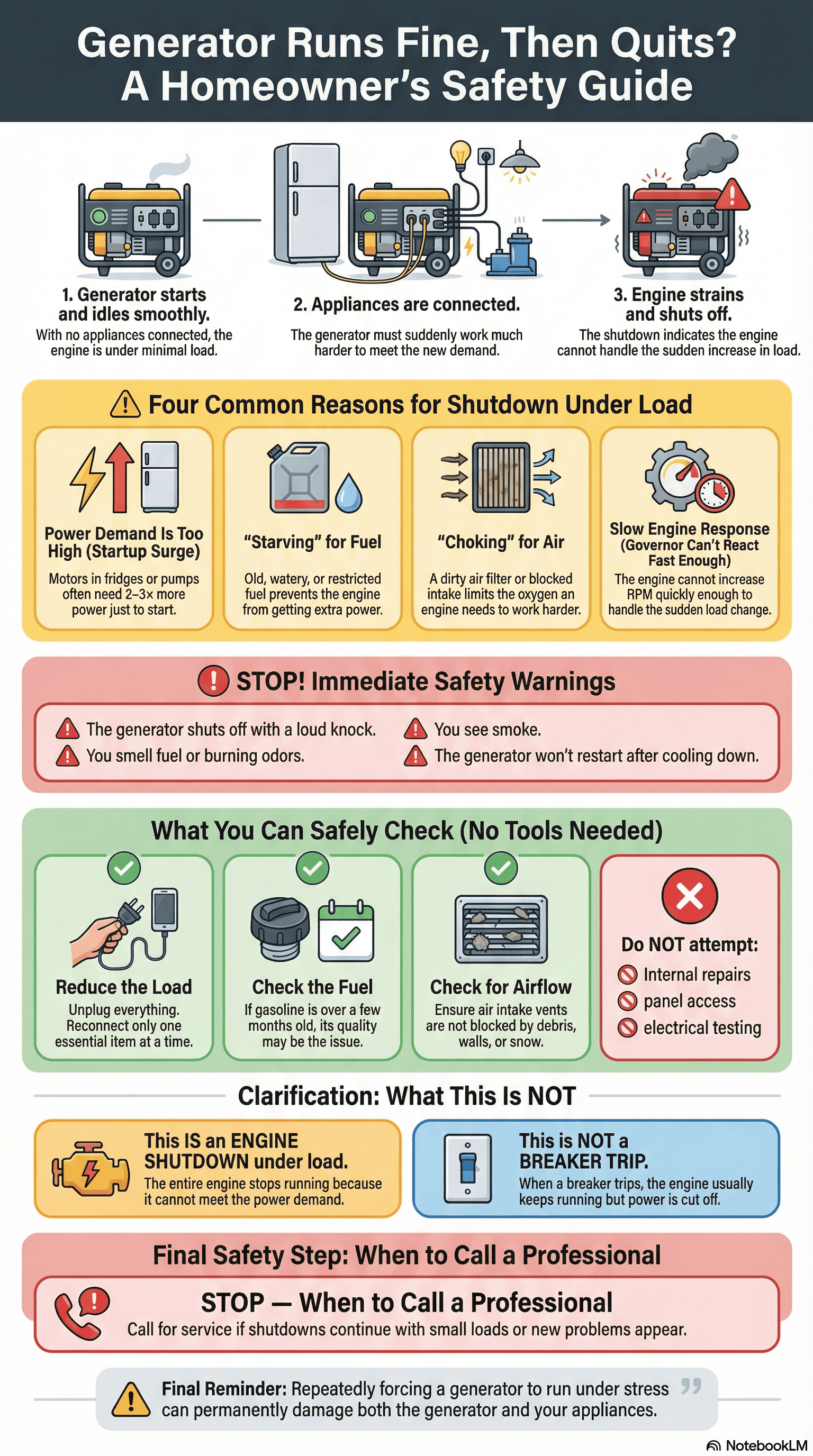
What This Visual Guide Covers
- The simple reason a generator can run “fine” with no load but stall once appliances are connected
- Four common causes: startup surge demand, fuel starvation, airflow restriction, and slow governor response
- What you can safely check (no tools, no panel access)
- Clear STOP signs and when to call a professional
Why This Happens
With nothing plugged in, a generator’s engine is under light demand. The moment a refrigerator, pump, or other appliance starts, the generator must deliver a sudden burst of power. If the engine can’t respond fast enough, it may bog down and shut off.
Important distinction: A breaker trip usually leaves the engine running while power cuts off. This guide is about the opposite scenario: the engine shuts down when the load is applied.
Common Causes of Shutdowns Under Load
1) Startup surge is too high
Motors and compressors can need 2–3× their running watts for a few seconds to start. If the surge exceeds what the generator can deliver, the engine may stall.
2) Fuel delivery can’t keep up
Old fuel, water contamination, clogged passages, or a restricted fuel cap vent can cause the engine to “starve” when demand rises. If you suspect old or contaminated gas, see: Bad Gas in a Generator: Symptoms, Safety Risks, and What to Do Next.
3) Airflow is restricted
A clogged air filter or blocked intake reduces oxygen. Under load, the engine needs more airflow, not less. A quick maintenance check here can prevent repeated shutdowns. Related: Generator Air Filter Maintenance: When to Clean or Replace.
4) Slow governor response
The governor helps the engine adjust RPM to changing load. If it can’t react fast enough, RPM drops sharply and the generator shuts off. This is more common on poorly maintained units or when load changes are abrupt.
Safe Checks You Can Do Right Now
Safe-check rule: Make changes slowly. Test with one appliance at a time.
- Reduce the load: Unplug everything. Then connect one essential device and try again.
- Check fuel basics: Confirm adequate fuel, clean fuel, and that the fuel cap vent (if present) isn’t blocked.
- Check airflow: Remove debris around vents/intake. If the air filter looks dirty, service it.
Common Mistakes to Avoid
- Repeatedly forcing restarts while the generator is hot and clearly struggling
- Trying to “prove it works” by adding multiple big appliances at once
- Running stale fuel and hoping the engine will “clear itself out” under load
- Ignoring fuel smells, smoke, loud knocking, or new grinding sounds
STOP Conditions
Stop troubleshooting immediately if:
- You smell fuel or see a leak
- You see smoke or melting plastic odors
- The generator shuts off with a loud knock or harsh mechanical sound
- It won’t restart after cooling down
When to Call a Professional
If shutdowns continue even with a small load, the generator likely has a fuel/air/governor issue that needs service. If your unit shuts down specifically when appliances kick on, see: Generator Starts but Shuts Down When Appliances Turn On. If you’re seeing repeated shutdowns across different scenarios, this may also relate to broader causes covered in Generator Keeps Shutting Off: Causes, Safety Checks, and What to Do Next.
FAQ
Is this the same as a generator breaker tripping?
No. If a breaker trips, the engine usually continues running while output stops. In this guide, the engine itself shuts off once the load is applied.
Can one appliance cause the generator to shut down?
Yes. A single motor/compressor appliance can demand a large startup surge. Test appliances one at a time and avoid stacking large starts together.
What’s the safest first test?
Unplug everything, then test one simple load (like a lamp) to confirm basic stability. Then test one essential appliance at a time.
Related Visual Guides
- Post-Outage Electrical Safety: Breaker & GFCI Troubleshooting Flowchart
- Half Your House Has No Power? A Post-Outage Safety Flowchart
- Generator Runs but House Has No Power — Safety Setup Flowchart
- Why a Generator Powers Some Devices but Not Others (And What to Do Safely)
Bottom line: A generator that idles fine but quits under load is usually hitting a surge, fuel, airflow, or governor-response limit. Reduce the load, verify basics, and don’t push past STOP signs.