


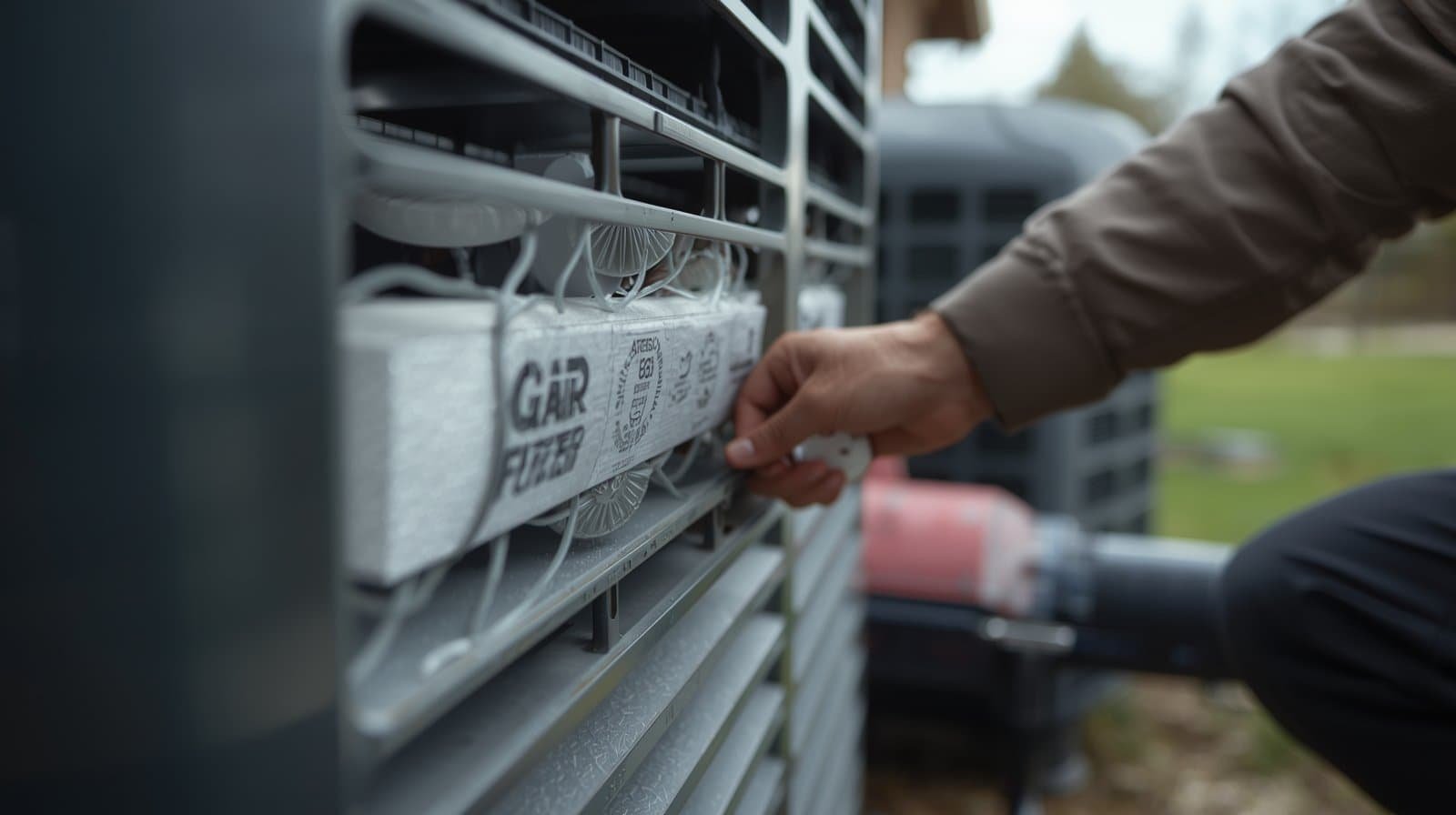
A generator air filter protects the engine from dust, dirt, insects, and other debris while allowing enough airflow for proper combustion. When the filter becomes clogged, damaged, incorrectly oiled, or neglected, the generator may become harder to start, run rough, produce black exhaust smoke, lose power under load, or consume more fuel than normal.
The correct maintenance method depends on the filter design. Foam elements may be washable and sometimes require light oiling, while many paper elements are meant to be replaced rather than washed. Some generators use a dual-element system. Always follow the air-filter procedure and service interval in the owner’s manual for the exact generator model.
Why the Air Filter Matters to Generator Performance
A small-engine generator needs a controlled mixture of fuel and air to run correctly. The air filter sits in the intake path and helps keep abrasive debris from entering the engine.
When airflow is restricted, the engine may receive less air than expected for the amount of fuel being delivered. On carbureted generators, that can contribute to a richer air-fuel mixture, which may cause rough running, black exhaust smoke, carbon deposits, reduced efficiency, or fouled spark plugs.
The filter also protects internal engine components. Dust that bypasses a damaged or poorly seated filter can accelerate wear inside the intake tract and combustion chamber.
Common Generator Air Filter Types
| Filter type | Typical maintenance | Common mistake |
|---|---|---|
| Foam element | Often washable; may require light oiling after drying | Reinstalling it wet or over-oiling it |
| Paper element | Usually inspected and replaced when dirty or damaged | Washing or soaking it unless the manufacturer explicitly permits it |
| Dual-element filter | Foam pre-filter plus paper main element | Servicing both pieces the same way |
Do not identify a filter by appearance alone if the manual is available. Two generators with similar-looking filters can have different cleaning and replacement procedures.
How Often Should You Inspect the Air Filter?
There is no single inspection interval that fits every generator. Manufacturers usually specify service by operating hours, calendar time, or both, and many call for more frequent inspection in dusty or dirty environments.
A generator that runs for many hours during one storm can reach an hour-based maintenance interval quickly. Likewise, a generator that sits most of the year can still collect dust, insects, or moisture in storage.
For that reason, air-filter condition should be checked before storm season, after especially dusty operation, and whenever the generator develops symptoms that suggest restricted airflow.
When a Foam Air Filter Should Be Cleaned
If the generator uses a washable foam element, cleaning may be appropriate when the foam is visibly dusty or dirty but still structurally sound.
The exact process varies, but manufacturer instructions may call for:
- Removing the filter carefully so debris does not fall into the intake
- Washing it with the recommended cleaner or mild detergent
- Rinsing thoroughly
- Allowing it to dry completely
- Applying the specified amount of clean engine oil if required
- Squeezing out excess oil without twisting or damaging the foam
- Reinstalling it only after it is dry and correctly serviced
Do not assume every foam filter should be oiled. Some are designed for dry use. The owner’s manual should determine whether oil is required.
Too Much Oil Can Create Its Own Airflow Problem
On an oil-treated foam filter, more oil is not better. Excess oil can restrict airflow, get drawn into the intake, contaminate nearby components, and contribute to rich-running symptoms.
The goal is a light, even film only when the manufacturer specifies an oiled element. If the foam drips, feels saturated, or leaves heavy oil on your hands, it may be over-oiled.
Likewise, reinstalling a freshly washed foam filter before it has dried can introduce moisture and interfere with proper airflow.
When a Foam Filter Should Be Replaced Instead of Cleaned
Cleaning is not a repair for damaged foam. Replace the element if it is:
- Torn or split
- Brittle or crumbling
- Permanently distorted
- Oil-soaked from an engine problem
- Contaminated with fuel or chemicals
- Unable to seal correctly in the air-box housing
A filter that no longer seals around its edges can allow dirty air to bypass the filter even if the foam itself looks clean.
When a Paper Air Filter Should Be Replaced
Many paper air filters are designed to be replaced when they become heavily dirty, clogged, wet, torn, oil-contaminated, or damaged.
Do not wash or soak a paper element unless the manufacturer explicitly says it is washable. Water or solvents can damage the filter media, weaken adhesive, alter pore structure, or cause the element to deform.
Some manuals may permit gently tapping loose dust from a paper element or another limited cleaning method. Follow that exact procedure rather than blowing high-pressure air through the filter or aggressively brushing it.
Do Not Use Compressed Air Unless the Manufacturer Allows It
High-pressure compressed air can damage paper filter media or open passages that allow dirt to bypass the filter. It can also drive debris deeper into the element.
If the manual allows compressed-air cleaning, use only the pressure and direction it specifies. Otherwise, replacement is usually safer than trying to restore a heavily clogged paper element.
How to Inspect the Air Filter Safely
Air-filter service should be performed only with the generator shut down and cool.
- Turn off the generator and disconnect loads.
- Allow the engine to cool.
- Follow the manufacturer’s maintenance shutdown procedure.
- Remove the air-filter cover carefully.
- Note how the filter and any pre-filter are positioned.
- Inspect the filter, sealing surfaces, and housing for dirt or damage.
- Clean or replace only as specified for that filter type.
- Reinstall the element in the correct orientation.
- Make sure the cover closes and seals properly.
Do not start the generator with the filter removed simply to see whether it runs better. That can allow unfiltered debris into the engine and can create a misleading diagnosis.
Signs the Air Filter May Be Restricted
A clogged or contaminated air filter can contribute to:
- Hard starting
- Rough or uneven running
- Reduced engine speed under load
- Black or sooty exhaust smoke
- Higher fuel consumption
- Loss of available power
- Spark-plug carbon fouling
These symptoms are not unique to the air filter. Choke problems, stale fuel, carburetor issues, ignition problems, overloading, or mechanical faults can look similar.
If a clean or correctly replaced air filter does not resolve the symptom, use the Generator Troubleshooting Hub rather than assuming the filter was the only cause.
Black Exhaust Smoke Can Point Toward Restricted Airflow
Black exhaust commonly suggests that the engine is running rich—too much fuel relative to the available air. A severely restricted air filter is one possible cause.
Other causes can include an incorrectly positioned choke, carburetor problems, or fuel-system issues. If black smoke continues after the air filter and choke are confirmed correct, stop prolonged operation and investigate further.
Running rich for long periods can contribute to carbon buildup, spark-plug fouling, poor fuel economy, and reduced performance.
Dusty Conditions Shorten the Maintenance Interval
Generators often run during storms, cleanup work, construction, wildfire smoke, dry summer weather, or debris removal—exactly the conditions that can load an air filter quickly.
A filter that would remain clean for many hours in a normal backyard may clog much faster beside a gravel driveway, dusty work area, or leaf-covered yard.
That is why manufacturer schedules often call for more frequent air-filter service in severe or dusty conditions.
Storage Can Affect the Air Filter Too
A generator that sits for months can still develop air-filter problems. Moisture, insects, rodents, dust, and aging filter material can all affect the intake system while the engine is not being used.
Before returning a stored generator to service, inspect the air-box area for nesting material, chewed foam, blocked openings, or filters that have deteriorated with age.
Do not stuff rags or improvised plugs into the intake for storage unless the generator manufacturer specifically recommends it. Anything left behind can become a serious restriction when the generator is started.
Air Filter and Spark Plug Problems Often Appear Together
Restricted airflow can contribute to rich combustion and carbon deposits, which may show up on the spark plug.
If the generator has both a dirty air filter and a blackened plug, service the filter and review Generator Spark Plug Maintenance. Replacing the plug without correcting restricted airflow may allow the new plug to foul again.
Likewise, a clean filter does not rule out other fuel or ignition problems.
Air Filter Service and Oil Service Are Separate Maintenance Tasks
Air-filter condition and engine-oil condition both matter, but one does not substitute for the other. A generator can have clean oil and a clogged filter, or a clean filter and overdue oil.
Track both by operating hours and the manufacturer’s calendar schedule. Use Generator Oil Change Intervals for the oil side of the maintenance plan.
After a long outage, it is common for several maintenance items to become due at the same time because the generator accumulated many hours in a short period.
Do Not Install a Filter That Does Not Fit Correctly
Replacement filters should match the generator or engine specification. A filter that is too small, too thick, incorrectly shaped, or poorly sealed can either restrict airflow or allow unfiltered air to bypass the media.
Use the part number or approved replacement listed for the generator. If using an aftermarket element, verify that it is specifically compatible with the exact engine or generator model.
Check the Air-Filter Housing, Not Just the Element
A new filter will not help if the housing is cracked, the cover does not latch, the gasket is missing, or dirt is bypassing the element.
Inspect the inside of the air-box housing for debris and signs that dust has been getting around the filter rather than through it.
If dirt is visible downstream of the filter or inside the intake throat, the sealing problem should be corrected before the generator is relied on again.
Include Air-Filter Inspection in Pre-Storm Maintenance
The best time to discover a clogged filter is before the outage starts. Pre-season maintenance should include the air filter along with oil, spark plug, fuel condition, battery condition, cords, receptacles, and general generator condition.
Use the Generator Maintenance Checklist Before Storm Season to keep those checks together.
If the generator recently completed a long outage, do not wait until the next season to inspect it. Hour-based maintenance may already be due.
Common Generator Air-Filter Maintenance Mistakes
- Running the generator with the filter removed
- Washing a paper element that is meant to be replaced
- Reinstalling a foam filter while it is still wet
- Over-oiling a foam element
- Using compressed air on a paper filter without manufacturer approval
- Ignoring a torn or poorly sealing filter
- Cleaning the element but leaving debris in the air-box housing
- Assuming every rough-running problem is caused by the filter
- Waiting for obvious power loss before inspecting the filter
- Using a replacement filter that does not match the engine specification
When Air-Filter Maintenance Does Not Fix the Problem
If the generator remains hard to start, runs rough, produces black smoke, bogs under load, or lacks power after the air filter has been correctly serviced, move on to other likely causes.
Possible next checks include choke position, fuel age, carburetor condition, spark plug, engine speed, overload, fuel-cap venting, and ignition-system problems.
Do not keep replacing air filters when the symptom clearly remains unchanged.
When to Stop and Get Service
Stop routine homeowner maintenance if the air-box housing is damaged, dirt has clearly bypassed the filter into the intake, the generator continues producing heavy black smoke after basic service, the engine repeatedly stalls, or there are signs of deeper fuel or mechanical problems.
Likewise, unusual knocking, severe overheating, persistent oil smoke, or major power loss under modest load deserves broader diagnosis rather than more filter cleaning.
Generator Air Filter FAQ
How often should I clean or replace a generator air filter?
Follow the operating-hour and calendar interval in the generator or engine owner’s manual. Inspect more often in dusty, smoky, or debris-heavy conditions.
Can I wash a generator air filter?
Only if the manufacturer says that filter type is washable. Foam filters often are; many paper elements are not.
Should a foam generator air filter be oiled?
Some foam filters require light oiling and others are designed to run dry. Follow the manufacturer’s procedure rather than assuming all foam elements should be oiled.
Can a dirty air filter make a generator lose power?
Yes. Restricted airflow can contribute to rich combustion, reduced engine performance, black smoke, rough running, and less available power under load.
Can I run the generator briefly without the air filter to test it?
That is not recommended. Running without the filter can allow dirt into the engine and does not provide a reliable diagnosis of the underlying problem.
Bottom Line
Generator air-filter maintenance is simple when the correct procedure is used: identify the filter type, inspect it at the manufacturer’s interval, clean only serviceable elements, replace damaged or heavily contaminated filters, and make sure the filter seals correctly in the housing.
Do not wait for severe power loss before checking it, and do not assume every rough-running symptom is an air-filter problem. If the generator still starts hard, smokes, bogs, or runs poorly after the filter is correctly serviced, move on to fuel, choke, spark, load, and engine troubleshooting.